
In this guide
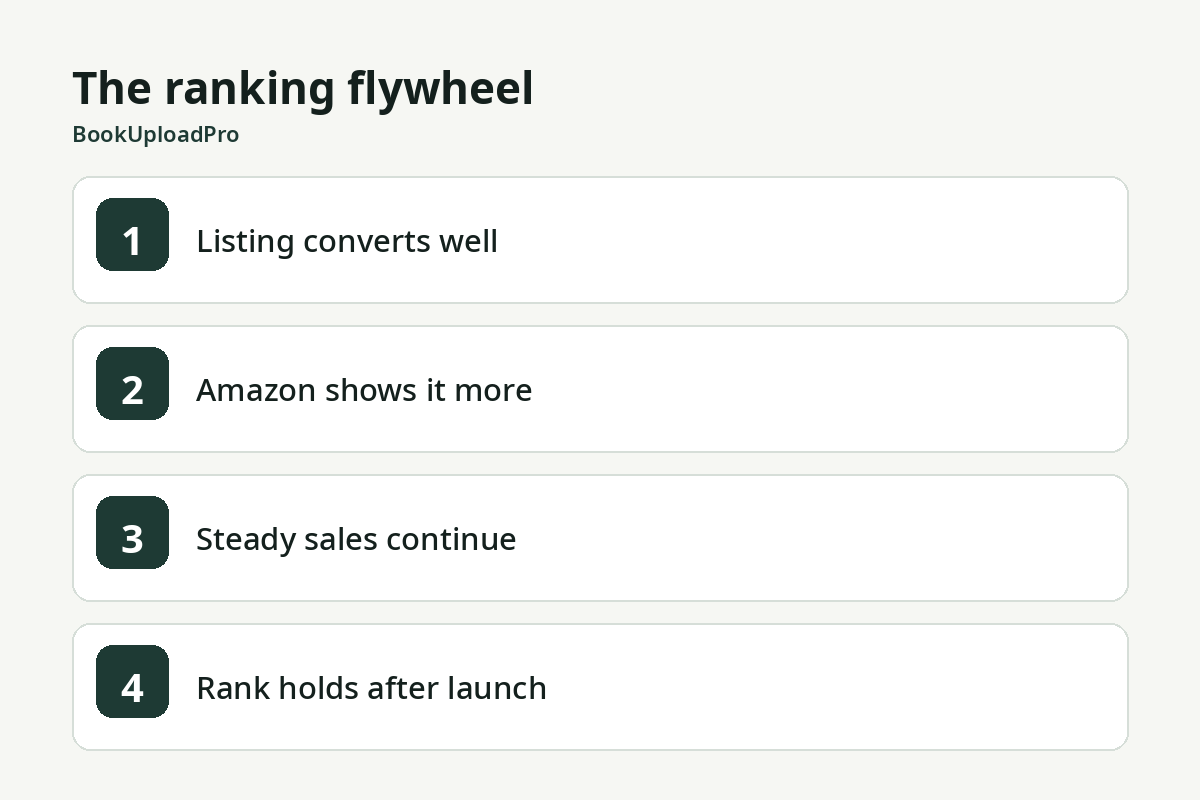
A launch spike rents a ranking; what keeps it is the boring machine underneath: a listing that converts browsers into buyers at a healthy rate, and a steady drip of sales after the promotion ends, because Amazon’s ranking logic rewards books that keep selling and keep converting long after it stops rewarding books that once spiked. Amazon promotes listings that make it money per visitor, so a book whose page turns a good share of views into purchases gets shown more, which produces more sales, which holds the rank. A book that needs a discount blast to move falls back the week the blast stops, every time.
Key takeaways:
- Conversion rate is a ranking input you control: cover, title, price, reviews, and the look inside all decide what share of page views become sales, and Amazon shows converting books more often.
- Post launch velocity matters more than launch height: ten sales a day for a month outranks a hundred sales in a weekend followed by silence.
- The durable drivers are unglamorous: also bought placement earned by steady sales, a backlist that feeds the book, ads run at a sustainable level, and a listing kept tight.
The conversion lever, explained
Amazon tracks what happens after it shows your book: how many click, and of those, how many buy. A listing that converts well is, to Amazon, a good recommendation, so it surfaces in more searches, more also bought rows, and more category browsing, which is the compounding engine behind stable ranks. A listing that gets clicks and no sales teaches the opposite lesson, and no keyword work repairs it, which is why relevance beats raw volume when choosing terms. Raise conversion by fixing what shoppers actually judge: a cover that reads at thumbnail size in your genre, a title and subtitle that promise the exact outcome, a price inside the band your category’s buyers expect, early honest reviews, and a look inside that starts selling in the first pages.
The post launch operating rhythm
Keep some promotion always on at a level you can sustain: modest ads against your proven keywords, your newsletter and back matter sending readers from each new book to this one, and periodic price promotions spaced through the year rather than one annual spike. Watch the rank’s trend, not its hourly mood, because rank is relative and moves with the whole store’s traffic. Publish the next book; nothing defends a backlist title like a new release whose back matter sells it. And accept the honest limit: in a competitive category, holding position is active work, while in a quiet niche the same habits can hold a rank for months with light touches, which is a category selection decision made before launch.
FAQ
How do I keep ranking after my launch promotion ends?
Replace the spike with a system: a listing that converts well, steady low level promotion you can sustain all year, ads on proven keywords, backlist and back matter traffic, and new releases that feed the title. Amazon keeps promoting books that keep selling and converting; it stops promoting books whose sales stopped.
How does my conversion rate affect my ranking?
Directly. Amazon shows books that turn views into sales more often, in search, also bought rows, and category pages, because those recommendations earn. Strong conversion therefore compounds into visibility and rank; weak conversion quietly suppresses both, no matter how good your keywords are.