
In this guide

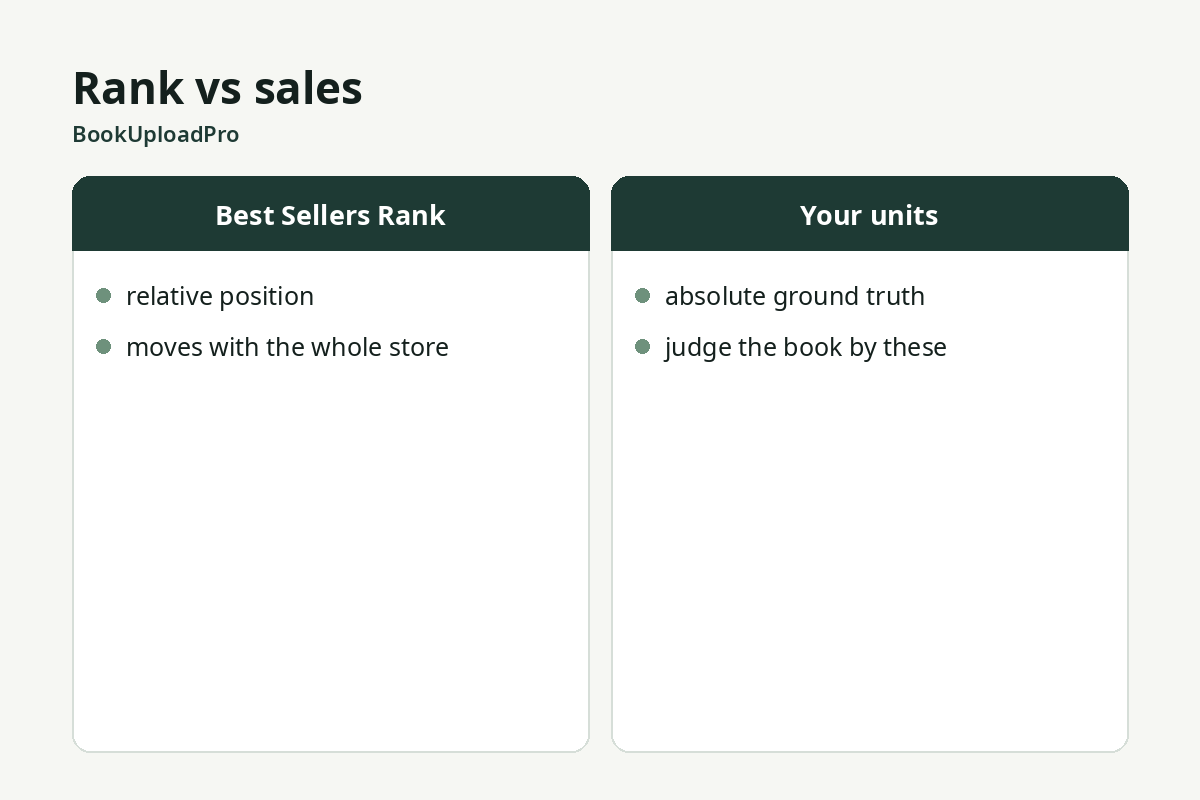
Because Best Sellers Rank is a race position, not a speedometer. Your rank compares your recent sales against every other book in the store over the same period, recalculated frequently, so when the store around you speeds up, during a Prime event, the holiday surge, a viral title in your lane, or simply a strong weekend, your book can sell exactly as many copies as last week and still fall hundreds or thousands of places. Nothing broke. The field got faster. The same effect runs in reverse in quiet January weeks, when flat sales can produce a flattering rank improvement that also means less than it appears to.
Key takeaways:
- BSR measures relative, recent sales velocity, weighted toward the recent hours and days, which is why it swings so much and why hourly movements mean almost nothing.
- A worsening rank on stable sales almost always means category or store wide sales rose. Check your category’s top books: if their ranks improved across the board, the tide came in.
- Judge your book by units sold and revenue over weeks, and by your category rank trend, not by raw BSR snapshots.
How the number actually behaves
Amazon has never published the full formula, but its behavior is consistent and observable: recent sales count far more than old ones, a sale today moves you more than ten sales last month; the rank updates frequently, so it is always describing a trailing window, not your lifetime performance; and it is computed per store, so your rank in the US and UK stores are separate races on separate fields. Two consequences follow for how you read it. A launch spike produces a spectacular rank that decays on schedule even if sales settle at a healthy level, because the window keeps forgetting the spike. And seasonality is real: the same daily sales buy a much better rank in a slow month than in December, when the whole store’s velocity roughly doubles in many categories. Authors who understand this stop having weekly panics; authors who do not end up discounting books that were never in trouble, or chasing rank with promotions when the actual problem is elsewhere.
What to watch instead
Track three things weekly. Units and royalties from your KDP reports, which are ground truth and never relative. Your rank inside your main categories, which shows your standing against the books you actually compete with, and where a fall on flat sales tells a different, more actionable story about specific competitors. And your conversion health, page views to sales where you can see it, because that predicts tomorrow’s rank better than today’s does. If units are stable, category standing is stable, and only the store wide BSR drifted, the correct action is usually nothing, beyond noting the season. save your interventions for the signals that are actually yours. Category selection, which decides which race you are even in, is covered here.
FAQ
Why did my Best Sellers Rank get worse even though my sales stayed the same?
Because rank is relative. It compares your recent sales with every other book’s recent sales, so when overall store or category sales rise, during sales events, holidays, or a competitor surge, a book with unchanged sales slips down the order. Check your units and category rank trend before concluding anything is wrong.