
In this guide
You do not need different BISAC codes per edition, and usually you should not have them: the subject of the book does not change with its binding. Each edition carries its own metadata record, so different codes are possible, and there is one legitimate reason to use them, when an edition genuinely targets a different shelf (the workbook edition coded to study aids while the narrative edition sits in the topic’s main code). Absent that, identical codes keep your metadata consistent across stores, which every downstream system rewards:
Key takeaways:
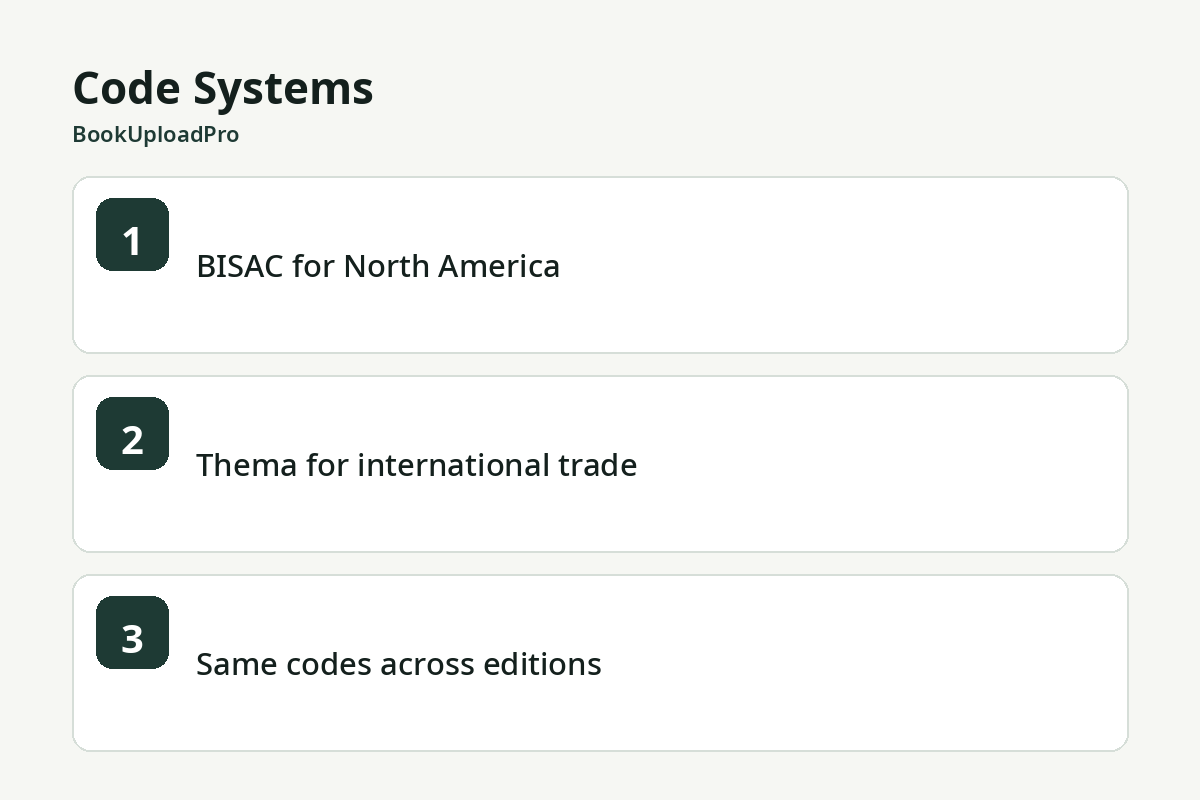
- BISAC is the North American trade standard, maintained by BISG and used by IngramSpark, Draft2Digital, libraries, and bookstores in that orbit. Thema is the international successor system designed for global trade, finer grained in places, with qualifiers for place, language, and audience layered onto subjects:
- Selling internationally through the big aggregators, you mostly supply BISAC and the channel maps or supplements it; Thema matters most when you work directly with international trade partners or want precise placement in European and other Thema native markets.
- Paperback back matter expectations are modest and conventional: an about the author page, a list of your other books, a first chapter or teaser of the next book in a series where applicable, a review request written with grace, and your contact or newsletter invitation. Readers expect the furniture; its absence feels unfinished rather than clean.
Back matter that earns its pages in print
Print readers cannot click, so back matter’s job is memory and instruction: the next book’s title and where to find it spelled plainly, your name in a form they can search, and one clear invitation. Series sell through on print back matter more than authors expect, because the satisfied reader at the last page is the warmest audience there is, and the book in their hands is the only store open:
Codes housekeeping
Whatever system you use, choose two or three codes, most specific first, review them when you revise the edition, and keep editions in step. Codes are shelving decisions, and shelves are where browsers become buyers:
FAQ
Do I need different BISAC codes for my ebook and print editions?
No. Keep them the same unless an edition truly targets a different audience or shelf, like a workbook versus the narrative edition. Consistency across editions is what stores and libraries reward.
How do Thema codes compare with BISAC codes for selling books internationally?
BISAC is the North American standard; Thema is the international system with subject codes plus qualifiers for place, language, and audience. Aggregators usually map from your BISAC choices; Thema fluency matters for direct international trade.
What back matter pages do paperback readers expect to see?
About the author, your other books, a next book teaser for series, a graceful review request, and a contact or newsletter invitation. Keep it brief, current, and searchable, since print readers cannot click.