
In this guide
- Splitting a big topic without the seams showing
- The messy draft reorganization, step by step
- FAQ
- How do I improve a weak AI chapter without rewriting it from scratch?
- Can AI reorganize my messy draft into a logical chapter order?
- How do I break a big topic into subtopics that AI can cover without overlap?
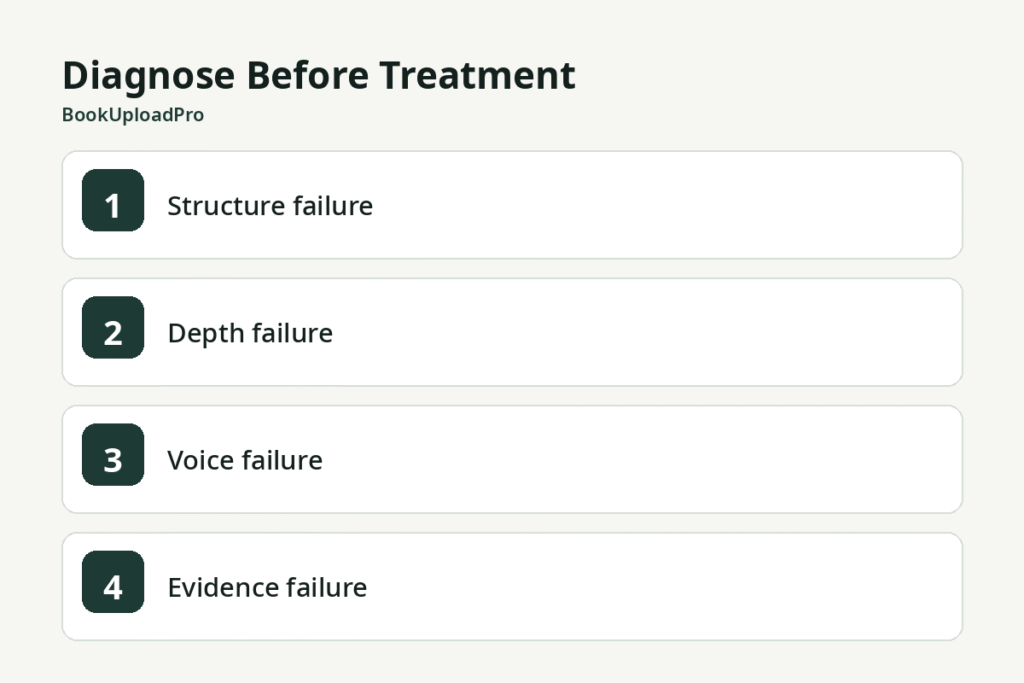
A weak AI chapter is rarely weak everywhere; it is usually one of four failures wearing a trench coat. Diagnosis before treatment: read the chapter and name the failure. Structure failure means the ideas are fine in the wrong order or the chapter tries to do three jobs. Depth failure means correct, shallow summary where the reader needed the worked example. Voice failure means it sounds like a brochure next to your stronger chapters. Evidence failure means claims float without stories, numbers, or steps. Each failure repairs in place: reorder paragraphs and add signposting for structure, brief the model for the missing example pass for depth, rewrite the opening and closing in your own words for voice, and insert your material for evidence. Rewriting from scratch throws away the 70 percent that worked.
Key takeaways:
- Repair passes beat regeneration: ask for one targeted change at a time (add a worked example to section two; cut the repeated background; sharpen the opening), because each regeneration reshuffles the parts that were already right.
- Reorganization is an outline task, not a writing task: reduce the draft to one line per section, arrange the lines, and only then move text. AI is excellent at proposing orders from a section list and arguing for them.
- Overlap is prevented before drafting, in the split: subtopics divided by reader situation or by stage of a process overlap far less than subtopics divided by theme alone.
Splitting a big topic without the seams showing
Ask the model for a split along an axis, not a brainstorm: stages of the process, levels of the reader, parts of the system, problems in the order readers meet them. Then demand a boundary statement for each subtopic: what it covers, and by name what it leaves to its neighbors. Those boundary statements become the chapter map, and pasting them into each chapter brief is what keeps ten generated chapters from teaching the same basics five times. During editing, a repeated explanation is a signal the boundary failed; move the passage to its home chapter and leave a one sentence bridge behind.
The messy draft reorganization, step by step
Extract headings and first sentences into a list (or ask the model to summarize each section in one line). Sort the lines into the reader’s journey: problem, mechanism, method, mistakes, maintenance is a sturdy default for how to nonfiction. Mark the duplicates the sort reveals. Then move the actual text to match the sorted lines, and write fresh transitions at the joins, because transitions written for the old order will lie about the new one. Finish with a read of only the first and last paragraph of each chapter in sequence; if that skeleton reads as one argument, the reorganization worked.
FAQ
How do I improve a weak AI chapter without rewriting it from scratch?
Diagnose the failure type first (structure, depth, voice, or evidence), then repair with targeted passes: reorder, add the missing worked example, rewrite the opening and closing in your words, or insert your own material. Regeneration reshuffles the good parts along with the bad.
Can AI reorganize my messy draft into a logical chapter order?
Yes, at the outline level: have it summarize each section in one line, propose an order along the reader’s journey, and flag duplicates. You make the final call, move the text, and rewrite transitions at the joins.
How do I break a big topic into subtopics that AI can cover without overlap?
Split along an axis (stages, reader levels, system parts), and write a boundary statement for each subtopic naming what it covers and what it leaves to neighbors. Use those statements as the chapter map in every drafting brief.