
In this guide
Expect an AI first draft to need the edit a good human first draft needs, because that is what it is: a first draft. Realistically that means several passes over every chapter: a fact pass, because AI drafts assert things that are not true; a structure pass, because chapters drift, repeat, and bury their point; and a voice pass, because unedited generated prose has a recognizable sameness that readers feel even when they cannot name it. For a typical nonfiction book, budget your editing in hours per chapter, not minutes, and treat anyone promising publish ready output with no editing as selling you the draft and the disappointment.
Key takeaways:
- The draft’s fluency is the trap: it reads finished, which is exactly why errors and repetitions survive a skim. Edit against checklists, not impressions.
- Readiness is testable: every claim verified, every chapter doing its outlined job, no repeated passages, disclosure understood, and a cold read by someone who did not watch it being made.
- If a chapter needs its facts rebuilt and its structure replaced, rewriting it yourself is often faster than editing the generation. Permission to do that is part of the workflow.
The editing passes, in order
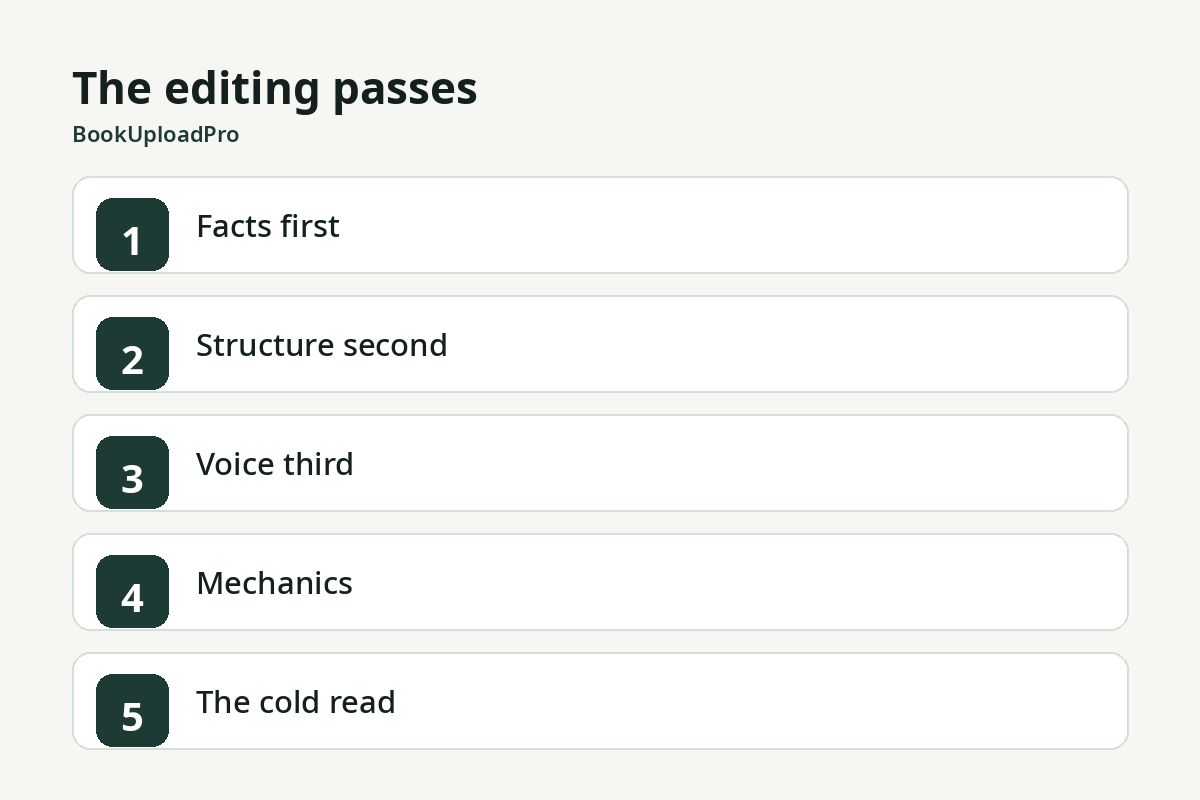
Facts first, because there is no point polishing a falsehood: check every statistic, date, name, quote, and instruction against a real source, the discipline detailed in our accuracy guide. Structure second: read only the first and last paragraph of each chapter in sequence and confirm the book argues in a straight line; move or cut the sections that repeat a point an earlier chapter already made, since generated books restate themselves with great confidence. Voice last: read aloud, cut the filler phrases and throat clearing, replace generic examples with your real ones, your clients, your kitchen, your numbers, because specificity is what a reader is paying a named author for. Then the mechanical pass: consistency of terms and headings, formatting, and the front and back matter the generator did not write for you.
The readiness test
A manuscript is ready when it passes five checks. One, verification: you could defend every factual claim in it, out loud, to a skeptic. Two, coverage: each chapter delivers what the outline and the book’s description promise, and the description promises nothing the book lacks. Three, freshness: a cold reader, ideally a beta reader in the audience, finishes it without reporting confusion or deja vu. Four, compliance: you know what you must disclose at upload, AI generated content is declared where the store asks, which our generated versus assisted guide explains. Five, ownership of the text: you have edited enough that the book is yours in substance, your expertise, your examples, your judgments, not a lightly seasoned printout. Fail any check and the book is a draft with good formatting. The workflow that gets a book to this point is laid out here.
FAQ
How much editing should I expect to do on an AI generated first draft?
Substantial editing, comparable to a human first draft: at minimum a fact checking pass, a structure pass for drift and repetition, and a voice pass to replace generic material with your own. Plan on hours per chapter for a book you intend to sell under your name.
How do I know when an AI generated manuscript is ready to publish?
When every claim is verified, every chapter does the job the outline set, a cold reader finishes without confusion or repetition fatigue, your store disclosures are handled, and the text carries your expertise and examples rather than generic filler. If you would not defend a page out loud, it is not ready.