
In this guide
- Expanded Distribution, the royalty reality
- The channel test that settles arguments
- FAQ
- What is the best marketing channel for a cookbook compared with a planner or journal?
- Why does Amazon keep spending my whole ad budget before noon?
- Do I get paid separately for each Amazon marketplace or in one combined payment?
- Does a higher price hurt my chances of being discovered on Amazon?
- How are royalties from Expanded Distribution sales paid, and are they slower than normal ones?

Cookbooks sell with their eyes and planners sell with their promise, so their best channels differ. A cookbook’s strongest channels are visual and searchable: short cooking video and photo platforms where one recipe can travel, plus Amazon search itself, because dinner intent is typed into search bars nightly. A planner’s buyers shop outcomes and seasons, so its best channels are goal and productivity communities, New Year and back to school moments, and visual platforms where the inside pages do the selling. Both reward a look inside made visible; they differ in which feed and which moment:
Key takeaways:
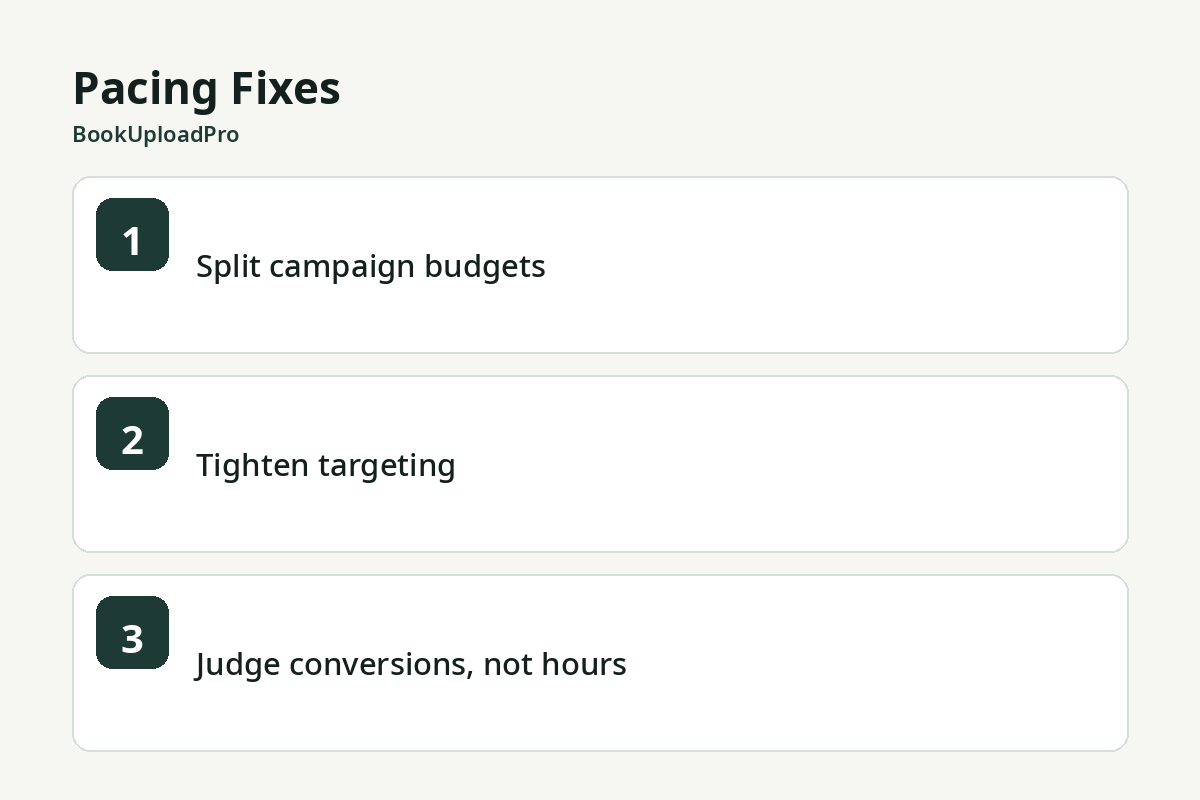
- Your ad budget is gone by noon because Amazon Ads paces against the daily cap, not your intentions: strong morning competition and loose targeting spend the cap in the high traffic hours. Fixes are structural: split campaigns by purpose so one hungry campaign cannot eat the shared budget, tighten targeting, use dayparting or scheduled rules where available, and judge by conversions, not by how long the money lasted:
- KDP pays per marketplace in earnings but settles efficiently: royalties are calculated per store and paid about 60 days after the month of sale, arriving as payments per marketplace currency arrangements you have set up, not one merged global check by default.
- Price affects discovery through conversion, not through a price penalty in the algorithm: a higher price that your page converts at is safe, while a higher price that tanks your click to buy rate will quietly cost you rank:
Expanded Distribution, the royalty reality
Print books in Expanded Distribution earn a lower royalty rate on those sales (the trade channel takes its cut through the wholesale discount), and yes, reporting and payment for those copies run on the trade’s slower rhythm, commonly appearing later than your Amazon store sales. It is reach money: bookstores and libraries you could not otherwise touch, priced accordingly:
The channel test that settles arguments
Give each candidate channel one book, one landing experience, and a fixed small budget or fixed hours, and compare sales per effort after a month. Authors routinely discover their assumed channel was a hobby and the neglected one was the business:
FAQ
What is the best marketing channel for a cookbook compared with a planner or journal?
Cookbooks: visual recipe content and Amazon search, where food intent is constant. Planners: outcome driven communities and seasonal moments (New Year, school terms), with inside page visuals doing the persuading. Match the channel to how each buyer shops.
Why does Amazon keep spending my whole ad budget before noon?
Because the daily cap is spent as auctions are won, and morning competition plus broad targeting wins fast. Split campaign budgets, tighten targets, use scheduling controls where available, and optimize for conversion rather than spend duration.
Do I get paid separately for each Amazon marketplace or in one combined payment?
Royalties accrue per marketplace and are paid per marketplace arrangements (currency and bank setup per store region), roughly 60 days after the month of sale. It is several coordinated payments, not one combined global payment.
Does a higher price hurt my chances of being discovered on Amazon?
Only through conversion. Amazon rewards listings that turn views into sales; if your page converts at the higher price, discovery holds, and if the price collapses conversion, visibility follows it down.
How are royalties from Expanded Distribution sales paid, and are they slower than normal ones?
They are paid through KDP on a lower royalty rate (the wholesale channel’s cut) and yes, they typically report and settle more slowly than direct Amazon sales, reflecting trade distribution timelines.