
In this guide
- The chapter map, the tool that prevents most of it
- Rewriting the generic and the padded
- FAQ
- How do I fix repetitive phrases and filler that AI keeps generating?
- How do I stop AI from using the same transition words in every paragraph?
- What should I do when AI repeats the same points in every chapter?
- Can AI help me rewrite sections that sound too generic or padded?
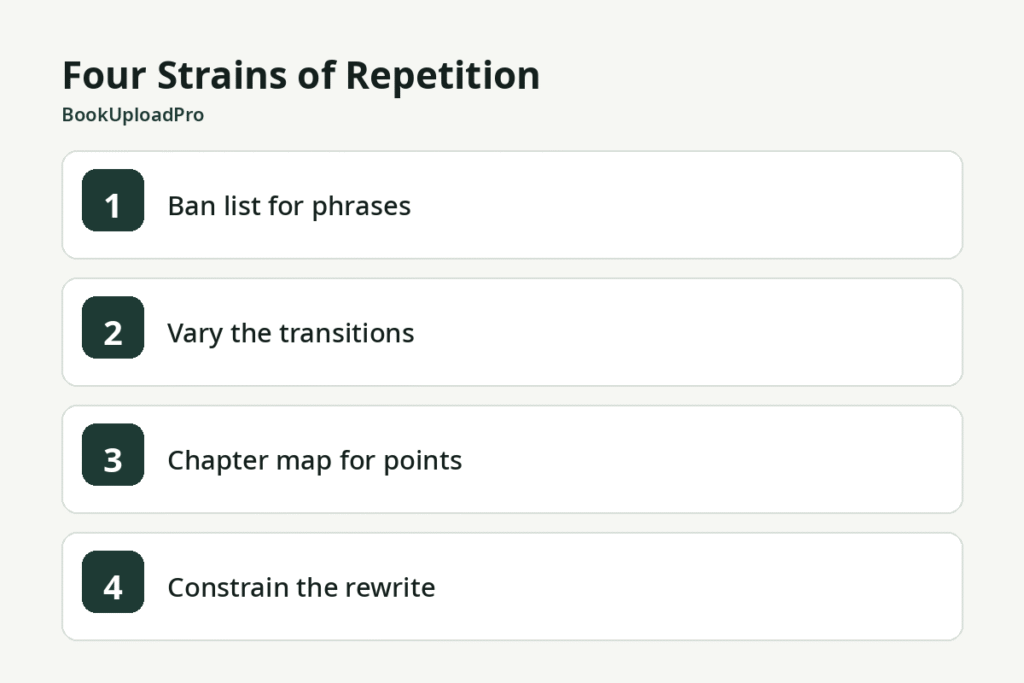
Repetition is how readers detect AI writing, and it comes in four distinct strains, each with its own fix. Phrase level repetition (the same sentence shapes and pet phrases) yields to a ban list: collect the offenders from your draft, furthermore, moreover, it is important to note, in today’s fast paced world, and put them in the project instructions as forbidden, then run a find pass for each before publishing. Transition monotony (every paragraph opening with the same two or three connectors) yields to structural variety: brief the model to vary paragraph openings among statement, question, example, and concession, and edit the survivors by hand, because transitions are cheap to fix in the editing pass.
Key takeaways:
- Chapter level repetition has a different cause: each chapter was generated without memory of the others, so the model re explains the core idea every time. The fix is a chapter map that assigns each point one home chapter, plus a short previously covered list pasted into each new chapter’s brief.
- Padded and generic sections rewrite best with constraints, not complaints: give the model the section, the specific reader, a concrete example to include, and a length shorter than the original, and it tightens.
- Your own final pass is non negotiable: read the manuscript aloud or on paper, because repetition is far more visible to the ear and the printed page than on screen.
The chapter map, the tool that prevents most of it
Before drafting, write one line per chapter: the single point that chapter owns. During drafting, include the map in every brief with the instruction to reference earlier points in one sentence, never re teach them. During editing, search for your book’s five key phrases and count their appearances per chapter; any chapter repeating another’s core explanation gets a surgical cut down to a cross reference. This is bookkeeping, not talent, and it is the difference between a manuscript that feels written and one that feels generated in slices.
Rewriting the generic and the padded
Generic text is text that could appear in any book on the topic; the antidote is always specificity. Rewrite prompts that work: replace every abstract claim with the named example from my notes; cut this section by a third, keeping only what a reader in (exact situation) needs; rewrite for a reader who already knows (basics), skipping all background. Then replace what the model cannot know: your stories, your numbers, your failures. A section that survives those three passes stops sounding like everyone else’s book.
FAQ
How do I fix repetitive phrases and filler that AI keeps generating?
Build a ban list from your own draft’s offenders, forbid them in the project brief, and run a find pass for each phrase before publishing. Then edit the survivors by hand; phrase repetition is the cheapest flaw to remove and the most telling to leave.
How do I stop AI from using the same transition words in every paragraph?
Brief variety explicitly (vary openings among statement, question, example, concession), forbid your top offenders, and fix the rest in the editing pass. Transitions are surface texture; ten minutes per chapter transforms it.
What should I do when AI repeats the same points in every chapter?
Use a chapter map: assign each point one home chapter, paste a previously covered list into each new chapter brief, and in editing cut re explanations down to one sentence cross references. The cause is chapters generated without memory; the cure is bookkeeping.
Can AI help me rewrite sections that sound too generic or padded?
Yes, with constrained prompts: name the exact reader, demand a specific example, and require a shorter length than the original. Then inject what no model has, your own stories and numbers, which is where generic actually dies.