
In this guide
A backlist audit is one deliberate pass over every book you have published, checking the files, the metadata, the prices, and the live listings on every store against what they should be. Books drift: a price changed on one store and not the others, a corrected file reached Amazon but not Kobo, an old bio survives somewhere. The audit finds the drift while it is cheap to fix. You need one catalog sheet, a few hours for a small catalog, and a rule: fix the books that sell first, and write down everything you find before you start changing anything.
Key takeaways:
- The audit has four layers per book: the master record, the files, the prices, and the live listing on each store. Compare each layer against the record.
- One catalog sheet answers the pen name question too: a row per book with a pen name column, its formats, ISBNs, series, and stores.
- A light listing check a few times a year and a full audit about once a year, or at each new release, keeps a catalog honest without becoming a second job.
The audit, step by step
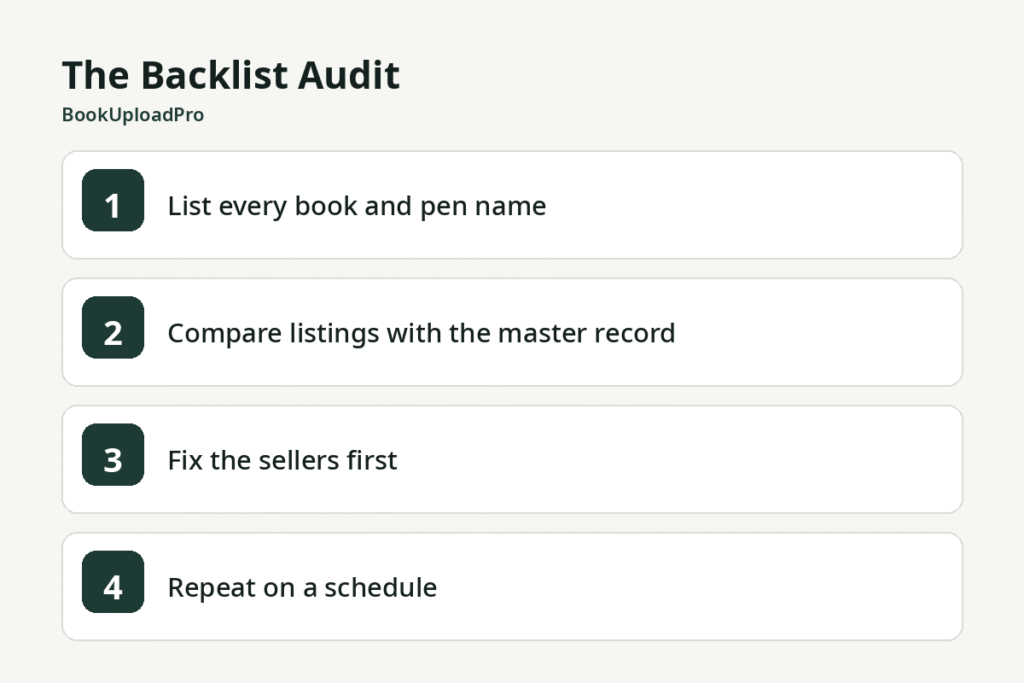
Start with the inventory: list every book, including the ones you would rather forget, with its pen name, series and position, formats, and the stores it sells on. Then compare, book by book: does the live listing on each store match your master record for title, subtitle, series, author name, description, and price? Is the file on sale the latest corrected version everywhere? Are the royalty option and price still the ones you would choose today? Log every mismatch in the sheet with the store named, then fix in earning order: the books making money get corrected today, the quiet ones join a weekly fix list. Our guide to keeping listings consistent across stores is the standard the audit checks against.
Keeping pen names straight
Pen names tangle when they live in your head. Give the catalog sheet a pen name column and never leave it blank: every book belongs to exactly one name, in one correct spelling, and the sheet is the authority when a store form asks. Keep each pen name’s author page and bio in the same sheet, and check in the audit that each book sits under the right name on each store, because a book filed under the wrong pen name is invisible to that name’s readers and awkward to move later. For a large catalog the same sheet, filtered by pen name, becomes each name’s own list.
How often to audit
Two rhythms work. A light check, a few times a year: scan the live listings of your selling books for price and description drift, broken series order, and any store notice you missed. A full audit, about once a year or whenever you launch a new book into a series: every book, every store, files included. Also audit after any platform wide change, a fee change, a royalty change, a store redesign of series pages, because platform changes are when listings quietly break. Between audits, the monthly royalty routine catches the money side of drift, since a price error shows up in the numbers.
FAQ
What is a backlist audit and how do I do one for my whole catalog?
It is a structured check of every published book: list the whole catalog in one sheet, then for each book compare the live listings on every store with your master record, confirm the current file is the one on sale, and check prices and royalty settings. Log every mismatch first, then fix in the order the books earn.
How do I keep track of which books belong to which pen name as my catalog grows?
Keep one catalog sheet with a pen name column for every book, in one exact spelling per name, alongside series, formats, ISBNs, and stores. Treat the sheet as the single authority and verify during each audit that every book sits under the right name on every store.
How often should I audit my listings across platforms for errors?
A light check of your selling books a few times a year, and a full catalog audit about once a year, at a new release, or after any platform change that touches listings or royalties. Drift is normal; the schedule is what keeps it small.