
In this guide
A pen name is a branding tool with a privacy side effect, and it should be chosen like one. The honest ledger: in favor, privacy and safety for authors with day jobs, families, or sensitive topics; a name fitted to the genre’s shelf, pronounceable, searchable, and free of another author’s shadow; a clean separation when you write in two distant genres, so romance readers are not served your tax guides; and freedom to fail in public while learning. Against: promotion friction, since interviews, local media, and your existing network attach to a person and you are now two people; doubled platform work if the separation is strict, two websites and two social presences; a split audience that cannot easily follow you across genres; and a small but real tax and estate complexity, all manageable, none free. The mechanics are simpler than the decision: your KDP account, payments, and tax records always sit in your legal name; the pen name is simply what the author field says.
Key takeaways:
- Default recommendation: real name for nonfiction authority building, where your face and credentials are the marketing; pen name is genuinely useful for fiction genres with strong name conventions, privacy needs, or a name that clashes badly with the shelf.
- One pen name per genre world is the sustainable ceiling for most authors; three personas is a workload, not a strategy.
- Choose the name like a domain: say it aloud, search it, check it is not a working author’s name in your genre, and keep it pronounceable for the audiobook credits and the podcast introduction.
Finished the first novel: what now
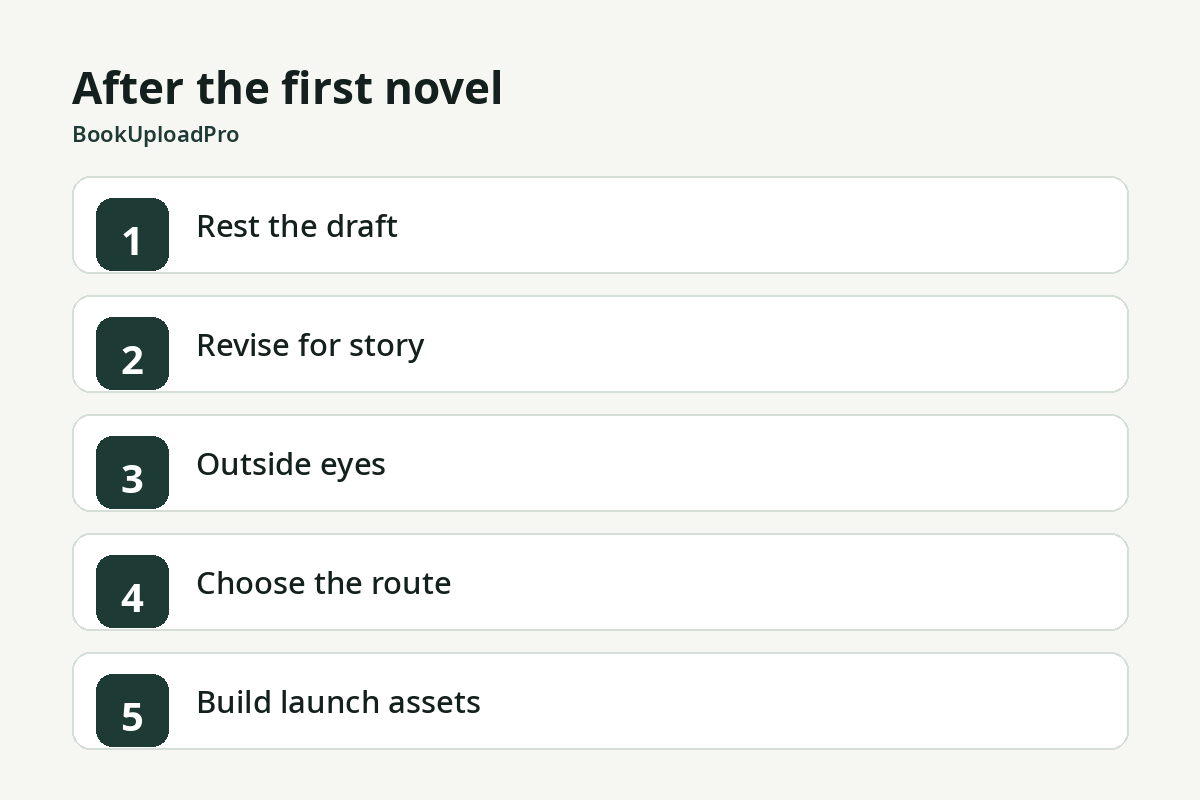
Not publishing, not yet. The sequence that protects the book: rest it, weeks not days, until you can read it as a reader; revise for story before sentences, structure, scenes that earn their place, an ending that pays the opening’s promises; outside eyes, beta readers from your genre or a developmental editor, because you cannot see your own blind spots; then decide the road, self publish or query, with eyes open about what each demands of you; and while the book is with readers or an editor, build the launch assets, because publication day is too late to start an audience. This is true whether the next draft came from your hands alone or with AI assistance along the way; the standards at the gate are the same, and the catalog thinking that makes a second book pay starts now. When the manuscript is final, the formatting choice for print and ebook is its own small decision. And give its metadata the same care as a nonfiction launch.
The decision, made once
Whichever name goes on the cover, decide it before the cover, the author page, and the ISBN records exist, because changing identity mid catalog costs more than either choice does. Document the pen name’s ownership somewhere private and durable, use it consistently on every book in its world, and let the question close. Authors lose more to dithering over the name than the name ever cost anyone.
FAQ
Should I publish under a pen name, what are the pros and cons?
Pros: privacy, a genre fitted searchable name, separation between distant genres, freedom to learn in public. Cons: promotion friction, possible doubled platform work, a split audience, minor administrative complexity. Choose a pen name when privacy or genre fit is a real factor; choose your real name when your authority and network are the marketing engine, as in most nonfiction.
I have finished my first novel, what should I do now?
Rest it, revise structurally, get outside readers or an editor, then choose self publishing or querying deliberately, and build launch assets while the book is in other hands. Do not upload the first draft: the gap between finished and publishable is where books are made, and skipping it is the most common first novel mistake.