Launch Momentum Optimization to Sustain Book Sales
Launch momentum optimization: Keep your book selling long after day one
Estimated reading time: 9 minutes
Key takeaways
- Launch momentum optimization is about planning continuous, small actions that extend sales and visibility after the initial release.
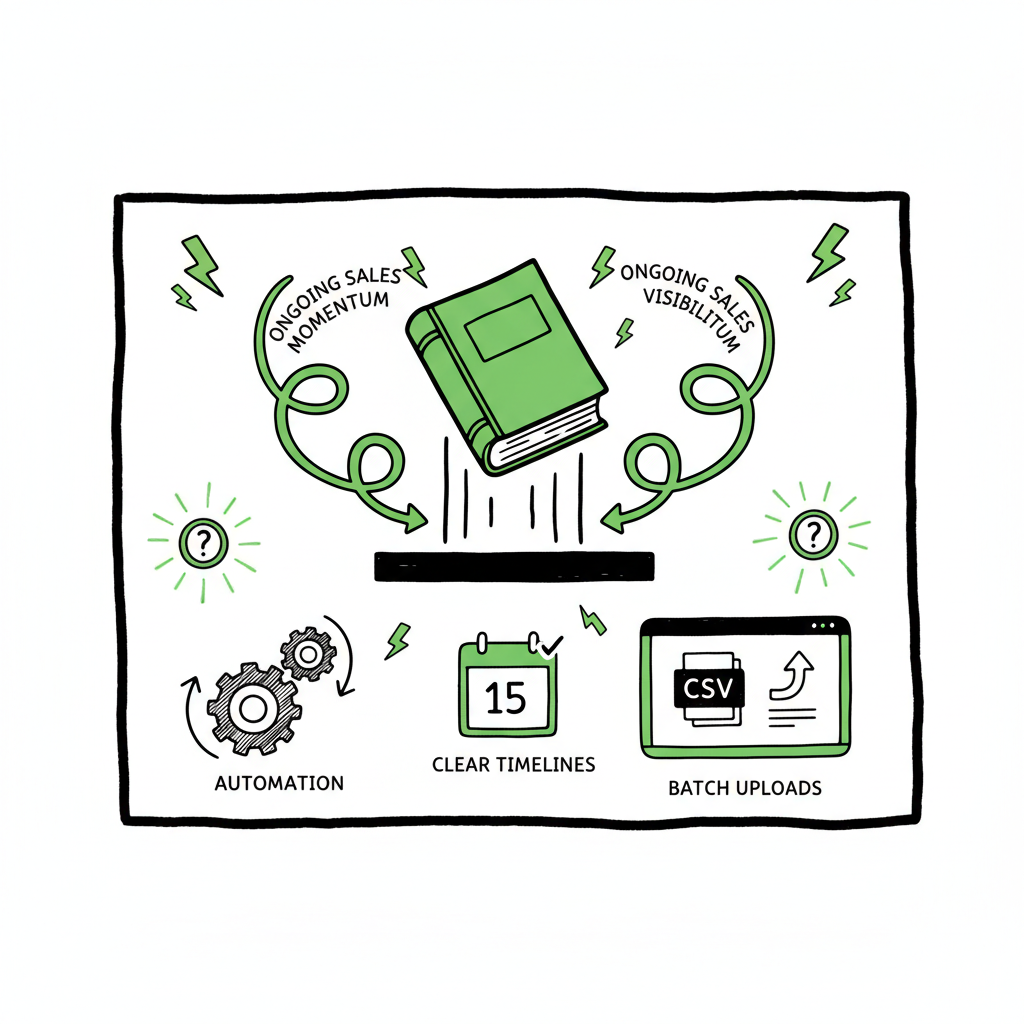
- Combine clear timelines, platform-aware tactics, and automation to scale launches without burning time.
- Tools that handle CSV batch uploads, platform-specific intelligence, and error checks make multi-platform distribution practical and repeatable.
Table of Contents
- What launch momentum optimization means for authors
- Planning momentum for a multi-platform launch
- Automating the launch: practical actions
- Frequently asked questions
What launch momentum optimization means for authors
Launch momentum optimization is a practical approach: get your book off to a strong start, then keep nudging visibility with measured actions over days and weeks. For self-publishers this matters because most discoverability gains occur after the first few weeks. The phrase itself borrows logic from other fields where sustained effort after an initial push creates compounding gains.
Think of a launch like rolling a heavy ball. The big push on day one sets velocity. Momentum optimization is the set of small pushes you schedule for the next 30–90 days so the ball keeps rolling toward steady sales rather than stopping after a spike.
If you want a step-by-step launch plan to pair with this approach, our Book Launch Strategy Practical Guide walks through the timeline and tasks that produce steady gains early in a campaign.
Planning momentum for a multi-platform launch
Momentum starts with a simple calendar. Break launch activity into short, repeatable blocks: pre-launch (4–6 weeks), launch week, and the momentum window (30–90 days). Assign specific goals for each block: pre-orders and reviews before release, visibility spikes during launch week, and attention-sustaining actions during the momentum window.
Key components for that calendar
- – Platform-aware timing: Amazon, Apple Books, Kobo, Draft2Digital, and Ingram each respond to different inputs (price changes, promo setup, metadata updates). Schedule tasks so each platform gets optimized signals at the right time.
- – Content drip: Plan small content drops—newsletter mentions, social posts, author interviews, or bonus short reads—that feed reader interest without overwhelming you.
- – Review and outreach cadence: Ask for reviews early and gently follow up. A steady stream of honest reviews over weeks helps algorithms and new readers.
- – Pricing and promos: Use price testing in week two and week four. A short, targeted promotional price can renew attention after the launch spike.
Make production practical at scale
If you produce multiple formats—ebook, paperback, or wide-distribution files—build a book creation workflow that avoids rework.
For example, a clean manuscript that converts properly to EPUB reduces delays and errors on most platforms. If you need reliable conversion, a dedicated EPUB converter can cut formatting friction and let you focus on distribution.
Design and assets matter too. A strong, platform-ready cover reduces rejection risk and improves click-through. If you’re creating covers or batch-processing assets, consider an automated cover generator that handles required specs and exports for each store.
Automating the launch: practical actions
Momentum planning is only useful if you can execute it without spending all your time on uploads and manual checks. The multiplier effect comes from repeating this plan consistently across titles and formats over time.
What to automate first
- – Bulk metadata uploads: Use CSV batch uploads to push titles, descriptions, pricing, and categories to multiple platforms. This saves hours per title and eliminates transcription errors.
- – File conversion and validation: Automate EPUB conversion and validation so you catch problems before platform review. That avoids delay and maintains schedule.
- – Distribution and tracking: Automate where possible, but keep manual checks on first-time listings or platform-specific quirks.
Frequently asked questions
Q: How soon should I start momentum actions after release?
A: Start within 24–48 hours. Early actions—reviews, small paid promos, new social posts—help reinforce the launch signal. Then plan regular, smaller actions across the first 30–90 days.
Q: Can I keep momentum without ads?
A: Yes. Ads help, but consistent organic signals—reviews, price testing, newsletter activity, and platform-aware updates—also sustain momentum. Ads are a force multiplier when paired with those basics.
Q: What formats should I prioritize for momentum?
A: Ebook and paperback first. Make sure your ebook is validated as a clean EPUB and that your paperback files meet each printer’s specs. If you need to convert or validate EPUB reliably, using an EPUB converter reduces delays and keeps your schedule.
Q: Do I need separate covers for each platform?
A: Not always; you can often use the same cover with resized thumbnails and wrap adjustments. A batch cover processor simplifies this by exporting platform-ready files.
Q: How does batching multiple books change the approach?
A: Batching scales the importance of automation. CSV batch uploads and platform-aware automation let you maintain consistent momentum across several titles without multiplying work.
Sources
- Momentum Technique in Deep Learning
- What is Momentum? | Activeloop Glossary
- Introduction to neural network optimizers [part 1] – momentum optimization
- Momentum – Optimization Wiki
- Why Momentum Really Works – Distill.pub
- Intro to optimization in deep learning: Momentum, RMSProp and Adam
Final thoughts
Launch momentum optimization is less about secrets and more about discipline: a clear schedule, repeatable tasks, and tools that remove friction. When you combine platform-aware planning with automation—CSV batch uploads, format converters, and error checks—you move from one-off launches to a reliable publishing engine.
Try the system rather than recreate it yourself. Automating uploads and getting platform-specific validation lets you spend time on writing and promotion instead of repetitive clicks.
BookUploadPro free trial — visit BookUploadPro.com to start automating multi-platform publishing today.
Launch momentum optimization: Keep your book selling long after day one Estimated reading time: 9 minutes Key takeaways Launch momentum optimization is about planning continuous, small actions that extend sales and visibility after the initial release. Combine clear timelines, platform-aware tactics, and automation to scale launches without burning time. Tools that handle CSV batch uploads,…