
In this guide

The experts who earn from books are rarely the ones who know the most; they are the ones whose knowledge is already organized by their work. A home baker’s knowledge arrives pre sorted: recipes tested at real ovens, substitutions learned from real failures, seasonal rhythms, and the questions friends always ask. That maps to two natural products. A cookbook sells your results, the recipes themselves with your voice and your fixes, and earns best when the niche is tight (sourdough for small kitchens, not baking). A recipe journal sells your system: part guided template buyers fill with their own bakes, part your reference charts, conversions, and troubleshooting pages, and it is faster to make, giftable, and part of a series. Many bakers publish the journal first to build the audience, then the cookbook to monetize it:
Key takeaways:
- Choose by what your buyers already ask you for: questions about your recipes point to a cookbook; questions about how you organize, track, and fix point to a journal or planner.
- The trainer’s three options serve three different buyers: a workout log serves clients and gym goers who train already, a fitness planner serves beginners who need structure and motivation, and a full training guide serves readers who want your method. They are a ladder, not rivals:
- Income follows the backlist shape: one book sells a trickle; a small series in one niche, cross linked and consistently branded, compounds:
The trainer’s decision, in order
Start with the log if your audience is your client base: it is the quickest to produce, your clients buy it because it carries your programming structure, and it puts your brand in gyms you never visit. Publish the planner when you want the beginner market, because beginners buy guidance and adherence tools, and a planner with your check ins, habit pages, and progression rules is a coaching product in paper form. Write the full training guide last and price it highest: it is the authority asset that makes the other two sell better and that speaking, coaching, and course offers hang from. Each book also feeds the others through back matter and series pages:
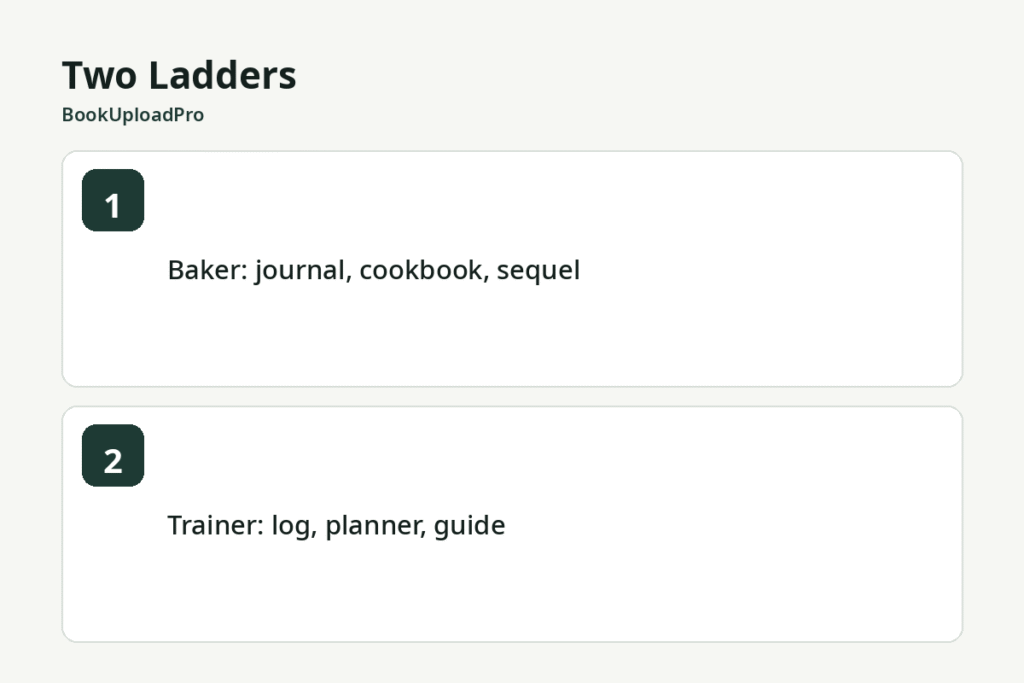
The baker’s version of the same ladder
Journal or log style first (a baking journal with your charts and troubleshooting woven in), then the focused cookbook, then the seasonal or advanced sequel. At each step your existing life supplies the marketing: the bakes you already make are the content calendar, photographed as you go: The principle underneath both careers: publish the book your daily work has already outlined, in the order your audience’s questions suggest, and the catalog builds itself out of knowledge you were giving away free.
FAQ
As a home baker, how can I turn what I know into a cookbook or recipe journal that earns income?
Sort what people ask you: recipe questions point to a tight niche cookbook of your tested recipes with your fixes; organization and tracking questions point to a recipe journal carrying your charts and troubleshooting. Many bakers publish the journal first for speed and audience, then the cookbook.
As a personal trainer, should I publish a workout log, a fitness planner, or a full training guide?
In ladder order: the log for your existing trainees (fastest, brand in every gym bag), the planner for beginners who buy structure and adherence, and the full guide as the premium authority book that lifts the other two. Each serves a different buyer, so the answer is sequence, not choice.