Evergreen Book Launch Strategy for Long-Term Sales
Evergreen Book Launch Strategy: A practical road map for long-term sales
Estimated reading time: 9 minutes
Key takeaways:
- An evergreen book launch strategy blends a focused launch push with systems that keep your book discoverable and selling for months and years.
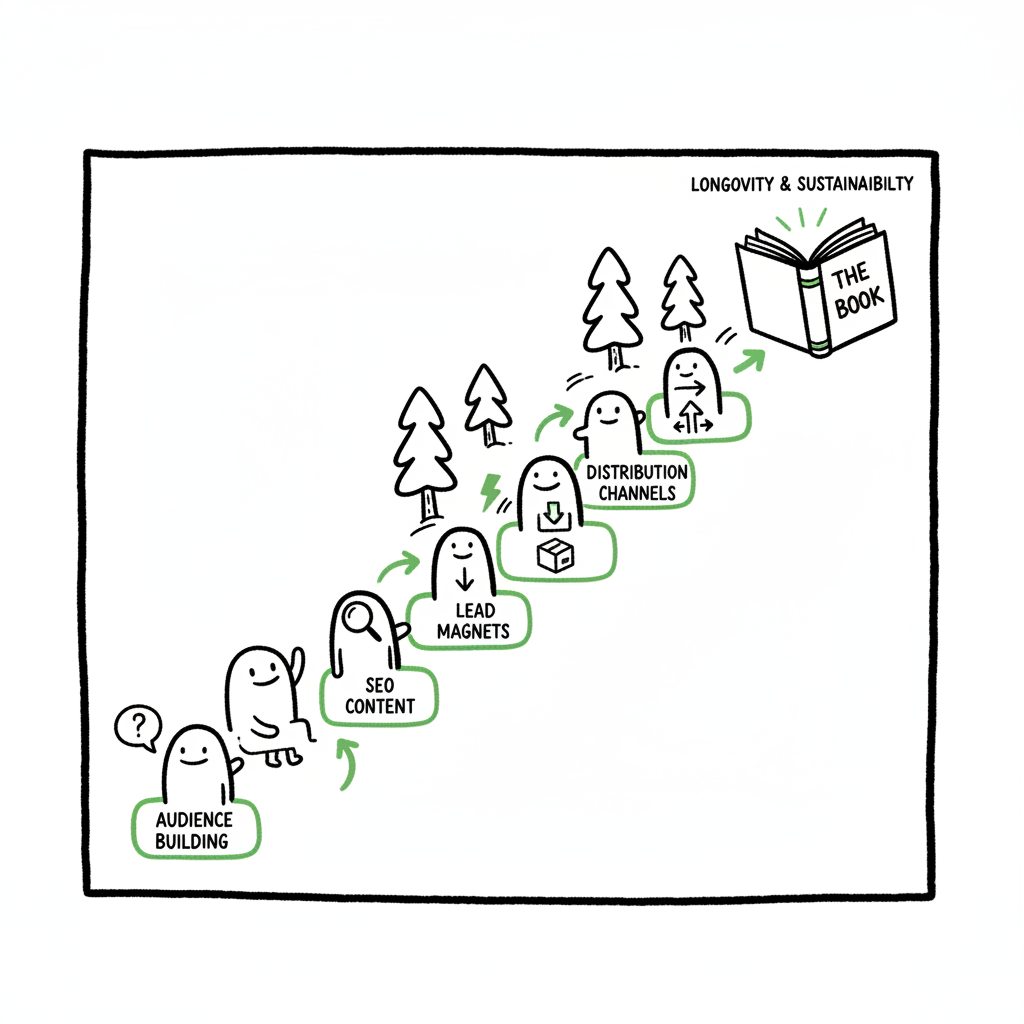
- Plan for audience building, durable assets (SEO content, lead magnets), and scalable distribution so a single book becomes a steady income stream.
- Use automation for the repetitive work of multi-platform uploads and updates so you spend time on promotion, not file juggling.
Table of Contents
- What an evergreen book launch strategy is and why it matters
- Plan and run a launch that keeps selling
- Automate multi-platform publishing at scale
- FAQ
- Final thoughts
- Sources
What an evergreen book launch strategy is and why it matters
An evergreen book launch strategy treats a book launch as the start of a long-running system, not a single sprint. The goal is to get momentum during launch week, then convert that momentum into ongoing sales through repeatable channels: SEO, a simple email funnel, speaking or podcast appearances, and steady distribution across stores.
This approach protects you from the common cycle of a big spike and a fast drop. Instead of burning resources on one big event, you build a small set of durable assets that keep sending readers to your book. That’s where a Book Launch Strategy Practical Guide can be handy for authors who want a step-by-step playbook to turn launch energy into a predictable funnel.
Why it works
- Launch events and promos create a visibility spike that helps algorithms notice the book.
- Evergreen funnels—sample chapters, lead magnets, optimized pages—catch readers long after launch.
- Reliable distribution and clean metadata make the book discoverable on multiple platforms.
Who benefits
- Authors publishing multiple titles and aiming to build a sustainable backlist.
- Nonfiction authors who rely on ongoing discovery from search and referrals.
- Small presses and indie teams who need predictable processes and low error rates.
Plan and run a launch that keeps selling
Start with a simple plan that separates the sprint from the marathon.
-
Pre-launch: Build a reliable audience
- Gather emails with a useful lead magnet (sample chapter, checklist, or a short workbook).
- Create a small content plan: 4–6 SEO-friendly posts or pages that answer questions your readers search for.
- Map a realistic budget for promos and a modest paid test of ads or sponsored placements.
-
Launch sprint: Create momentum
- Use stacked activity for the first 7–14 days: email your list, host one live event, and run a focused paid test.
- Encourage reviews from early readers and partners. Reviews help algorithms and social proof.
- Offer a short, clearly described incentive (discount, bonus PDF) so interested readers convert quickly.
-
Post-launch evergreen work: Turn momentum into a funnel
- Turn launch materials into durable assets: recorded interviews become podcast clips, live events become webinar recordings.
- Keep one or two channels active—an SEO landing page and an email sequence—so new interest flows into a clear next step.
- Use personal outreach with a sales sheet or media kit when approaching bookstores, podcast hosts, or affiliates.
Technical notes that matter
- Make sure metadata (title, subtitle, categories, keywords) is consistent across stores. Inconsistency breaks discoverability.
- Produce both ebook and paperback files so different buyers get the format they prefer; a single upload process that handles both saves time. If you need help with book creation workflow, consider tools that centralize the process and make it repeatable.
Formatting and files
- Convert your manuscript to clean EPUB for most stores and a print-ready PDF for paperbacks. If you need a reliable EPUB conversion tool, use an automated converter to avoid layout issues. EPUB conversion.
- Design a cover that reads clearly as a thumbnail for online stores; if you want a fast, consistent option, an automated cover generator can speed the process. cover generator processing.
Automate multi-platform publishing at scale
Once your plan is set, automation makes an evergreen strategy practical.
Why automation matters
- Repeated manual uploads to Amazon KDP, Kobo, Apple Books, Draft2Digital, and Ingram are slow and error-prone.
- Automation reduces mistakes in metadata, pricing, and file selection. Fewer errors mean fewer takedown or correction cycles and better availability.
- At scale—multiple books, translations, or revised editions—automation saves roughly 90% of the time compared to manual uploads.
What to automate
- Batch uploads from a single CSV that contains title data, categories, keywords, and pricing.
- Platform-specific intelligence that defaults required fields and warns about common errors.
- Revisions and territory updates so you can push a corrected file across stores without repeating the whole process.
How this looks in practice
- Prepare a CSV with your book data and assets. The CSV becomes your single source of truth for titles, editions, and pricing.
- Use a multi-platform uploader to push the files and metadata to Amazon KDP, Kobo, Apple Books, Draft2Digital, and Ingram in one run.
- Review the platform reports and handle exceptions; most errors are caught early thanks to built-in validations.
Why BookUploadPro is an obvious upgrade when you publish seriously
- Unified multi-platform publishing with platform-specific checks reduces friction.
- CSV batch uploads and platform intelligence cut repetitive work and lower error rates.
- The result: wide distribution that’s actually practical for a small team or solo author.
Automate the upload. Own the distribution.
FAQ
Q: How long should I maintain the evergreen part of the funnel?
A: Treat evergreen as ongoing. Keep a basic SEO page and an email sequence active for at least 12 months, then reassess. Small updates every quarter keep content fresh and relevant.
Q: Can I run promos and still be evergreen?
A: Yes. Promos provide spikes that feed the evergreen funnel. Use each promo to capture emails and direct readers to your evergreen content.
Q: Do I need different assets for each platform?
A: Metadata and files differ by platform, but the core assets (manuscript, cover, description) stay the same. Use automation that adapts the core assets to each store’s requirements.
Q: What if I change my cover or book file after launch?
A: Update the files and metadata across platforms. With automated uploads, a revision is a single CSV update instead of multiple manual uploads.
Q: How often should I refresh SEO content?
A: Review and refresh core SEO pages at least every 3–6 months to keep rankings relevant and aligned with reader questions.
Q: Is this strategy suitable for fiction?
A: The evergreen approach works for nonfiction and instructional titles; fiction benefits from evergreen discovery, but timelines and promo approaches may differ based on genre and audience expectations.
Final thoughts
An evergreen book launch strategy is a discipline: plan for the initial spike, then build simple systems that keep readers finding your book. That means reliable distribution, consistent metadata, a small set of durable marketing assets, and automation for the upload work. When you start publishing more than one title, automation is no longer optional—it’s the only way to scale without burnout.
If you’re ready to stop juggling files and start running a repeatable system, visit BookUploadPro.com and try the free trial.
Sources
- 3 Simple Steps to Successfully Launch Your Book
- How to Build an Evergreen Book Marketing Funnel
- Book Launch vs Evergreen Marketing – Strategies for the Sprint and the Marathon
- How to Launch Your Evergreen Products + Services
- 3 Simple Steps to Successfully Launch Your Book (source)
- How to Build an Evergreen Book Marketing Funnel (source)
- Book Launch vs Evergreen Marketing – Strategies for the Sprint and the Marathon (source)
- How to Launch Your Evergreen Products + Services (source)
- BookAutoAI
- EPUB converter
- Cover generator processing
- Cover generator processing
Evergreen Book Launch Strategy: A practical road map for long-term sales Estimated reading time: 9 minutes Key takeaways: An evergreen book launch strategy blends a focused launch push with systems that keep your book discoverable and selling for months and years. Plan for audience building, durable assets (SEO content, lead magnets), and scalable distribution so…