Book Launch Without Ads Practical Plan for Authors
Book launch without ads: a practical path to steady sales
Estimated reading time: 9 minutes
Key takeaways
- You can build a reliable book launch without ads by focusing on discoverability, email, and platform optimization.
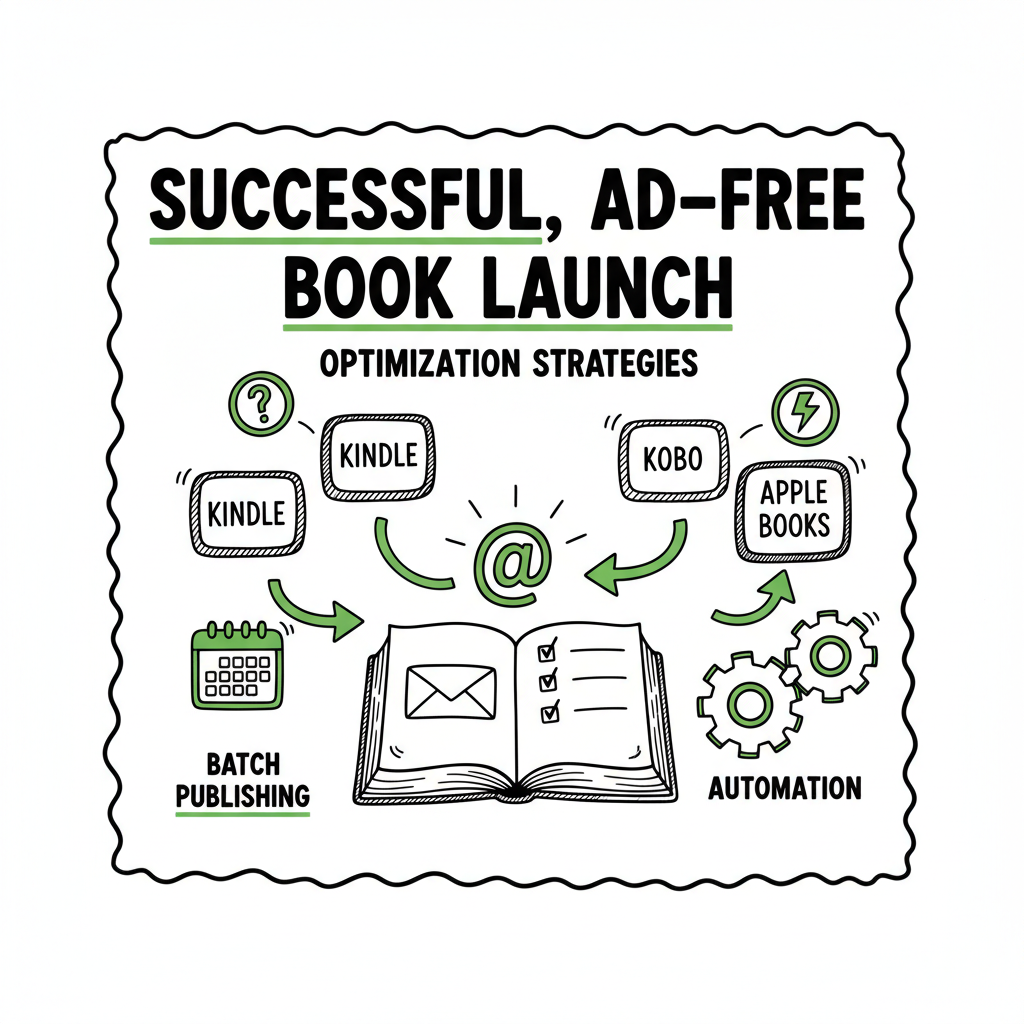
- Automation and batch publishing make ad-free strategies scalable and repeatable across Kindle, Kobo, Apple, and more.
- Once you publish seriously, a multi-platform upload service saves time, reduces errors, and makes wide distribution practical.
Table of Contents
- Why a book launch without ads works
- Plan, publish, and be discoverable
- Optimize listings, reviews, and early momentum
- Scale with multi-platform automation
- FAQ
- Final thoughts
- Sources
Why a book launch without ads works
The most sustainable launches don’t depend on paid traffic. A book launch without ads focuses on organic discovery—search visibility, category positioning, email subscribers, and repeatable distribution tactics. Early readers, category rank, and consistent availability across platforms produce ongoing sales that compound. That’s why authors who publish multiple titles often earn more over time than one-off paid campaigns.
If you want concrete guidance on structuring a launch calendar and process, the Book Launch Strategy Practical Guide is a concise reference many teams use as a starting point for planning repeatable, ad-free launches.
Plan, publish, and be discoverable
Start with niche and intent. Pick topics or genres where readers actively search and buy, then shape your book’s angle to match those queries. On Amazon and other stores, discoverability is driven by metadata: title, subtitle, categories, and long-form description. Optimize these with clear keywords and benefits, not buzzwords.
Build an email list before launch. Turn a sample chapter, checklist, or flipbook into a lead magnet and collect subscribers who want your next release. An engaged list replaces many paid impressions—announce the launch, offer limited-time price promotions, and request early reviews.
Make the book presentable across formats. Clean interior formatting and a professional cover reduce returns and increase conversion. If you need conversion tools or files for wide distribution, using an EPUB converter can save hours and reduce formatting errors. And when you need a polished cover quickly, a cover generator helps keep production moving without hiring outside designers.
Leverage platform-specific features. Enroll in Amazon’s programs where appropriate, enable preorders when you have enough demand, and deliver a consistent back-matter that points readers to your newsletter and other titles. Strong back-matter and a linked author page create cross-sell opportunities that feed future launches.
Optimize listings, reviews, and early momentum
Organic momentum comes from a few small, manageable actions:
- Early reader outreach: Give a copy to engaged readers in return for an honest review. Aim for quality reviews rather than volume.
- Pricing strategy: Use short, targeted price promotions to hit new bestseller lists or category ranks without long-term discounting.
- Description and buy box: Write a benefit-focused description and keep formats available (ebook, paperback, audiobook) so readers can buy in their preferred way.
- Cross-platform presence: Make the book available on Kindle, Apple Books, Kobo, Draft2Digital, and Ingram to reach readers where they shop.
Creating multiple formats helps capture different buyer behaviors. If you plan a paperback or ebook distribution, consider tools that handle batch creation and exports so you avoid repeating manual steps across platforms. For authors producing many titles, a book creation process can eliminate the typical bottlenecks that slow down launches.
Scale with multi-platform automation
A single title can take hours to upload correctly to multiple stores. When you start publishing seriously, the manual process becomes a constraint. That’s where unified multi-platform publishing pays for itself: CSV batch uploads, platform-specific intelligence, and error reduction turn a one-off launch into an engine that can support dozens of books a year.
Automation benefits that matter in an ad-free strategy:
- Time savings: Uploads and metadata mapping done in minutes instead of hours—often delivering ~90% time savings for repeat tasks.
- Consistency: The same metadata and assets across platforms reduce mistakes that hurt discoverability.
- Wide distribution: Being in all relevant stores increases the chance a reader finds you organically.
- Practical economics: Affordable pricing and a free trial make automation an obvious upgrade once authors start publishing seriously.
When scaling, keep quality checks in place. Automated systems should export clean EPUBs for stores that require them; if you use a dedicated EPUB converter, you’ll avoid rejections and layout problems. Don’t skimp on covers—use a reliable cover generator for rapid iteration, then refine the strongest options.
Operational notes that reduce friction
- Batch titles by series, theme, or keyword set so metadata reuse becomes a force multiplier.
- Standardize naming conventions and interior templates to reduce formatting edits.
- Keep a launch calendar tied to your newsletter schedule; consistent cadence trains readers to expect new books.
FAQ
Q: Can you launch a book without spending on ads and still reach readers?
A: Yes. Consistent metadata optimization, an email list, targeted price promotion windows, and wide distribution produce sustained visibility. It’s slower than paid pushes but more durable.
Q: Do I need multiple formats for an ad-free launch?
A: Multiple formats broaden reach. Many readers prefer different ecosystems; having an ebook and paperback available across platforms increases organic sales opportunities.
Q: How does automation change the launch process?
A: Automation reduces repetitive tasks—formatting, metadata mapping, and multi-store uploads—so you can publish more titles reliably and focus on promotion and writing.
Q: Where can I get tools to generate EPUBs or covers quickly?
A: There are fast conversion and cover tools that integrate into production workflows; authors often pair those with multi-platform upload services to keep quality high while moving quickly.
Q: Is a multi-platform upload service necessary for indie authors?
A: For many authors, a centralized publishing workflow reduces errors and saves significant time when distributing to multiple stores.
Final thoughts
A book launch without ads is a disciplined system: pick the right niche, optimize your metadata and listings, build an audience, and use automation to scale distribution. When you eliminate repetitive manual work, launching more books becomes practical—and the compound effect of multiple titles grows your organic income.
Automate the upload. Own the distribution.
BookUploadPro free at BookUploadPro.com — start the trial and see how multi-platform publishing speeds your launches.
Sources
- Ebook Writer AI Review: Creates 8,000-Word Ebooks in 4 …
- AI Book Generator for KDP Authors BookAutoAI vs QuickWrite
- eBook Writer AI Review
- I Used AI to Write an Entire Book
- I Tried Writing a Book using AI (Best AI Book Generator)
- This AI Robot Writes ENTIRE Books For Less Than $8!
Book launch without ads: a practical path to steady sales Estimated reading time: 9 minutes Key takeaways You can build a reliable book launch without ads by focusing on discoverability, email, and platform optimization. Automation and batch publishing make ad-free strategies scalable and repeatable across Kindle, Kobo, Apple, and more. Once you publish seriously, a…