
In this guide
A planner is a system wearing pages, and systems can be designed by beginners because the design skill is mostly restraint. Start from the day you want the buyer to have: what must they capture in the morning, see at a glance at noon, and close out at night? Sketch that day page on paper with boxes, in pencil, before touching software. Then build it in the simplest tool you can operate, a word processor with tables, a slide tool, or a template based designer, using one font, one accent, and generous white space. Every beginner mistake is addition: too many sections, decorative clutter, tiny boxes nobody writes in. Print your draft at real size and use it for three days; the fixes announce themselves:
Key takeaways:
- ADHD friendly is a set of concrete choices: one clear priority per view, large writing areas, minimal simultaneous options, visible progress, and permission structures for imperfect days. A planner that shows twelve boxes demands decisions an ADHD brain finds expensive:
- Undated beats dated for independent planners: no wasted stock when a month passes, buyers can start any time, and the guilt spiral of skipped dated pages disappears, which matters doubly for ADHD users.
- Test with the actual audience: three ADHD users with your printed prototype will teach you more than any design tutorial, especially about what they ignore.
The ADHD page, element by element
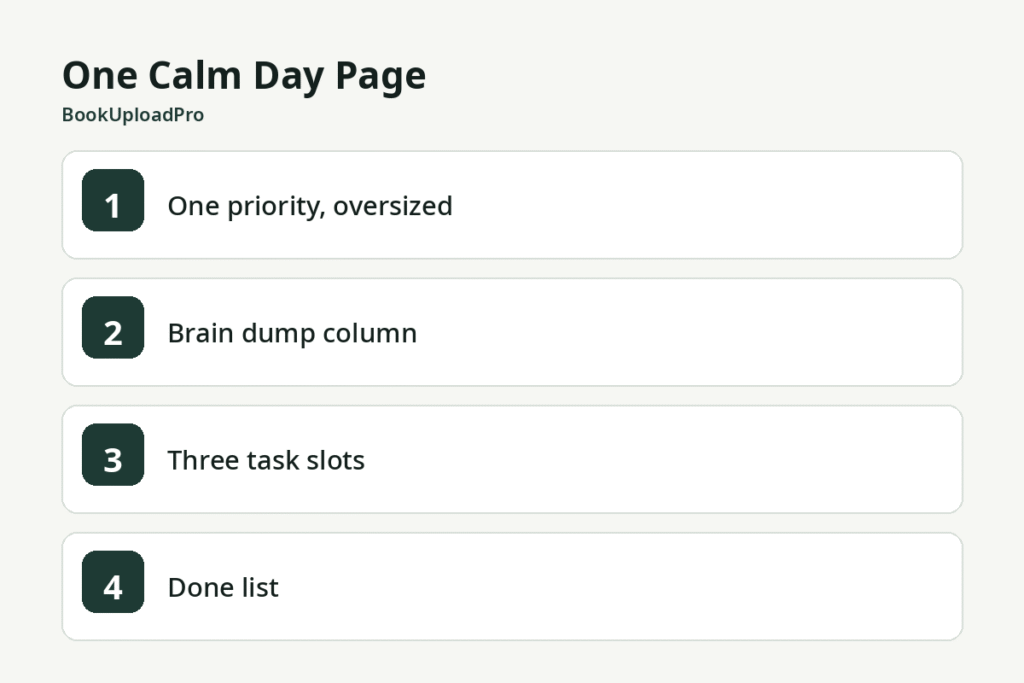
Top of the day page: one line for the day’s single most important outcome, oversized. Then a brain dump column, because externalizing the swarm is the first focus move. Time gets a simple vertical strip, not a minute grid. Tasks are capped visually (three priority slots, a parking lot for the rest) so the page cannot become an accusation. Add a dopamine line: a small done list where finished things get written and checked, because ADHD motivation runs on visible completion. Weekly pages carry a reset ritual (clear the parking lot, choose next week’s one thing) and a no judgment restart page for after gaps, since every ADHD planner eventually gets abandoned for a fortnight and the ones that welcome the user back get used again
Your beginner production checklist
One page system, sketched on paper. One tool, used simply. One font pairing. Print at 100 percent and write in it yourself. Then a small test with real users of the niche, a fix pass, and only then the full interior build. Page count and pricing follow the same print economics as every low content book: count the pages, cost them, price above the royalty floor you are willing to accept:
FAQ
How do I create a planner interior if I have no design experience at all?
Design the system before the pages: sketch the day page on paper, build it in the simplest tool you can run with one font and generous white space, print at real size, and use it yourself for three days. Restraint and testing substitute for design training.
How do I design an ADHD friendly planner that actually helps its users stay focused?
One priority per view, a brain dump space, capped task slots with a parking lot, large writing areas, a visible done list, undated pages, and a no judgment restart ritual after gaps. Then test printed prototypes with actual ADHD users and fix what they ignore.