
In this guide
- The stories first workflow
- The consistency audit before you publish
- FAQ
- How do I keep the tone consistent across chapters written at different times?
- How do I make AI content sound warm and human for a self help audience?
- How do I prompt AI to include my own stories and examples instead of generic ones?
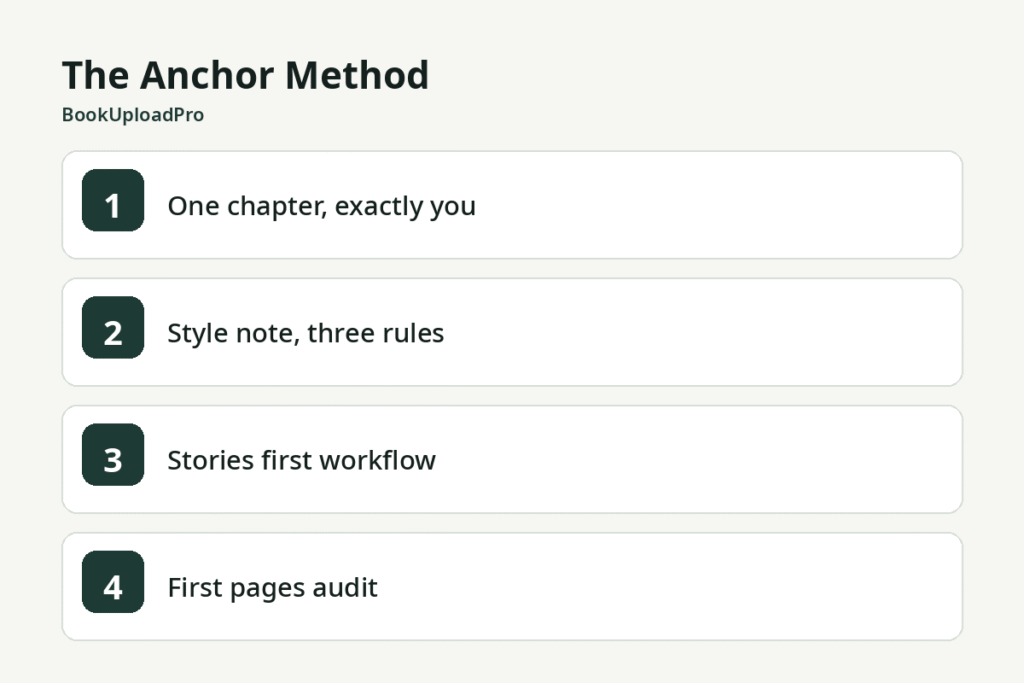
Tone drift is the quiet flaw of AI assisted books: chapter three, drafted in a cheerful session, sounds like a different person from chapter nine, drafted tired a month later, and readers feel the seams even when they cannot name them. The fix is an anchor. Write or heavily edit one chapter until it sounds exactly like you on your best day, then treat it as the reference: include it, or its key passages, in the brief for every later chapter with the instruction to match its rhythm, sentence length, and level of directness. A short style note helps too: three adjectives for the voice, three banned habits, and your rules for humor, second person, and how you handle hard topics. Voice in a dedicated creation workspace benefits from the same discipline: the tools generate, the anchor unifies.
Key takeaways:
- Warmth for self help readers is specific, not syrupy: name the reader’s 2 AM fear plainly, normalize it with a true story, then give one small doable step. Generic encouragement is what sounds like a machine.
- Your stories enter through the brief, not the edit: supply the story in bullets (situation, mistake, turn, result) and instruct the model to build the section around it. Asking it to invent a personal sounding story gets you a generic one with your name pasted on.
- A note on style matching uploads: a verified style sample feature is not part of the documented BookAutoAI workflow; the reliable route is importing your own text and editing against a reference chapter you wrote.
The stories first workflow
Before drafting a chapter, spend ten minutes listing what only you can contribute to it: the client, the failure, the kitchen table moment, the number from your own records. Brief the chapter with those bullets marked as required material and the generic research as supporting material. In editing, check the ratio: a chapter where your material carries the openings, the examples, and the conclusions reads as yours even when the connective prose was drafted with help. This is also the honest structure readers reward in reviews, because the book could only have come from one person.
The consistency audit before you publish
Read the first page of every chapter in one sitting, in order. You are listening for one voice: same warmth, same sentence weather, same way of talking to the reader. Mark the chapters that sound like strangers and give them a voice pass (openings, transitions, and closings rewritten against the anchor) rather than a full rewrite. Pair this with the repetition audit and the manuscript stops reading as assembled.
FAQ
How do I keep the tone consistent across chapters written at different times?
Create an anchor: one chapter edited until it sounds exactly like you, plus a short style note (three adjectives, banned habits, your rules). Include the anchor in every later chapter’s brief, and finish with a first pages audit across all chapters in one sitting.
How do I make AI content sound warm and human for a self help audience?
Brief for the pattern warmth actually takes: the reader’s specific fear named plainly, a true story that normalizes it, and one small doable step. Ban generic encouragement phrases, and supply the stories yourself; warmth is specificity plus honesty, not adjectives.
How do I prompt AI to include my own stories and examples instead of generic ones?
Give the stories in the brief as bullets (situation, mistake, turn, result) marked as required material the section must be built around. The model arranges; you supply. Asking it to invent personal stories produces generic ones with your name on them.