
In this guide
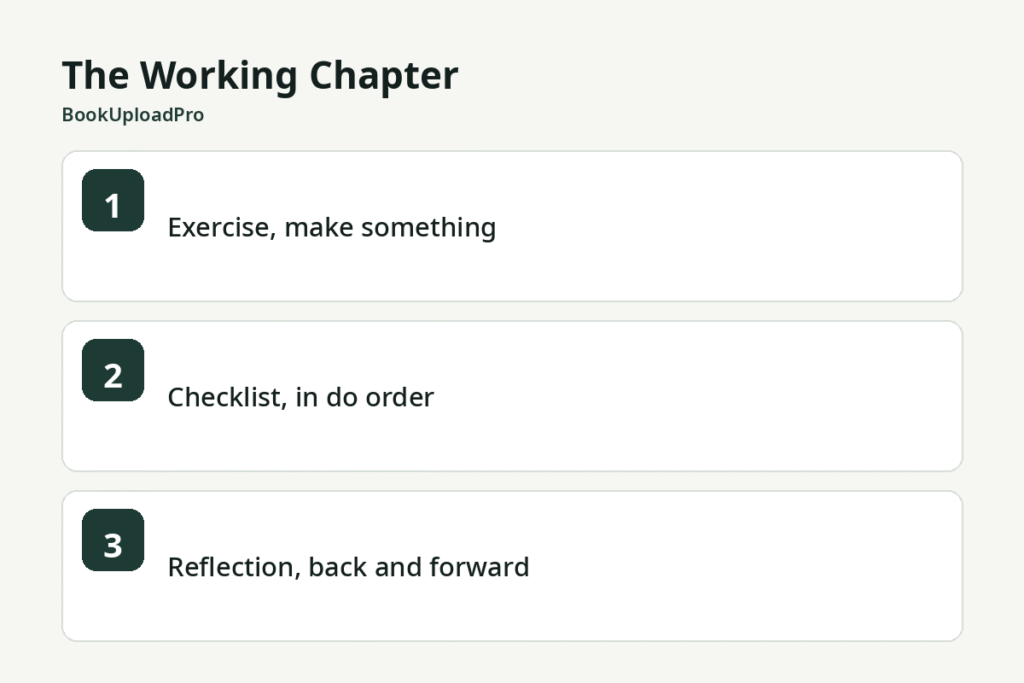
The difference between a book readers finish and a book readers use is the working elements: the exercise that makes them apply the idea, the checklist that makes the process repeatable, and the reflection question that makes it personal. AI generates all three well, because they are structured writing with clear jobs, provided you brief each element with the chapter’s actual content rather than asking for generic end of chapter questions. The reliable pattern: paste or reference the finished chapter, then ask for one exercise that produces a visible artifact (a list, a draft, a decision), one checklist that covers the chapter’s process in do order, and two reflection questions, one backward looking (what has this cost you so far) and one forward (what changes this week). Generic prompts produce generic elements; chapter specific briefs produce elements readers photograph and share.
Key takeaways:
- Sequence the elements like a coach: apply, systematize, reflect. Exercise first, checklist second, reflection last, in every chapter, so readers learn the rhythm.
- Edit elements harder than prose: a vague exercise (“think about your goals”) is worse than none, because it teaches readers to skip the boxes.
- Workbooks are a documented use of the creation workspace pattern: generating the elements inside the same project as the chapters keeps them consistent with the text they serve.
The introduction prompt pattern that works
Introductions fail with AI when they are asked for cold, because the model writes the generic version of your book’s promise. Brief it like an editor: give it the finished chapter list with one line per chapter on what the reader gains, your own story in bullet points (the failure, the turn, the result), the reader’s exact situation in one sentence, and the promise the book can honestly keep. Then ask for a draft that opens inside the story, not above it. Edit the draft’s voice ruthlessly toward your own; the introduction is the most read and most judged part of the book, and the part buyers sample.
Consistency across a whole book
Generate elements chapter by chapter but audit them as a set: read all the exercises in sequence and check that difficulty climbs, that no two chapters ask for the same artifact, and that the final chapter’s reflection closes the arc the introduction opened. Keep a simple elements log (chapter, exercise artifact, checklist name, reflection theme) in your project; ten minutes of bookkeeping prevents the most common workbook flaw, repetition that makes a careful book feel padded.
FAQ
Can AI generate exercises, checklists, and reflection questions for my chapters?
Yes, and well, when each element is briefed from the finished chapter: one exercise producing a visible artifact, one checklist in do order, and reflection questions that look backward and forward. Briefed generically, you get generic elements readers skip.
What prompts work best for writing an introduction with AI?
Editor style briefs: the chapter list with reader gains, your own story in bullets (failure, turn, result), the reader’s situation in one sentence, and the honest promise. Ask for an opening inside the story, then edit the voice hard toward your own, because the introduction is the sample buyers judge.