
In this guide
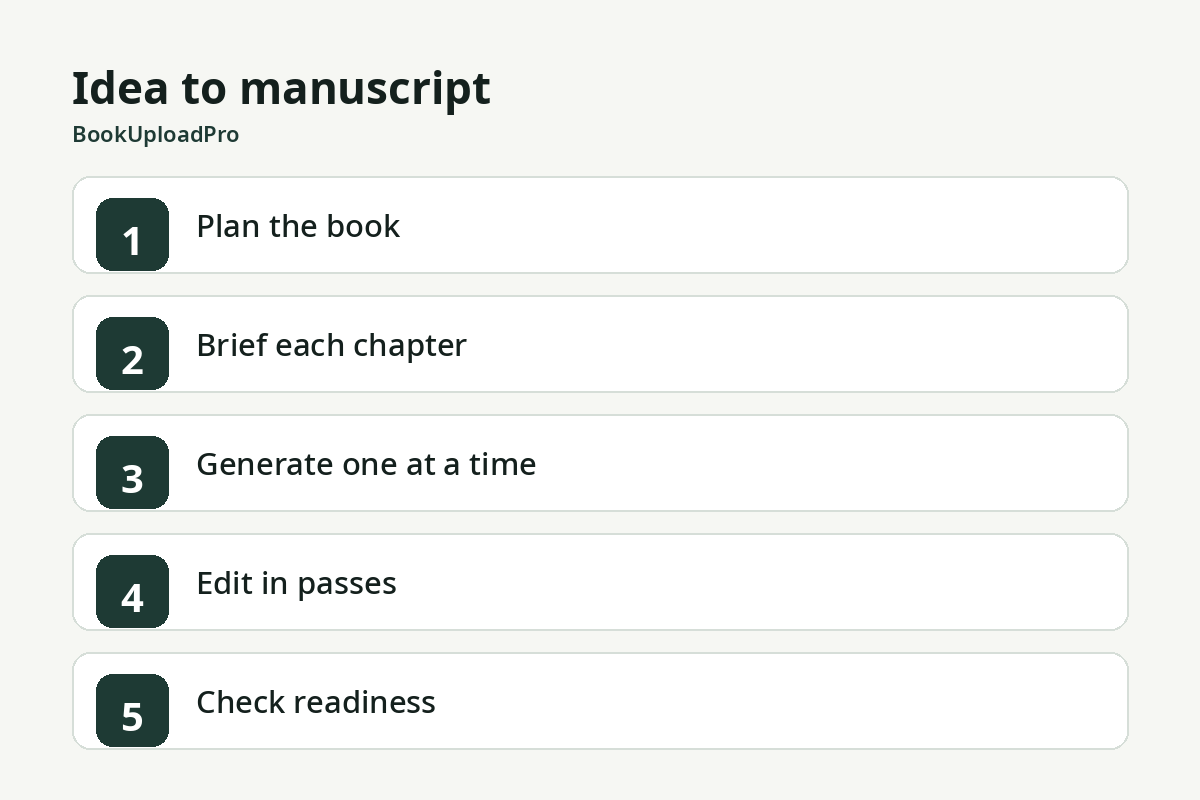
The workflow that produces publishable books from AI is boring in the best way: decide the book before generating it, expand the outline one chapter at a time with the outline as the contract, then edit in deliberate passes, facts first, structure second, voice last. Authors who generate a whole book in one pass get a whole book’s worth of drift: chapters that repeat each other, promises the later chapters forget, and a voice that sounds like everyone. And on style: matching your voice is real work with real methods, but uploading a sample and having the tool simply become you is more marketing than mechanism in most tools today.
Key takeaways:
- Outline first, always: title, reader, promise, chapter list, and for each chapter its job, its main points, and its example. Generation against that outline is drafting; generation without it is gambling.
- Expand per chapter, not per book: brief the tool with the chapter’s job and points, generate, review against the outline, and only then move on.
- Voice comes from editing and from starting material. Importing your own writing and revising generated text toward it beats any style toggle.
Expanding an outline into chapters
Give each chapter a brief before generation: the question it answers, three to five points in order, any story, data, or example that must appear, and what the reader can do afterward. Generate the chapter, then check it against the brief like an editor, not a fan: did it cover the points in order, invent anything you will have to verify, or wander into the next chapter’s job? Fix the brief when the chapter misfires twice; repeated failure is the outline’s fault, not the prompt’s wording. Tools built for books, BookAutoAI among them, hold this structure for you: the plan is created first and chapters generate against it, and you can preview that outline free before committing. Keep a running list of terms, claims, and numbers used, because chapter nine must agree with chapter two, and the AI will not remember unless the workflow makes it.
The style sample question, answered straight
Can you upload a sample so the AI writes like you? Some general AI tools accept style examples in a conversation and will imitate surface features for a while. Dedicated book generators, BookAutoAI included on its current public description, do not advertise a style sample upload that retrains the book on your voice; what they offer instead is arguably more reliable: import your own manuscript and improve it in the workspace, so the starting text is literally yours, and use rewriting tools on generated chapters with your edits setting the standard. The practical method professionals use: write the introduction and one chapter yourself, keep them open while editing generated chapters, and pull every chapter toward that reference. Voice lives in sentence length, word choices, and what you bother to explain; an hour of editing per chapter installs more of you than any sample upload. However the text was produced, the readiness bar is the same.
FAQ
What is a good workflow from idea to finished manuscript using AI?
Plan the book first: reader, promise, full outline with each chapter’s job. Expand chapter by chapter against written briefs, checking each against the outline. Then edit in passes: verify facts, fix structure, and finally edit for voice. Generate fast, but decide slowly.
How do I use AI to expand a short outline into full chapters?
Turn each outline line into a chapter brief: the question answered, the points in order, the examples or data required, and the reader takeaway. Generate one chapter at a time against its brief, review it against the outline before continuing, and keep a consistency list of terms and claims across chapters.
Can I upload a sample of my writing so the AI matches my style?
In most book generators, not as a true style training feature, whatever the marketing implies. The dependable routes are starting from your own imported manuscript, and editing generated chapters against a chapter you wrote yourself as the voice reference. That combination produces a book that sounds like you because, in the passages that matter, it is you.