Preorder Launch Strategy for Self-Publishing Authors
Preorder Launch Strategy: A Practical Guide for Self-Publishing Authors
Estimated reading time: 6 minutes
Key takeaways
- A focused preorder launch strategy concentrates sales and visibility on release day, which helps rankings and discoverability.
- Plan a 6–12 week runway with staged promotion, clear buyer incentives, and a disciplined production schedule.
- Use multi-platform distribution and automation to reduce manual work and avoid mistakes at scale.
- Practical tools (batch CSV uploads, platform intelligence, EPUB and cover preparation) make wide distribution realistic for serious authors.
Table of Contents
- Why preorders work — why this tactic matters
- Plan a practical preorder runway — timing, pricing, and promo
- Launch mechanics and wide distribution — files, retailers, and automation
- FAQ
- Final thoughts
- Sources
Why preorders work — why this tactic matters
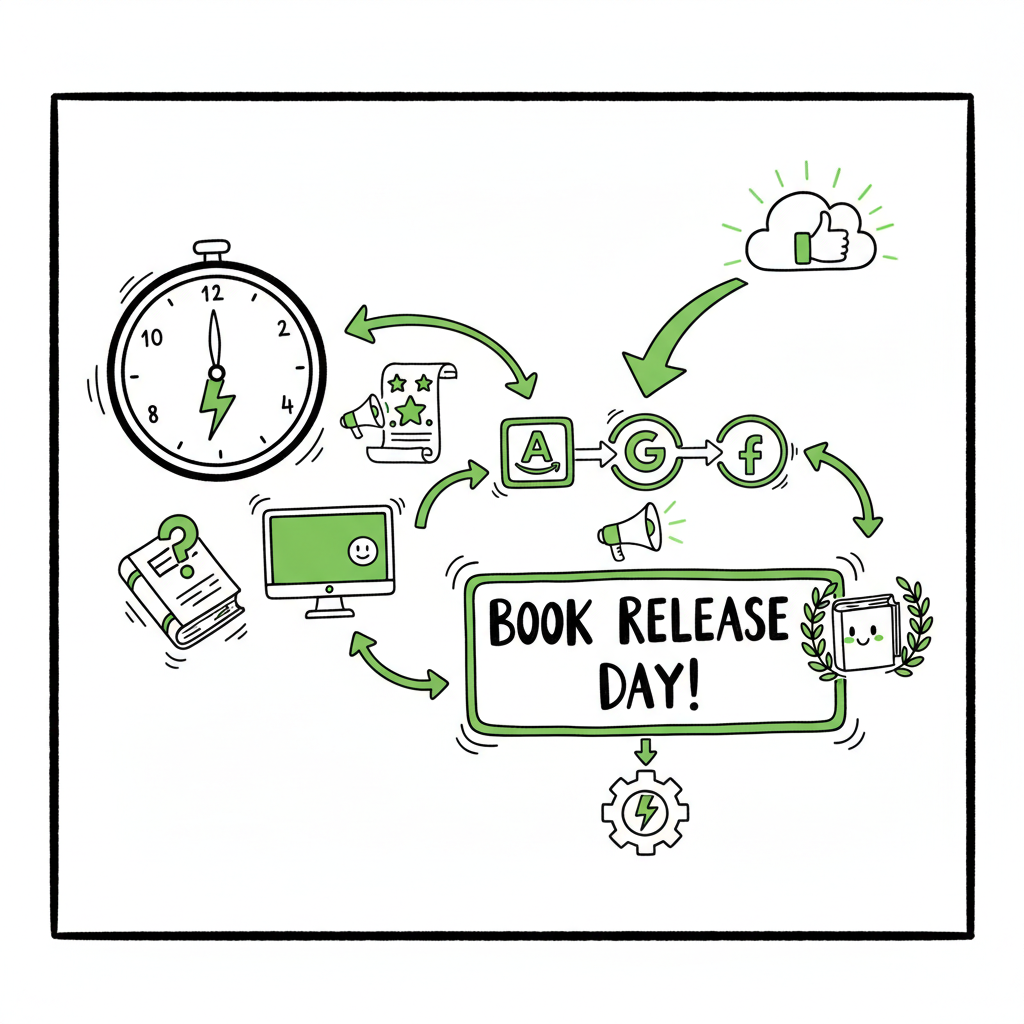
Preorders are not just a way to sell copies early. A well-run preorder launch strategy concentrates sales on release day, which signals retailers and algorithms that a book is relevant. That concentrated sales velocity improves rankings, which increases visibility and organic discovery. For authors who have at least a small audience—newsletter readers, social followers, or previous-book back matter—preorders are a leverage point: early readers buy, reviews roll in, and your release day has momentum.
If you’re new to preorders, think of them as a staged campaign. You’re trading a period of passive visibility for a burst of activity on launch day. That burst is what pushes the book into featured lists, category rankings, and retailer recommendation feeds. The strategy matters even more when you plan to publish across stores; coordinated purchases across platforms multiply the effect.
If you want a deeper operational frame for launch planning, our Book Launch Strategy Practical Guide walks through timelines and tactics in a step-by-step format and is useful once you’re ready to scale beyond one-off launches.
For a deeper operational frame, see the Book Launch Strategy Practical Guide.
Plan a practical preorder runway — timing, pricing, and promo
Start by setting a realistic production and promotion timeline. For most indie authors a 6–12 week runway is practical: long enough to build awareness, short enough to keep momentum and prevent deadline creep.
Runway checklist (operational view)
- Set a firm release date and lock production milestones (final manuscript, proof, metadata).
- Establish preorder price and incentives. Common patterns: low preorder price (for visibility), rising price at launch, or preorder bonuses like a short story or workbook.
- Assemble an ARC team early. Send digital ARCs on a staggered schedule to generate reviews around launch day.
- Schedule promotional bursts: cover reveal, email sequence, social posts, and cross-promotion in relevant author groups.
Pricing and urgency
A low preorder price (for example, $0.99 or a small discount) can seed early sales. Pair price incentives with scarcity—limited bonus content or early-access extras—to give readers a reason to buy before the book is out. Make the buyer benefit explicit in newsletter subject lines and promotional copy.
Editorial and production discipline
Risks from preorders come from missed deadlines and version control. Lock final files weeks before release to allow for retailer processing and proofs. Treat metadata (title, subtitle, series fields, categories, BISAC codes) as part of production—not marketing—to avoid last-minute changes that can trigger retailer delays or listing problems.
Launch mechanics and wide distribution — files, retailers, and automation
On launch day you want tidy files, consistent metadata, and coordinated distribution across stores. That’s operational work, and it’s where automation pays for itself.
Files and formats
Prepare both ebook and paperback files well before the preorder window closes. Convert your manuscript to EPUB (required or preferred by many retailers) and validate it early. If you’re converting EPUBs at scale, consider a tool that streamlines the process and reduces manual fixes: an EPUB converter simplifies conversion and checks, reducing formatting regressions late in the schedule.
Covers and packaging
A clean, professional cover matters more than clever tags. If you’re creating covers or generating batch variations for series, use a cover workflow that outputs print-ready and ebook-ready files to avoid rework; a dedicated cover processing tool can speed this step and keep assets organized.
Multi-platform distribution
Preorders are most effective when they’re present across major storefronts—Amazon KDP, Apple Books, Kobo, Draft2Digital, and Ingram. Each platform has quirks: Amazon has a specific preorder flow that requires the final manuscript by a set deadline; other retailers accept preorders via aggregators. Managing multiple uploads by hand is error-prone and time-consuming.
That’s why authors scaling their publishing should consider unified multi-platform publishing automation. BookUploadPro automates repetitive uploads across Amazon KDP, Kobo, Apple Books, Draft2Digital, and Ingram, using CSV batch uploads and platform-specific intelligence to cut manual work by about 90%. It reduces errors, respects each retailer’s requirements, and makes wide distribution practical for authors doing multiple titles or series. When authors decide to publish seriously, automation is an obvious upgrade: automate the upload. Own the distribution.
Operational tips for launch day
- Freeze metadata 48–72 hours before release (except price changes that are allowed).
- Confirm final files have been accepted on each platform (look for proofs or acceptance emails).
- Coordinate promotional timing so purchases and reviews cluster around the release hour in major time zones.
- Track retailer dashboards and sales notifications; small errors early are fixable if caught fast.
Production tool links (practical resources)
- If you need a reliable EPUB conversion workflow, use a dedicated EPUB converter to avoid formatting surprises.
- For cover processing or batch cover generation, a cover processing tool helps keep print and ebook covers consistent.
- If you’re creating paperbacks or ebooks and want a single workflow for both, a full book creation service can speed the end-to-end process.
FAQ
Q: Who should use preorders?
A: Authors with an existing audience, active email lists, or a series to sustain interest tend to see the best results. New authors can use preorders, but they must be prepared to drive visibility with promo tactics like giveaways, virtual launches, and targeted ads.
Q: How long should the preorder window be?
A: Aim for 6–12 weeks. Shorter windows limit discovery; longer windows risk losing interest and create production risk. The right length depends on your promotional capacity.
Q: What are the common pitfalls?
A: Missed deadlines, inconsistent metadata across retailers, and poor file quality. Use checklists, early validation, and automation to reduce these risks.
Q: Can I change price after preorder?
A: Yes—most platforms allow price changes before release, but coordinate changes carefully and communicate them to buyers if necessary.
Q: Should I use an aggregator or upload to each store individually?
A: Both approaches work. Aggregators simplify distribution but may delay some retailer features. If you publish across many stores and want to avoid repetitive uploads, automation and CSV batch uploads scale better than manual entry.
Sources
- Stress-Free Preorders: Essential Timing, Promotion & Platform Tips for Indie Authors
- Should you set up a preorder for your book?
- Leveraging Pre-Orders: Building Anticipation for Your eBook Launch
- How to Launch a Book with More Pre-Orders
- Launching Your Book Successfully with Preorders
- How to Run a Successful Preorder Campaign for Your Book [STEPS]
Preorder Launch Strategy: A Practical Guide for Self-Publishing Authors Estimated reading time: 6 minutes Key takeaways A focused preorder launch strategy concentrates sales and visibility on release day, which helps rankings and discoverability. Plan a 6–12 week runway with staged promotion, clear buyer incentives, and a disciplined production schedule. Use multi-platform distribution and automation to…