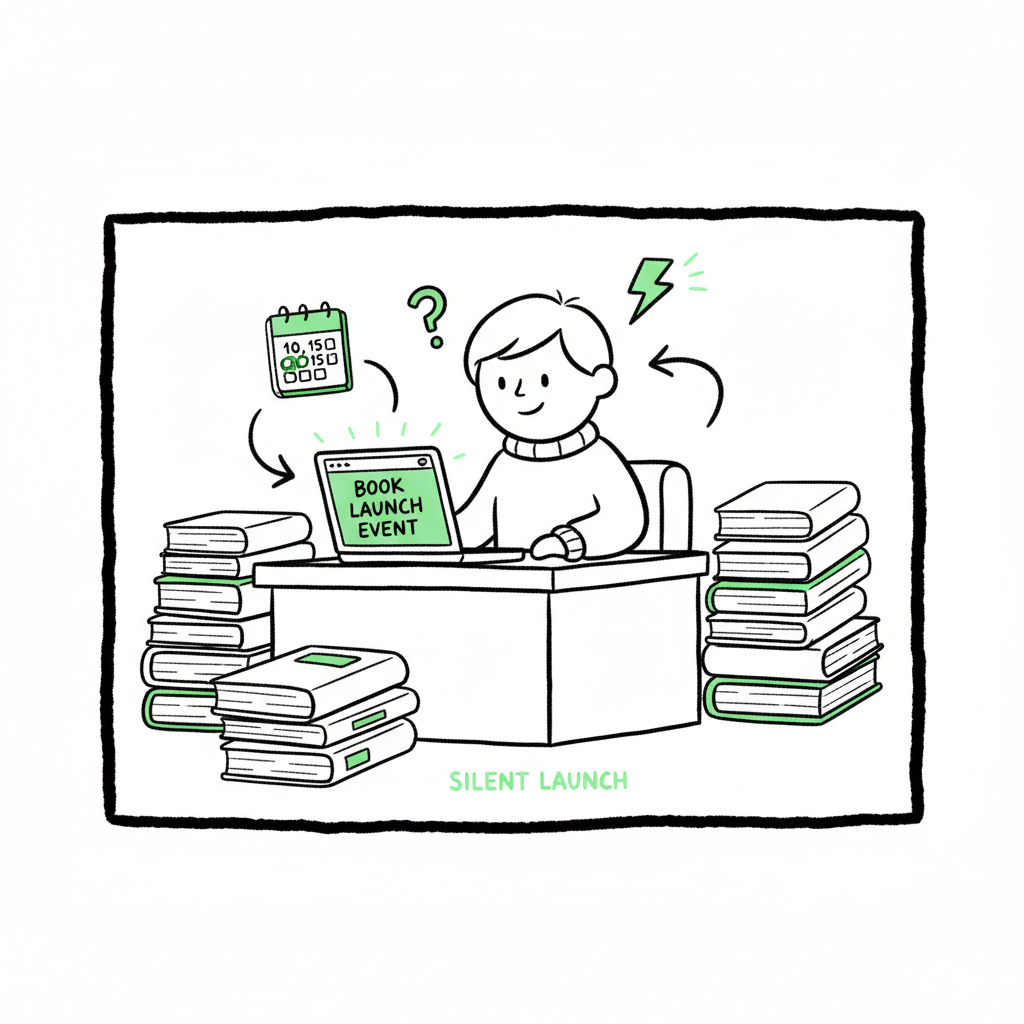
Silent Book Launches Practical Guide for Indie Authors
Silent Book Launches: A Practical Guide for Indie Authors
Estimated reading time: 7 minutes
Key takeaways
- Silent book launches reduce pressure and technical risk by releasing quietly before a promotional push.
- A short, controlled early release lets you gather reviews, confirm distribution, and test pricing without risking reader disappointment.
- Automating multi-platform uploads and batch tasks makes silent launches practical at scale — an obvious upgrade once authors publish seriously.
Table of Contents
- What are silent book launches?
- A practical silent launch workflow
- Multi-platform publishing and automation
- FAQ
What are silent book launches?
Silent book launches, sometimes called low-key or quiet launches, are a simple idea: publish your book to retailers without a fanfare, then run the public promotional push later. The goal is not to hide the book forever but to let the product and the systems settle before you ask for attention.
For many indie authors this looks like a short early release window for ARC readers and beta testers, a few days to a week before the official marketing start. That window gives you time to gather early reviews, catch platform problems, and make quick fixes to metadata or files if something breaks.
This approach stands apart from the “big splash” launch mindset that tries to cram all visibility into week one. Silent launches trade a big first-week spike for steadier, more reliable long-tail sales. If you publish several titles a year or prioritize steady growth over a single event, silent book launches keep you sane and consistent.
If you want a fuller playbook that covers both big launches and low-key options, see the Book Launch Strategy Practical Guide for the step-by-step planning most successful indie authors follow. Book Launch Strategy Practical Guide.
A practical silent launch workflow
A silent launch should be simple and repeatable. Here’s a practical workflow you can use and scale.
- Two to four weeks before release — prepare assets
- Finalize the manuscript, interior files, and cover. If you need help generating a print-ready cover quickly, a cover generator can speed the job by producing high-resolution files you can drop into your upload workflow.
- Convert your manuscript to the required formats. If you handle EPUBs yourself, an automated conversion tool reduces errors and saves time. See the EPUB converter.
- Build metadata: synopsis, keywords, categories, and series info.
- One week before public promotion — soft release
- Upload to retailers and enable distribution. If you’re creating both paperback and ebook files, publish them together so formats are available when readers search (many authors use a streamlined service to manage ebook and paperback creation; a typical book creation workflow).
- Share the link with a small group of ARC readers or newsletter subscribers. Ask for honest, timely reviews and report any platform issues.
- Verify live pages, pricing, and look inside functionality on stores like Amazon, Kobo, and Apple Books.
- Monitor and adjust (48–72 hours)
- Watch retailer live pages and fix anything broken. Small errors are far easier to correct before a big advertising push.
- Collect initial reviews and add them to your marketing plan. If a cover, blurb, or category needs adjustment, make it now.
- Start the public launch
- Schedule ads, newsletter sends, and promo partners. With reviews already in place and files confirmed, you reduce the risk of wasted ad spend or negative feedback from technical problems.
Why this works: early feedback reduces friction. It removes last-minute surprises from advertising and gives you a safety net of reviews that improve conversion when you do promote.
Multi-platform publishing and automation
Silent launches become practical at scale when you stop repeating manual uploads for each retailer. Publishing to Amazon KDP, Kobo, Apple Books, Draft2Digital, and Ingram takes time and care — and that’s where automation matters.
BookUploadPro automates repetitive uploads across major retailers, using CSV batch uploads and platform-specific intelligence to reduce errors and cut time by about 90%. You can push one set of metadata and files and let the system create retailer-specific packages, saving the grunt work. Automating uploads also means you can run silent launches across multiple stores with a single, predictable process.
What automation buys you for a silent launch
- Faster multi-platform availability: no manual re-entries that introduce typos or mismatches.
- Consistent metadata and pricing across stores: fewer mismatched listings that confuse readers.
- Error reduction with platform-aware checks: file problems surface before public promotion.
- CSV-driven batch uploads for series and backlists: publish many titles in a single session.
Put simply: BookUploadPro is a practical way to streamline distribution. When you start publishing seriously, a service that handles batch uploads and platform quirks is an obvious upgrade.
A few practical notes when you automate:
- Keep an ARC list separated from your main mailing list so the soft release reaches only those who should see it early.
- Automate file conversions and cover sizing as part of the pipeline to avoid repeated fixes.
- Schedule the promotional push only after you confirm live availability across platforms.
FAQ
Q: Does a silent launch reduce long-term sales?
A: No. A silent launch changes the timing of attention, not the book’s lifetime potential. Many authors see steadier sales and less burnout. When done well, a soft release followed by targeted promotion can match or exceed the performance of a rushed big launch.
Q: How long should the soft release window be?
A: Typically 3–7 days. Long enough to collect reviews and confirm listings, short enough to prevent leaks or premature wide distribution.
Q: Can I still run ads after a silent launch?
A: Yes. In fact, starting ads after you’ve confirmed files and gathered a few reviews is recommended. Your ad spend performs better when conversion signals—like early reviews—are already present.
Q: What if my retailer listing breaks during the soft release?
A: Fix the problem, then communicate with your ARC group. Early transparency keeps goodwill intact. Automated upload tools reduce the chance of these errors by checking platform-specific rules before submission.
Q: Is a silent launch suitable for all genres?
A: It works for most fiction and non-fiction categories, especially for authors who publish regularly or prefer less stress. Big media-driven launches (celebrity authors, tie-ins with events) may still benefit from a traditional splash.
Final thoughts
Silent book launches are a practical, low-risk way to protect your time and your readers’ experience. They let you confirm distribution, gather honest early reviews, and make informed promotion choices. When you combine a quiet early release with automated multi-platform publishing, the process becomes repeatable and scalable.
If you’re ready to reduce manual uploads and run consistent silent launches across Amazon KDP, Kobo, Apple Books, Draft2Digital, and Ingram, visiting BookUploadPro.com is a logical next step. Try the free trial to see how CSV batch uploads, platform-specific checks, and near-automated distribution can save time and cut errors.
Sources
Sources
- https://frontlist.io/blog-detail/your-publish-date-is-not-your-book-launch-date
- https://createifwriting.com/big-book-launches-vs-low-key-book-launches/
- https://knliterary.com/2021/05/20/book-launch-guide/
- https://www.blurb.com/blog/plan-book-launch/
- https://www.youtube.com/watch?v=l15CtPy3_Es
- https://www.blackchateauenterprises.com/the-three-month-book-launch-rule-break-it-at-your-own-risk/
Silent Book Launches: A Practical Guide for Indie Authors Estimated reading time: 7 minutes Key takeaways Silent book launches reduce pressure and technical risk by releasing quietly before a promotional push. A short, controlled early release lets you gather reviews, confirm distribution, and test pricing without risking reader disappointment. Automating multi-platform uploads and batch tasks…