Backlist Relaunch Strategy Explained for Authors on KDP
Backlist relaunch strategy: refresh older titles and regain readers
Estimated reading time: 9 minutes
Key takeaways
- Treat a backlist relaunch strategy like a new release: updated cover, fresh blurb, and a planned promotional window drive discovery.
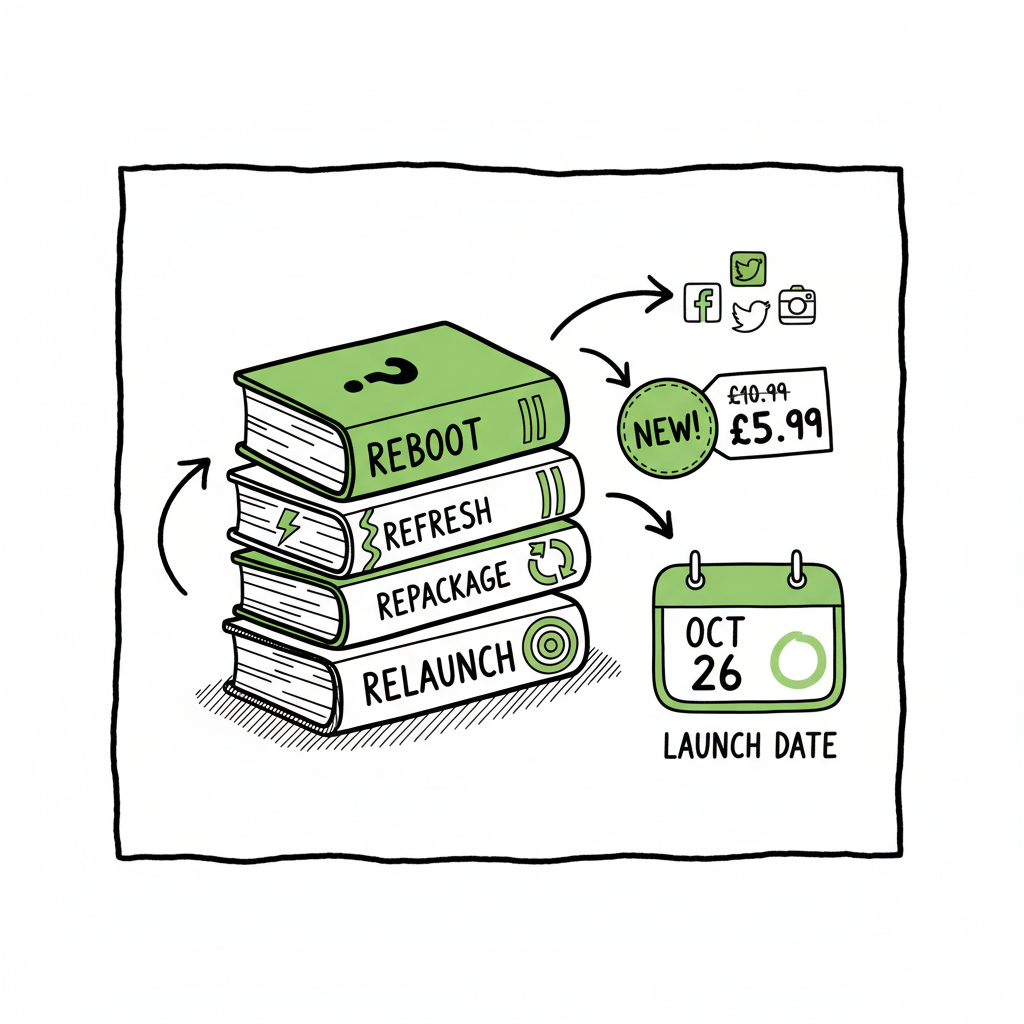
- Use bundles, limited-time pricing, and social hype to reach new readers while tracking data to refine future relaunches.
- Automate uploads and distribution with multi-platform tools to save time and reduce errors as you scale.
Table of Contents
Why a backlist relaunch strategy works
A backlist relaunch strategy is a focused effort to bring older titles back into the marketplace spotlight. It combines creative updates—new covers, revised blurbs, bonus material—with promotional tactics like discounts, bundles, and coordinated social posts. The goal is to trigger algorithmic rediscovery and give readers a reason to buy now.
If you want timing and launch steps that mirror a new release, check the Book Launch Strategy Practical Guide for ideas you can reuse across titles. Refreshes benefit from the same mechanics as new books: visibility spikes during pricing windows and when reviews and downloads accelerate. For authors with multiple books, relaunching smartly can turn dormant titles into repeat revenue with a handful of concentrated actions.
How to run a backlist relaunch strategy
Start with priority and research
Pick 1–3 titles that are easiest to update and most likely to respond. Look for:
- Series starters or books that sit well with current genre trends.
- Titles with steady but low sales that need a visibility push.
- Books with an existing email list or social traction.
Audit the asset list
Before you change anything, inventory every asset: interior files, ebook and paperback files, cover images, product blurbs, metadata, ISBNs, categories, and current reviews. Note platform differences—what works on Amazon isn’t identical to Apple Books or Kobo.
Creative updates that matter
- New cover: Align design and typography to current genre bestsellers. If you don’t have design capacity, consider a cover generator to test quick concepts before investing in a full redesign.
- Fresh blurb and keywords: Rework the first two lines for scan-readers. Use strong hooks, clear stakes, and a short author credibility line. Update backend keywords and categories to reflect how readers search now.
- Bonus content: Add a short new epilogue, author note, or reading guide as exclusive content to entice buyers and reward loyal readers.
- Format refresh: Make sure the EPUB and interior files are clean. If you need a reliable conversion tool, an EPUB converter can avoid layout issues and speed uploads.
Plan the promotional window like a launch
Treat the relaunch period as a project with a start date and KPIs. Typical steps:
- Pre-launch (2–4 weeks): Build anticipation with email, a price promise, and ARC reader outreach for new reviews.
- Launch (3–7 days): Run a discounted price, submit to deals services if eligible, and push social posts timed across platforms.
- Post-launch (2–4 weeks): Redirect momentum to long-term strategies—bundles, paid ads, and continuing social content.
Pricing and bundling
Short, visible price drops can trigger algorithmic boosts. For series, bundle books into a box set or themed collection to increase perceived value and encourage binge reading. Bundles often outperform single titles for readers who want an instant series commitment.
Promotion channels that move the needle
- Email list: The highest ROI. Offer the discounted link or an exclusive edition for direct buyers.
- Social: Use BookTok and Bookstagram formats: short clips, reader reactions, and swipeable carousels. Coordinate posts across channels for a single-day push.
- Paid and deals: Consider services like BookBub for high-impact days, but plan them around your launch window to maximize conversion.
Distribution and scaling: automate where it counts
When you run relaunches across multiple platforms, manual uploads become a bottleneck. Use unified multi-platform publishing to push updated files and pricing to Amazon KDP, Kobo, Apple Books, Draft2Digital, and Ingram in one flow. CSV batch uploads and platform-specific intelligence cut time and errors, making wide distribution practical. For teams or authors publishing seriously, this is an obvious upgrade once you outgrow single-platform uploads: automate the upload. Own the distribution.
File types and formats
When revamping interiors, create clean EPUB and print-ready files. If you plan to produce new paperback editions or expanded ebook files, use established book creation tools to manage formats and print settings reliably. book creation tools
Tracking and iteration
Measure results by tracking downloads, sales rank changes, and new review velocity. Compare relaunch windows to baseline sales and keep a simple spreadsheet of what you tried and the outcome. Successful relaunches compound: a cover that works for one title often works across similar books in your catalog.
Operational checklist (for the operator)
- Inventory assets and pick relaunch targets.
- Make creative updates (cover, blurb, bonus content).
- Prepare clean EPUB and paperback files.
- Schedule email and social posts tied to launch dates.
- Set a short promotional price and monitor platform reporting.
- Run the distribution update across retailers and check for errors.
- Record results and standardize the successful pieces for the next relaunch.
FAQ
Q: How often should I relaunch a backlist title?
A: Focus on value, not frequency. Relaunch when you have a clear reason: a cover that matches current trends, a companion book release, or a promotional calendar slot. Repeating successful elements—new cover plus a short price window—every 12–24 months is common.
Q: Will changing a cover or blurb hurt my reviews or rankings?
A: No. Reviews stay with the book if you use the same ISBN or platform listing. Algorithm signals can reset somewhat after major changes, which is why you should plan a promotional window to re-earn visibility.
Q: Do I need new ISBNs for revised editions?
A: If the interior content changes substantially (new chapters, revised text), consider a new edition ISBN for print. For minor updates, keep the same listing to preserve reviews and metadata. Check each retailer’s guidance before changing ISBNs.
Q: How much work is automation worth for relaunches?
A: If you relaunch more than a few titles a year, automation saves time and reduces errors. Batch CSV uploads, platform-aware metadata mapping, and single-step distribution remove repetitive tasks so you can focus on marketing and creative decisions.
Q: What metrics matter most during a relaunch?
A: Track downloads, changes in sales rank, and new review velocity. Compare relaunch windows to baseline performance and maintain a simple log of what worked.
Sources
- https://blog.publiwrite.com/your-next-bestseller-might-already-be-written-how-to-refresh-and-relaunch-your-backlist-in-2025/
- https://kindlepreneur.com/revive-dead-book/
- https://indieauthormagazine.com/frontlist-vs-backlist-marketing-how-indie-authors-can-maximize-book-sales-at-every-stage/
- https://www.foglioprint.com/blog/how-to-revive-your-backlist-strategies-to-bring-older-titles-back-to-life
- https://amarketingexpert.com/2025/05/29/how-to-market-an-older-book-reviving-backlist-titles-for-new-audiences/
- https://insights.bookbub.com/reviving-backlist-books/
Automate the upload. Own the distribution.
Visit BookUploadPro.com to try the free trial..
Backlist relaunch strategy: refresh older titles and regain readers Estimated reading time: 9 minutes Key takeaways Treat a backlist relaunch strategy like a new release: updated cover, fresh blurb, and a planned promotional window drive discovery. Use bundles, limited-time pricing, and social hype to reach new readers while tracking data to refine future relaunches. Automate…