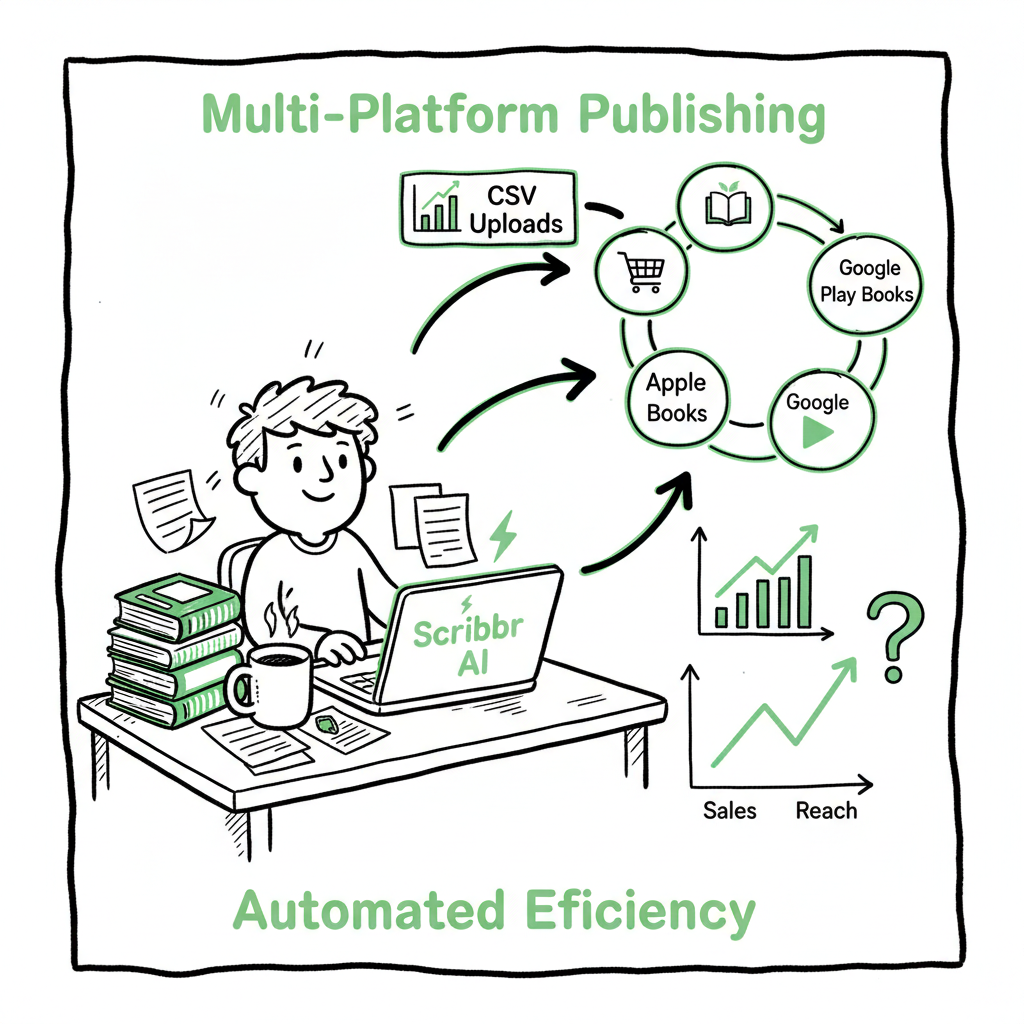
scribbr ai book writer typo traffic explained for authors
scribbr ai book writer (typo traffic)
Estimated reading time: 8 minutes
Key takeaways
- Search terms like "scribbr ai book writer (typo traffic)" usually come from authors mixing tools; clarify the intent before choosing a workflow.
- Automating multi-platform publishing with CSV batch uploads saves time, cuts errors, and makes wide distribution practical.
- BookUploadPro bridges manuscript preparation and platform-specific delivery so serious indie authors can scale without reinventing uploads.
Table of Contents
- What authors mean by "scribbr ai book writer (typo traffic)"
- Why unified multi-platform publishing matters
- A practical batch upload workflow for self-publishers
- Publishing pitfalls, quality checks, and automation limits
- FAQ
What authors mean by "scribbr ai book writer (typo traffic)"
Search queries like scribbr ai book writer (typo traffic) often mix tools and intent. Scribbr is known for editing and plagiarism checks, while some authors add "AI" and "book writer" when they want help drafting, editing, or polishing manuscripts. That combination signals three possible needs: draft generation, manuscript editing, and platform-ready formatting.
Before you switch tools, be specific about the job: do you need raw draft text, an editor to clean language, or a formatted file ready for Amazon KDP and other stores? If the goal includes getting content onto stores at scale, look beyond single-purpose AI text tools and plan for distribution. For authors testing AI-assisted drafts, Amazon Kdp Ai Writing are a practical next step for connecting writing workflows to real uploads.
BookUploadPro’s resources can help bridge drafting, editing, and publishing to real uploads, so authors can scale more efficiently across stores.
Why unified multi-platform publishing matters
Most midlist and indie authors eventually stop treating uploads as one-off tasks. You have the same book to place on Amazon, Kobo, Apple Books, Draft2Digital, and Ingram — and each platform expects slightly different metadata, file formats, and cover specs. Doing each manually multiplies hours and the chance for mistakes.
A unified publishing workflow solves that:
- CSV batch uploads: keep one spreadsheet with title metadata, pricing, descriptions, rights, and distribution choices. Upload once and let the system map fields to each store.
- Platform-specific intelligence: automate format tweaks like trim size, keyword placement, and territory rules so files pass validation.
- Error reduction and time savings: consistent fields mean fewer rejections and roughly 70–90% less manual time on repeat releases.
When authors publish seriously, a tool that automates uploads becomes an obvious upgrade. Automate the upload. Own the distribution.
BookUploadPro can help you manage the transition from single-store uploads to multi-store distribution.
A practical batch upload workflow for self-publishers
A repeatable process keeps releases predictable and faster. Here’s a pragmatic workflow that scales from one title to dozens.
- Prepare the master files
- Manuscript: Final copy in DOCX or clean Word. Keep a version history.
- Interior formatting: Export a print-ready PDF for paperbacks and an EPUB for ebook stores. If you need reliable EPUB converter to avoid validation errors — it’s worth the step for stores that require strict EPUBs. (See the EPUB converter if you want a quick tool.)
- Cover: Produce separate assets for ebook and paperback front/back/spine. If you’re generating covers, use a tested cover generator to match store specs.
- Build the master CSV
- Include ISBN (if you have one), BISAC categories, keywords, description, language, price, territories, and upload file names.
- Keep metadata normalized: no smart quotes in ISBNs, match publisher names consistently, and avoid line breaks in descriptions.
- Validate locally
- Run a preflight check: opening the EPUB in an e-reader, validating PDF bleed and margins, and rendering the cover at the target resolution.
- If you create paperbacks or ebooks, standardize the process to generate both file types from the same source and link to a central creation step.
- Batch upload and mapping
- Use a multi-platform uploader that reads your CSV and maps fields to each store’s schema. That mapping is where platform-specific intelligence matters most: a description that works best on Amazon might need minor tweaks for Apple Books or Kobo.
- Expect automated systems to flag missing fields or mismatched formats; fix once and continue.
- Post-publish checks
- Confirm storefront availability, sample downloads, and price reflections. Track revenues and returns against the CSV to spot global issues.
- Notes
- This workflow reduces repetitive inputs and makes multi-platform distribution practical. If you work with covers or EPUBs, the right creation tools speed the early steps: try a cover generator for dimension accuracy, and an EPUB converter to prevent upload rejections.
This workflow reduces repetitive inputs and makes multi-platform distribution practical. If you work with covers or EPUBs, the right creation tools speed the early steps: try a cover generator for dimension accuracy, and an EPUB converter to prevent upload rejections.
When you’re ready to scale distribution, a book creation workflow and multi-platform uploader can help you reach more stores efficiently.
And if you’re considering a brand-backed option, BookUploadPro can streamline uploads across major stores.
Publishing pitfalls, quality checks, and automation limits
Automation speeds you up, but it doesn’t remove editorial responsibility. Watch for these common traps:
- Metadata drift: Small differences in metadata can fragment discoverability. Keep one master CSV and only change fields there.
- File validation failures: Stores reject files for margins, fonts, or malformed EPUB structure. Validate before upload to avoid “paperwork” back-and-forth.
- Overreliance on AI: AI drafting speeds early drafts, but you still need human-led edits for voice, structure, and fact checking.
- Cover mismatches: Low-resolution or incorrect spine sizes kill print approvals. Use a dedicated cover process to generate print and ebook variants.
- Rights and territories: Automating distribution doesn’t substitute for correct rights ownership and territory choices. Double-check contractual permissions.
BookUploadPro addresses many of these pain points by combining CSV batch uploads, platform-specific intelligence, and error reduction in one tool. It automates repetitive uploads across Amazon KDP, Kobo, Apple Books, Draft2Digital, and Ingram, cutting manual effort by roughly 90% for frequent publishers. That makes wide distribution practical and affordable for authors who want to scale.
FAQ
Q: Will automation hurt my book’s quality?
A: No—automation handles repetitive tasks (uploads, field mapping, format conversions). Quality still depends on your manuscript, editing, and cover design. Automation reduces human error in the publishing pipeline, not creative judgment.
Q: Do I still need separate files for paperback and ebook?
A: Yes. Print and ebook have different layout and cover requirements. Use a consistent source, but generate store-specific files (print-ready PDF, specific EPUB variants).
Q: How does CSV batch uploading work with different stores?
A: A good uploader maps your CSV columns to each store’s required fields, adjusts per-store specifics, and queues files for each storefront. The uploader should validate files and report platform-specific errors.
Q: I only publish on Amazon now. Is multi-platform automation worth it?
A: If you plan more than a handful of titles or want passive distribution, yes. Once you publish seriously, automating uploads is an obvious upgrade—fewer repetitive errors, standardized metadata, and faster time to market.
Q: Can automation save time on metadata and rights management?
A: Yes. Standardized metadata across stores reduces errors; always verify rights and territories to ensure correct distribution.
Sources
- https://www.bookautoai.com/book-cover-generator-processing
- https://www.bookautoai.com/epub-converter
- https://www.bookautoai.com
scribbr ai book writer (typo traffic) Estimated reading time: 8 minutes Key takeaways Search terms like "scribbr ai book writer (typo traffic)" usually come from authors mixing tools; clarify the intent before choosing a workflow. Automating multi-platform publishing with CSV batch uploads saves time, cuts errors, and makes wide distribution practical. BookUploadPro bridges manuscript preparation…