Scaling an Amazon KDP Business with Repeatable Systems
Scaling an Amazon KDP Business
Estimated reading time: 16 minutes
Key takeaways
- Scaling an Amazon KDP business means turning ad-hoc uploads into a repeatable system: higher-quality series, consistent publishing velocity, and smart automation.
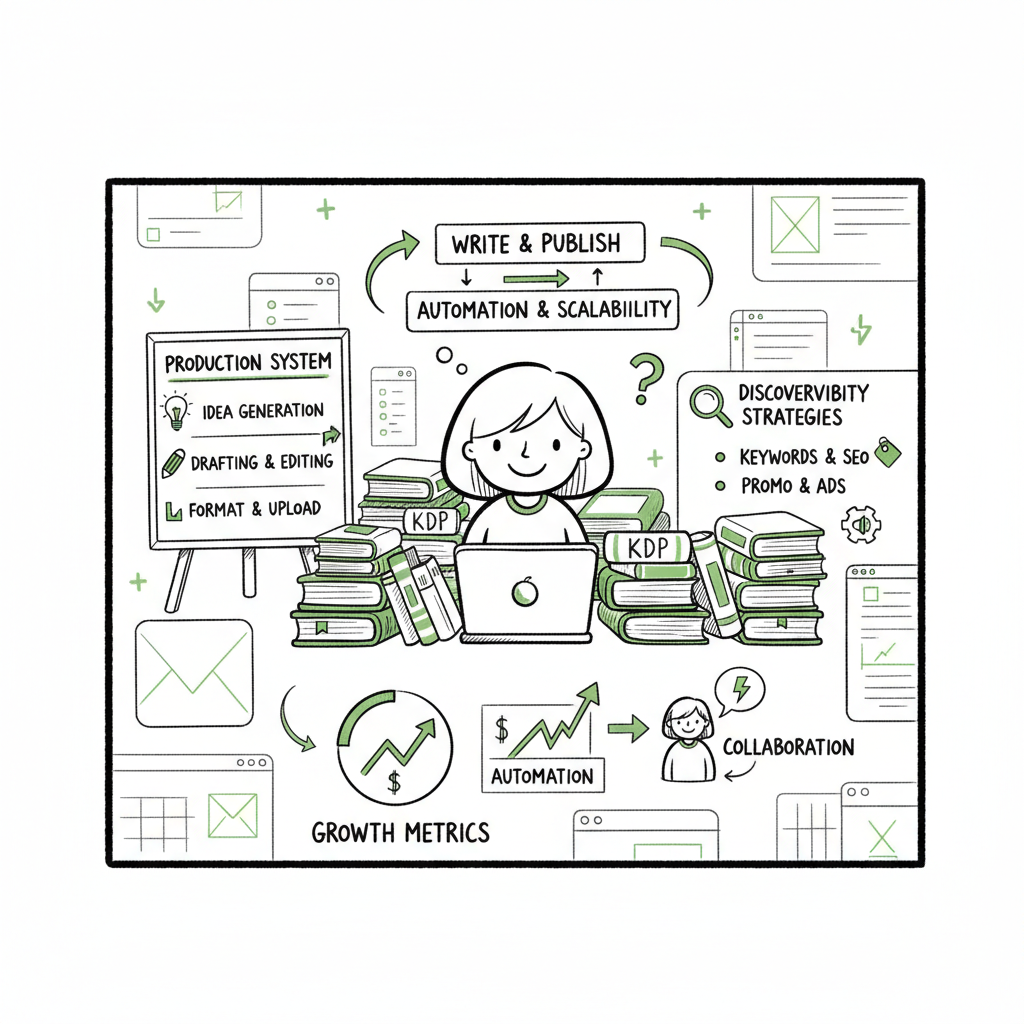
- Focus on three pillars: production systems, discoverability (pricing + keywords + external traffic), and delegation so you stop being the bottleneck.
- Multi-platform distribution and CSV batch uploads cut time and errors, making wide distribution practical once your catalog proves out.
Table of Contents
- Why scaling an Amazon KDP business is different
- Build systems: production, pricing, and traffic
- Operational playbook for scale
- International and distribution levers
- Final thoughts and next steps
- FAQ
- Sources
Why scaling an Amazon KDP business is different
Scaling an Amazon KDP business starts with a mindset change. Most new publishers treat KDP like a place to upload one title at a time. That works for a while, but it reaches limits. Real scale means designing a repeatable publishing machine: predictable output, consistent quality, and a plan to get readers to each new book.
Three facts shape how you should approach scale:
- Publishing velocity matters. When you publish regularly, you create opportunities for discovery, cross-sales, and algorithmic boosts.
- Readers reward predictability. Series and clear niches let you convert a first sale into a lifetime reader.
- Time is the true scarce resource. Systems, automation, and delegation let you multiply output without burning out.
When you accept those facts, the task becomes operational. You stop asking what to publish next and start asking how to publish ten books a month without turning into a project manager. That shift is what separates casual authors from those who grow a KDP publishing empire.
Build systems: production, pricing, and traffic
To scale, build three repeatable systems: production, discoverability, and traffic. Each system reduces friction and frees you to focus on decisions that move the needle.
Production: predictable creation and delivery
A production system covers writing, editing, cover design, formatting, and upload. Define roles, steps, and quality checks. Typical elements:
- Templates. Use manuscript templates for your genre so every file matches layout and metadata rules.
- Outsourcing roster. Maintain a small stable of vetted freelancers or agencies for ghostwriting, editing, and design.
- Automated formatting. Convert manuscripts to EPUB and print-ready files with tools that enforce margins, fonts, and image guidelines. If you convert to EPUB often, a reliable EPUB converter will save hours and reduce rework. EPUB converter.
- Batch uploads. Move from single uploads to CSV batch uploads and platform-aware automation so you can push dozens of titles across stores in one run.
A simple way to cut time is to standardize file naming and metadata spreadsheets. When your cover artist, formatter, and uploader all use the same CSV, errors drop and throughput rises.
Note on covers and paperbacks: design consistency matters. If you produce many books in a series, invest in a cover family and a repeatable paperback template to keep production quick and the brand instantly recognizable. If you need automated cover generation, use a cover generator.
Discoverability: pricing, keywords, and category strategy
Books must be found. At scale, small improvements compound across a catalog.
- Price in the 70% royalty band. For most fiction and many non-fiction titles, pricing between $2.99 and $9.99 maximizes take-home revenue. Test $2.99 first for wide exposure, then raise prices on proven winners.
- Keywords and categories. Build a research process: list seed keywords, measure search volume and competition, then pick a set of keywords per title. Do not spray keywords randomly—assign a focused keyword set to each book and track rank movement.
- Series structure. If you publish a series, price entry points lower and later entries higher. Promote the first book aggressively to create a funnel that scales across the series.
- Promotions and enrollment. Use KDP Select promotions, Countdown Deals, and free promo windows to trigger Amazon’s machine learning. Promotion timing matters—plan them around new launches or advertising pushes.
Traffic: off-Amazon sources
Amazon’s algorithm can only do so much. High-growth publishers bring external traffic that turns into consistent sales.
- Email. Even a small list pays dividends. Capture readers with a lead magnet or a free first-in-series book.
- Social platforms. Short-form video (TikTok, Instagram Reels) and niche communities can create spikes that lift catalog-wide sales.
- Ads. Start with a small Amazon Ads budget, learn ad types, and scale spend around books that hit positive return targets. Treat ads as a traffic engine, not a magic profit center.
When you combine optimized pricing, keyword discipline, and external traffic, each new book inherits visibility from the catalog. That compounding effect is the heart of scaling an amazon kdp business.
Operational playbook for scale
Here’s a practical, repeatable playbook that moves you from publishing manually to running a small publishing operation.
- Audit your catalog baseline
Before you add titles, know where you stand. Measure:- Monthly revenue per title
- Conversion rates (page views → sales)
- Top-performing keywords and categories
- Lead capture and external traffic sources
This baseline tells you where to invest time. If conversion is poor, don’t publish more until you fix covers, blurbs, and keywords.
- Standardize and document your workflow
Write down the steps for a single book from idea to live:- Research and outline
- Drafting and editing
- Cover and interior design
- Metadata, categories, and keywords
- Pricing, enrollment, and launch plan
- Post-launch ads and promotion
Create templates for outlines, briefs for ghostwriters, and a metadata sheet. Documentation makes delegation safe.
- Build a small team and hand off low-skill tasks
Free your time for research and strategy by delegating:- Formatting and EPUB conversion to a dedicated contractor or tool
- Covers to a designer or cover generator service
- Metadata and uploads to an operations assistant who uses a CSV workflow
- Ads and promotions to a marketer once you have a few steady performers
When you delegate, keep a short checklist for quality control. Mistakes at scale are expensive.
- Automate uploads and distribution
Uploading the same file multiple times across platforms wastes hours and creates errors. Use CSV batch uploads and platform-smart automation to publish to KDP, Kobo, Apple Books, Draft2Digital, and Ingram with one process. This reduces manual clicks and keeps your catalog synchronized. BookUploadPro’s approach—unified multi-platform publishing with CSV batch uploads and platform-specific intelligence—saves time and reduces errors, making wide distribution practical. Automate the upload. Own the distribution. - Measure and iterate
Set cadence for review:- Weekly: ad performance, promotional calendar
- Monthly: new title output, keyword ranking changes
- Quarterly: pricing tests and catalog pruning
Track unit economics per title. Scale behind winners and prune or rewrite underperformers. This portfolio mindset—investing more in proven books—scales revenue more safely than blind volume.
- Protect margins
Scaling doesn’t mean spending freely. Track production cost per book, royalty bands, and ad spend. Aim for 65–70% margins on digital sales and healthy long-term ROI on advertising. - Build reader pathways
Make it obvious how a first sale becomes a long-term reader:- Series order on the front and back matter
- Strong author page and Amazon follow prompts
- Email capture with a clear reader promise
Retention and cross-sales are how a single breakout book lifts an entire catalog.
International and distribution levers
After you build a reliable home-market engine, international markets and distribution channels become high-leverage moves.
- Translate and localize
Translating bestsellers requires modest upfront cost and can multiply revenue without reinventing the product. Focus on markets with proven demand—Brazil, Germany, Japan, and Spanish-speaking regions are common targets. Use local metadata and categories to match reader expectations. - Multiple Amazon marketplaces
List your titles in additional Amazon marketplaces. Some books will outperform in non-US markets. Track regional performance and adjust pricing and promotions by market. - Use wholesalers and print distribution
Platforms like Ingram expand bookstore and library reach. For authors who want physical retail presence or library placements, print distribution through a global wholesaler steps beyond KDP’s print-on-demand constraints. - Rights and licensing
If a title finds traction, consider audio rights, translations sold to local publishers, or licensing deals. These moves require negotiation and often an agent, but they scale income without proportional effort. - Multi-platform presence
Publishing the same book across Amazon, Kobo, Apple Books, Draft2Digital, and Ingram widens reach and reduces dependency on a single storefront. When done at scale, multi-platform distribution is practical only with automation. Tools that handle platform differences and CSV batch uploads keep the deployment simple and repeatable.
Operational tips for international expansion:
– Test with one title per market before committing to catalog-wide translation.
– Use local pricing psychology—what sells at $2.99 in the US may need a different sweet spot elsewhere.
– Keep metadata and cover art culturally appropriate; small tweaks matter.
You don’t need to translate everything. Focus on winners and then multiply them into new audiences.
Final thoughts and next steps
Scaling an Amazon KDP business is not a single trick. It’s a system of choices that move you from reactive publishing to predictable growth. The steps are straightforward:
– Standardize production
– Focus on discoverability (price, keywords, series)
– Bring external traffic into the funnel
– Delegate and automate to escape the time ceiling
– Expand geographically and across platforms only after the home market proves the model
Practical next steps for an author who wants to scale:
– Build or refine your metadata spreadsheet and a book template.
– Set a monthly publishing cadence that you can sustain via outsourcing and automation.
– Choose one title to promote hard—use ads and external traffic to seed the funnel.
– Move multi-platform with batch uploads once you have a repeatable process.
Tools and services exist to remove low-level friction: cover generation and processing speeds up design work, reliable EPUB conversion removes formatting headaches, and unified distribution platforms make pushing titles to multiple stores feasible at scale. If you aim to publish seriously, those tools are an obvious upgrade. BookAutoAI can help.
FAQ
Q: How many books do I need before I can call my KDP operation “scaled”?
A: There’s no single number. Many publishers see compounding effects after 10–30 well-targeted titles, especially when those titles are organized into series or strong niches and supported by external traffic.
Q: Should I enroll every book in KDP Select?
A: KDP Select has benefits (promotions, Kindle Unlimited) but comes with exclusivity. Test Select with titles where Amazon is your primary traffic source; diversify for books that perform well off-Amazon or on other platforms.
Q: How do I price a series for maximum lifetime value?
A: Price the entry book lower to lower the barrier to try, then price sequels higher. Use timed promotions to convert trial readers into paid readers and consider bundling older books.
Q: What role does advertising play when scaling?
A: Ads are a scaling tool, not a silver bullet. Use ads to accelerate visibility for new releases and to scale proven winners. Maintain clear metrics to avoid letting ad spend erode margins.
Q: When should I translate or expand internationally?
A: Wait until a title shows repeatable success in your home market. Then test a single market with a translated or localized edition. Measure response before expanding catalog-wide.
Sources
- https://www.londondaily.news/scaling-your-publishing-business-with-amazon-kdp-2/
- https://www.youtube.com/watch?v=dl2-gwTZTdw
- https://www.youtube.com/watch?v=w2QlKgvHwYw
- https://www.thefastlaneforum.com/community/threads/profitable-kdp-business-65-70-margins-stuck-at-the-amazon-ceiling-how-would-you-scale.122073/
- https://www.helium10.com/podcast/amazon-kdp-money-making-strategies/
Scaling an Amazon KDP Business Estimated reading time: 16 minutes Key takeaways Scaling an Amazon KDP business means turning ad-hoc uploads into a repeatable system: higher-quality series, consistent publishing velocity, and smart automation. Focus on three pillars: production systems, discoverability (pricing + keywords + external traffic), and delegation so you stop being the bottleneck. Multi-platform…