Ranking Books Without Ads for Organic Discoverability
Ranking Books Without Ads: Practical Strategies for Organic Visibility
Estimated reading time: 5 minutes
Key takeaways
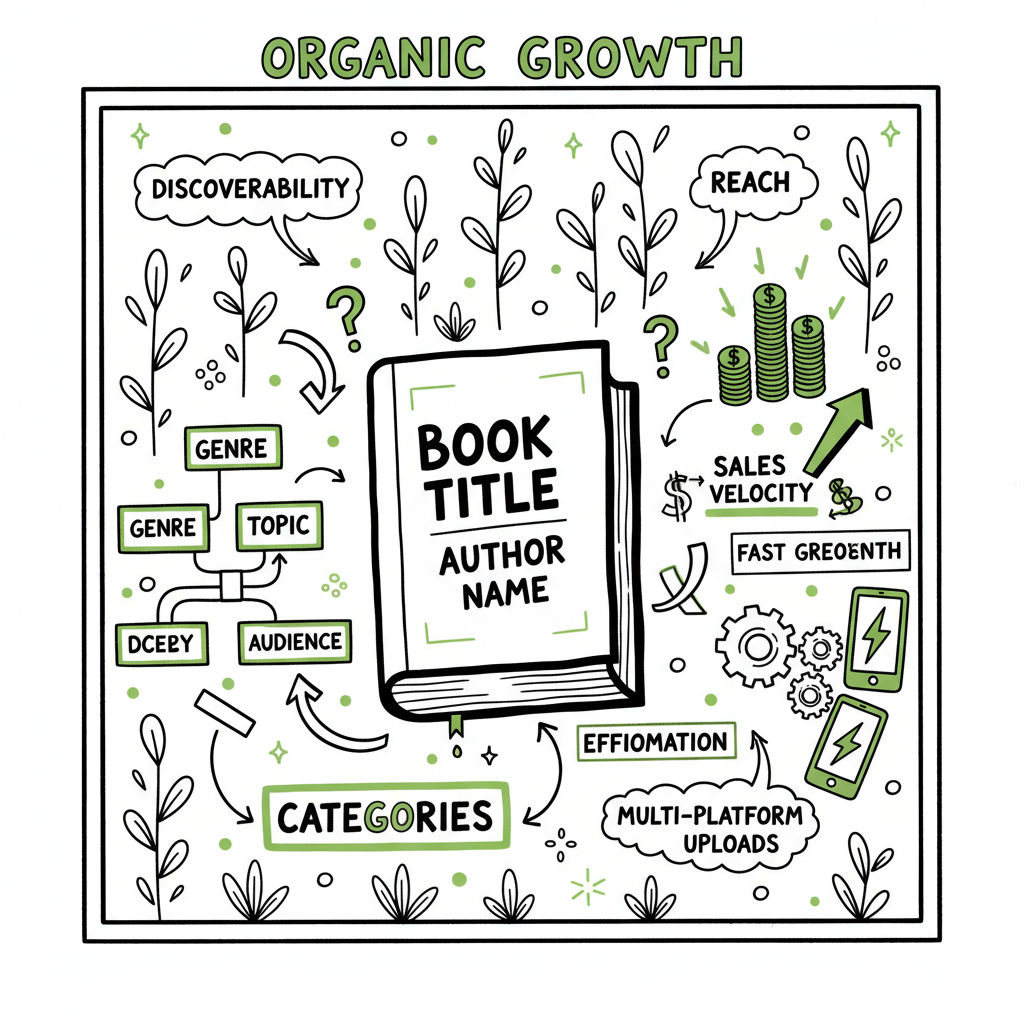
- Ranking books without ads is a cumulative process: metadata, categories, and sales velocity matter most.
- Focus on discoverability signals you can control: keywords, product page quality, and early-read momentum.
- Automating multi-platform uploads and format workflows frees time for marketing and writing — an obvious upgrade for serious authors.
Table of Contents
- Why ranking books without ads matters
- The core signals that move a book up
- A practical workflow to rank organically
- How BookUploadPro helps you scale organic discovery
- Final thoughts
- FAQ
- Sources
Why ranking books without ads matters
If you want steady sales and long-term discoverability, relying only on ads is fragile. Ranking books without ads means building a product page and distribution pathway that work for readers and for store algorithms. This article shows how to prioritize the actions that move the needle: cleaner metadata, better formatting, intelligent distribution, and early momentum. Along the way, I’ll point to practical tools and a reliable publishing automation option so you can spend less time uploading and more time improving books.
For platform-specific guidance, see Amazon Book SEO for Authors.
The core signals that move a book up
The core signals that move a book up
Rankings on major stores are not mysteries. They respond to measurable signals. Focus on these controllable items first.
- 1. Metadata and keywords
- Title, subtitle, and book description are your primary real estate. Include natural phrases readers search for, not keyword lists.
- Backend keywords matter on platforms like Amazon. Use relevant phrases and avoid repetition.
- Tip: For authors selling on Amazon, a deeper look at platform-specific optimizations helps. If you want a focused guide, check Amazon Book SEO for Authors to learn how platform signals differ and how to tune your KDP listings.
- 2. Product page quality
- Clean, scannable descriptions with HTML where allowed.
- Professional cover that reads at thumbnail size.
- Correct categories and BISAC codes so you compete in the right buckets.
- If you’re creating a cover yourself, consider using a modern cover generator to speed iterations and keep design consistent across formats.
- 3. Readable, well-formatted files
- Files that convert cleanly to EPUB and MOBI reduce negative reader feedback and return rates. A clumsy ebook can hurt reviews and thus discoverability.
- Produce a solid paperback proof: trim size, margins, and ISBN/UPC handling matter for distribution.
- If you convert files often, an epub converter speeds the technical steps and reduces formatting errors.
- 4. Launch momentum and pricing
- Early sales velocity and downloads from targeted promotions signal demand. You don’t need ads for this — preorders, newsletter blasts, and author network promotions work when coordinated.
- Price strategically for category placement and Kindle algorithms.
- 5. Reviews and social proof
- Authentic reader reviews remain a strong relevancy signal.
- Ask early readers for honest feedback; don’t manipulate reviews.
- 6. Distribution breadth
- Ranking on Amazon is important, but readers use many stores. Wide distribution increases total readers and creates cross-platform signal flow. Automating uploads across Amazon KDP, Kobo, Apple Books, Draft2Digital, and Ingram makes wide reach practical.
A practical workflow to rank organically
This workflow is written for authors who publish regularly and want repeatable, measurable results.
Step 1 — Nail the metadata
Spend focused time on title/subtitle and description. Use natural search language. Create variations and test which subtitles convert better during prelaunch and early sales windows.
Step 2 — Build a platform-specific product page
Treat each store separately. Amazon gives different weight to some fields than Apple or Kobo. Use platform intelligence to tailor descriptions and keywords per store without duplicating content.
Step 3 — Get your files production-ready
Convert your manuscript cleanly to EPUB and check page breaks for paperbacks. A reliable EPUB conversion process reduces rejection and reader complaints. If you need consistent, repeatable conversions, look into an epub converter that handles common pitfalls automatically.
Step 4 — Design a strong cover and consistent branding
Your cover must work as a thumbnail and on retailer banners. Iterations are cheaper with automated tools; use a trusted cover generator so you can produce multiple sizes and test variants quickly.
Step 5 — Choose categories and pricing with intent
Selecting the right category can be more effective than a short ad campaign. If your book fits multiple niches, choose the one with realistic sales expectations where you can be competitive.
Step 6 — Launch with coordinated outreach
Use your newsletter, ARC group, social profiles, and trusted bloggers. Early sales and downloads from genuine readers build the velocity that algorithms reward.
Step 7 — Extend reach with wide distribution
Publish beyond one store. If you upload across platforms manually, errors and time cost mount. CSV batch uploads and platform-specific intelligence eliminate repetitive tasks and reduce mistakes so you can maintain consistent listings across retailers.
How BookUploadPro helps you scale organic discovery
When you publish more than one title, the manual work becomes the bottleneck. BookUploadPro automates repetitive uploads across Amazon KDP, Kobo, Apple Books, Draft2Digital, and Ingram. It’s not theory — it saves about 90% of the time you’d spend uploading files, metadata, and pricing one store at a time.
Here’s how automation supports ranking books without ads:
- CSV batch uploads: update metadata and push changes across stores quickly.
- Platform-specific intelligence: fields are mapped correctly so product pages match each retailer’s expectations.
- Error reduction: built-in checks catch common issues that can delay visibility.
- Format handling: manage ebook and paperback assets so each store gets a production-ready file.
When you start publishing seriously, a publishing workflow becomes an obvious upgrade. Automate the upload. Own the distribution.
Practical examples
– If you publish a series, use batch updates to keep subtitles, series metadata, and pricing aligned across stores. Consistency helps readers find and buy the next book, improving overall sales velocity.
– When you revise a cover, a cover generator can produce all required sizes and variations. Upload those in a single batch and push the updated asset everywhere.
– If you test different price points, CSV pricing updates let you test quickly and roll back without tedious manual edits.
Final thoughts
Ranking books without ads is deliberate work, not luck. Focus on the elements stores reward: clean metadata, readable files, strong covers, strategic categories, and early reader momentum. Reduce the busywork — use automation to publish consistently and accurately across stores so your time goes to writing and genuine reader outreach.
FAQ
Q: Can a book rank well without any paid promotions?
A: Yes. Many books build organic ranking through coordinated launches, reader outreach, and consistent distribution. Paid ads can accelerate results, but they’re not mandatory.
Q: How long does organic ranking take?
A: It varies. A focused launch can produce measurable rank improvements in days; broader discoverability often takes weeks to months as sales and reviews accumulate.
Q: Do I need different files for each store?
A: Stores accept similar formats, but each has quirks. Producing a clean EPUB and a production-ready paperback PDF is the baseline. Converting and validating files before upload reduces issues.
Q: Will automating uploads reduce errors?
A: Yes. Tools that map fields to each platform and validate common problems cut mistakes and speed distribution.
Q: What is the best way to start ranking organically?
A: Focus on cohesive actions: clean metadata, fast and readable files, strong covers, accurate categories, and early momentum from genuine readers along with coordinated distribution.
Sources
- https://blog.bookuploadpro.com/amazon-book-seo-for-authors
- https://www.bookautoai.com/book-cover-generator-processing
- https://www.bookautoai.com/epub-converter
- https://www.bookautoai.com
Ranking Books Without Ads: Practical Strategies for Organic Visibility Estimated reading time: 5 minutes Key takeaways Ranking books without ads is a cumulative process: metadata, categories, and sales velocity matter most. Focus on discoverability signals you can control: keywords, product page quality, and early-read momentum. Automating multi-platform uploads and format workflows frees time for marketing…