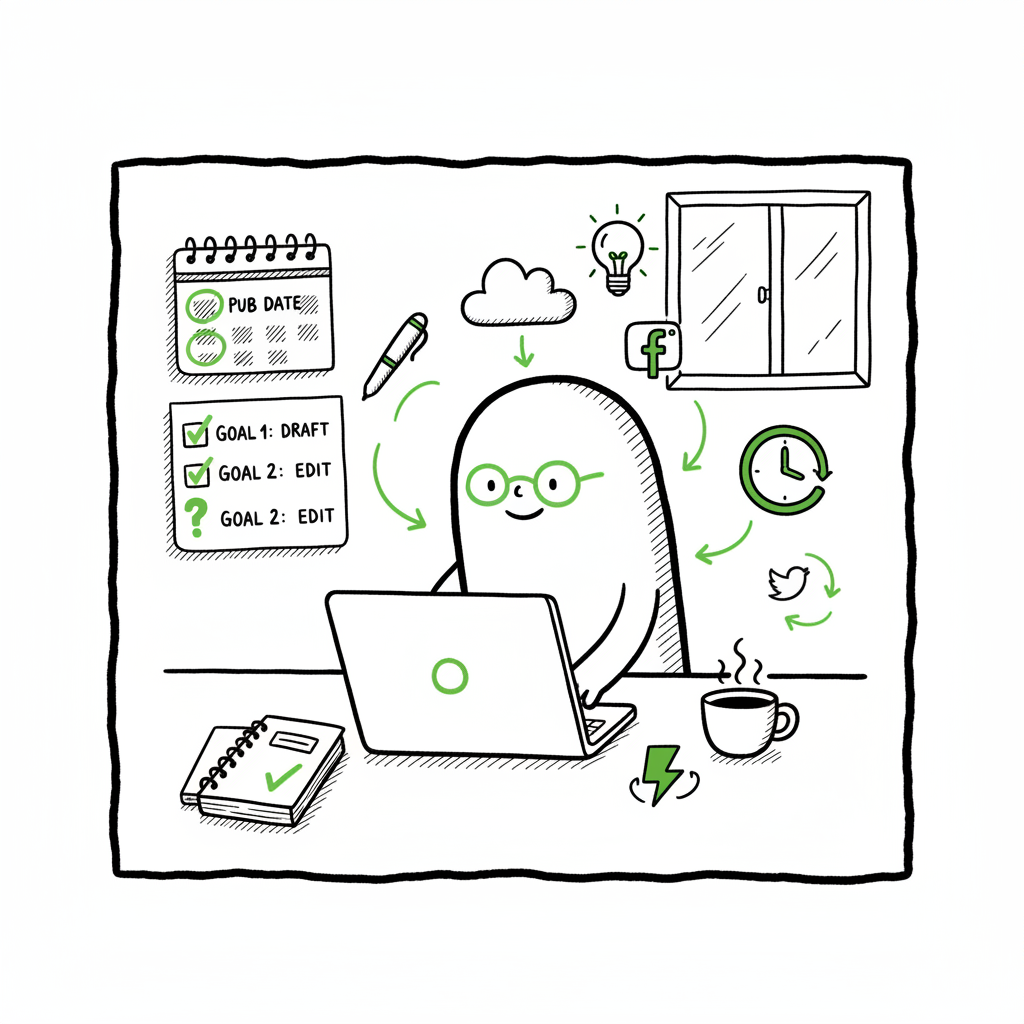
Publish Consistently Without Burnout and Sustainable Output
Publish Consistently Without Burnout
Estimated reading time: 7 minutes
Key takeaways
- Consistency beats speed: modest, repeatable goals protect your energy and build discovery over time.
- Use systems and selective automation to reduce repetitive work while keeping creative control.
- Tools that handle multi‑platform uploads, formatting, and collateral let you scale without turning publishing into a sprint.
Table of Contents
- Why consistent publishing matters
- Systems that prevent burnout
- Automating publishing without losing control
- FAQ
Why consistent publishing matters
Anchor: why-consistent-publishing
Most authors who want to publish consistently without burnout start with two pressures: a creative schedule and a business schedule. The creative schedule asks for time to imagine, draft, and revise. The business schedule asks for consistent releases, marketing, and metadata updates so readers can find your work. When those schedules conflict, the result is usually stress, missed deadlines, or worse—giving up on future books.
Sustainable output is not about lowering standards. It’s about defining what “enough” looks like for a year and building a plan that matches your life. That might mean one finished book a year, or four short books and a steady newsletter. Set a realistic cadence, then protect it with systems that handle repeatable tasks.
One practical step is to think of your publishing program as a small operation: content, packaging, distribution, and promotion. For packaging and distribution—tasks that are predictable and repetitive—you can rely on tools that scale. For example, many authors move from uploading a book to a single store to automating multi‑platform distribution so the repetitive parts don’t eat into writing time. If you’re exploring predictable revenue and long‑term reach, see Automated Passive Income With Books for a perspective on making distribution work harder so you don’t have to.
The rest of this article explains the systems and choices that let you keep releasing work on a sustainable rhythm—without burning out.
Systems that prevent burnout
Anchor: systems-that-prevent-burnout
Burnout comes from unsustainable intensity: all work, no rest, and no guardrails. To prevent it, break your publishing process into repeatable stages and assign rules to each stage. Below are the core systems authors use to maintain steady output.
1) Scope and friction control
Decide what a finished project looks like before you start. Set length limits, required front matter, and a minimal launch checklist. Scoping solves two problems: you won’t drift into infinite rewrites, and you can estimate how long projects take. BookUploadPro, for example, helps authors standardize project length and formatting so each title fits a predictable workflow.
2) Habit-based writing, not sprints
Small, consistent targets beat heroic bursts. For many authors that means daily or weekly word goals that add up. A reliable routine reduces the daily decision overhead: you don’t argue about whether to write—the system makes it a habit.
3) Editorial guardrails
Build a short editorial pass model: draft to a fixed length, then 2–3 editing passes that fix structure, voice, and polish. Avoid open-ended perfectionism by using a checklist for each pass. Editorial templates make each pass predictable and faster.
4) Shared responsibility
If you work with freelancers, a small team, or a service, split launch responsibilities early. Planning visibility and promotional tasks across people prevents last-minute all-hands marathons that cause burnout.
5) Production automation and formatting
Formatting, conversion, and packaging are repetitive and ideal for automation. When repeated manually, these tasks add weeks to a schedule. Tools that standardize interior layout, handle EPUB conversion, and generate print files free up weeks per title. If you need a simple, reliable way to create an ebook or paperback without rebuilding files each time, look for services that handle book creation workflows and file generation.
6) Minimal launch rules
Design a launch that scales: pick two promotional channels you can sustain for months (newsletter and social, for example). Use simple launch assets—cover, blurb, 4–6 email templates—and reuse them across titles with light edits. Consistent visibility compounds better than trying every new tactic.
Practical tool notes
- CSV batch uploads and platform‑specific intelligence reduce repetitive clicks when you publish multiple titles.
- Standardized formatting reduces errors and the amount of back-and-forth with retailers.
- Semi‑automated collateral generation (blurbs, metadata, basic emails) speeds production while keeping you in the creative loop.
If you handle your interior and cover production internally, consider services that streamline those steps. For example, an EPUB converter will let you turn a clean manuscript into a retail-ready file quickly, and a Book Cover Generator helps produce consistent, professional covers without reinventing each design. Both steps reduce friction and keep progress steady.
Automating publishing without losing control
Anchor: automating-without-losing-control
Automation gets a bad reputation when it means “set it and forget it” for creative work. The practical approach is selective automation: move time‑consuming, rule‑based tasks out of your workflow, and keep decision points where creative judgement matters.
What to automate
- File conversion and format checks. Use a reliable EPUB converter to make validated files for each retailer so you spend less time chasing format errors.
- Metadata and distribution. Fill metadata once, then push it to multiple platforms. Platform-specific intelligence can handle retailer quirks automatically.
- Uploads and scheduling. Batch uploads by CSV or via a publishing service that supports multiple channels: Amazon KDP, Kobo, Apple Books, Draft2Digital, Ingram.
- Collateral templates. Create reusable templates for blurbs, newsletter copy, and social posts, then customize lightly for each release.
What to keep manual
- Voice and story. Your voice is your brand. Any automation that touches content must be supervised and edited by you.
- Final quality checks. Read files on multiple devices and inspect covers at thumbnail size. Automated checks can flag issues, but the final decision is human.
- Strategic choices. Release timing, pricing, and long-term series planning should remain author-driven.
A practical workflow that balances control and efficiency
- Define the project scope (length, release window, essential metadata).
- Draft using modest daily or weekly targets.
- Run editorial passes with clear goals and a short checklist.
- Export clean manuscript and cover assets.
- Convert to retail formats with a trusted EPUB converter and generate print files.
- Use batch upload or multi-platform publishing tools to distribute files, using platform‑specific checks.
- Schedule promotions using reusable collateral templates.
- Post‑launch: monitor sales and long-run visibility tasks, not daily panics.
Tools that help at scale
If you plan to publish multiple titles per year, a service that automates repetitive production and multi‑platform uploads becomes an operational upgrade. Look for offerings that advertise unified multi‑platform publishing, CSV batch uploads, platform-specific intelligence, and measurable time savings—claims like ~90% time savings are what many authors report when they move away from manual uploads to a managed, repeatable process. These tools reduce errors, maintain consistent formatting, and make wide distribution practical and affordable. For authors ready to scale publishing as a steady practice, this type of automation is an obvious upgrade. Book Creation Workflow.
To explore a comprehensive workflow for book production, see the Book Cover Generator and EPUB converter tools, and consider Book Creation Workflow for end‑to‑end guidance.
Balancing speed versus longevity
Automation can tempt you to increase cadence simply because production is easier. Guard against overcommitment by pairing automation with a personal publishing policy: maximum titles per year, mandatory rest windows, and clear quality gates. Use automation to reduce busywork, not to replace rest.
FAQ
FAQ
Q: How many books should I aim to release each year to avoid burnout?
There’s no single number. Many authors find one to three books per year is sustainable when paired with habit-based writing and systems. The right number depends on your life, writing speed, and the complexity of your projects.
Q: Can I use automation and still keep my voice?
Yes. Automation should handle repetitive, technical tasks. Keep content creation and final editorial passes in human hands. Use structured prompts and templates that match your tone so generated assets need only light edits.
Q: What’s the biggest cause of publishing burnout?
Unclear scope and last‑minute launches. When you don’t define “done” and try to manage everything at once, the effort multiplies. Planning, delegation, and a short checklist prevent crises.
Q: Which parts of publishing are safest to automate?
File conversion, formatting, multi‑platform uploads, metadata propagation, and template-based collateral are all rule-based and safe to automate. Always run human checks before release.
Q: Will automating uploads reduce quality?
Not if you keep quality gates. Proper automation reduces human error and frees time for creative review. Maintain a final inspection step for files and covers before you hit publish.
Q: How do I prevent automation from encouraging too-fast release schedules?
Set a publishing policy—max releases per quarter or year—and build mandatory buffers (time for rest, marketing, and reader engagement). Treat your policy as non-negotiable.
Final thoughts and next steps
Publishing consistently without burnout is an operational problem more than a creativity problem. The creative work still matters and still needs your attention. What changes is how you manage the rest. Break projects into predictable, repeatable pieces. Use habit-based writing and short editorial passes. Offload rule-based production—formatting, conversion, multi‑platform uploads, and collateral—to tools and services that standardize quality and save time. Keep strategic and creative decisions with you, and set a publishing policy that protects rest and quality.
If you want to test a workflow that moves repetitive uploads and formatting off your plate while you focus on writing, visit BookUploadPro.com and try the free trial.
Sources
- J. Kevin Tumlinson: On Effective Writing and Avoiding Burnout
- Mastering Consistency to Promote Your Self-Published Book
- Less Stress, More Words: A No-Burnout Plan for Writers
- The Art of Subtle Book Marketing (no burnout, more book sales!)
- Publish Without Burning Out: A Small Press Launch System for Authors
- How to Write & Publish Your First Book Without Burnout
Publish Consistently Without Burnout Estimated reading time: 7 minutes Key takeaways Consistency beats speed: modest, repeatable goals protect your energy and build discovery over time. Use systems and selective automation to reduce repetitive work while keeping creative control. Tools that handle multi‑platform uploads, formatting, and collateral let you scale without turning publishing into a sprint.…