Organic Traffic for KDP Books Explained for Authors
Organic Traffic for KDP Books
Estimated reading time: 8 minutes
Key takeaways
- Organic traffic for KDP books is driven by Amazon’s algorithm and depends on relevance, conversions, and early momentum.
- Optimize listings (title, subtitle, keywords, description, categories) and improve conversion signals (cover, price, reviews) to win unpaid visibility.
- Seed initial sales with small promotions or ads, then scale distribution and reduce manual work with multi-platform automation.
- Use practical tools for cover design, EPUB conversion, and batch uploads to move from hobby publishing to a repeatable business.
Table of Contents
- How Amazon’s algorithm rewards relevance and performance
- Practical SEO and listing work that drives organic traffic for KDP books
- Kickstart sales, reviews, and scaling with automation
- FAQ
- Final thoughts
- Sources
How Amazon’s algorithm rewards relevance and performance
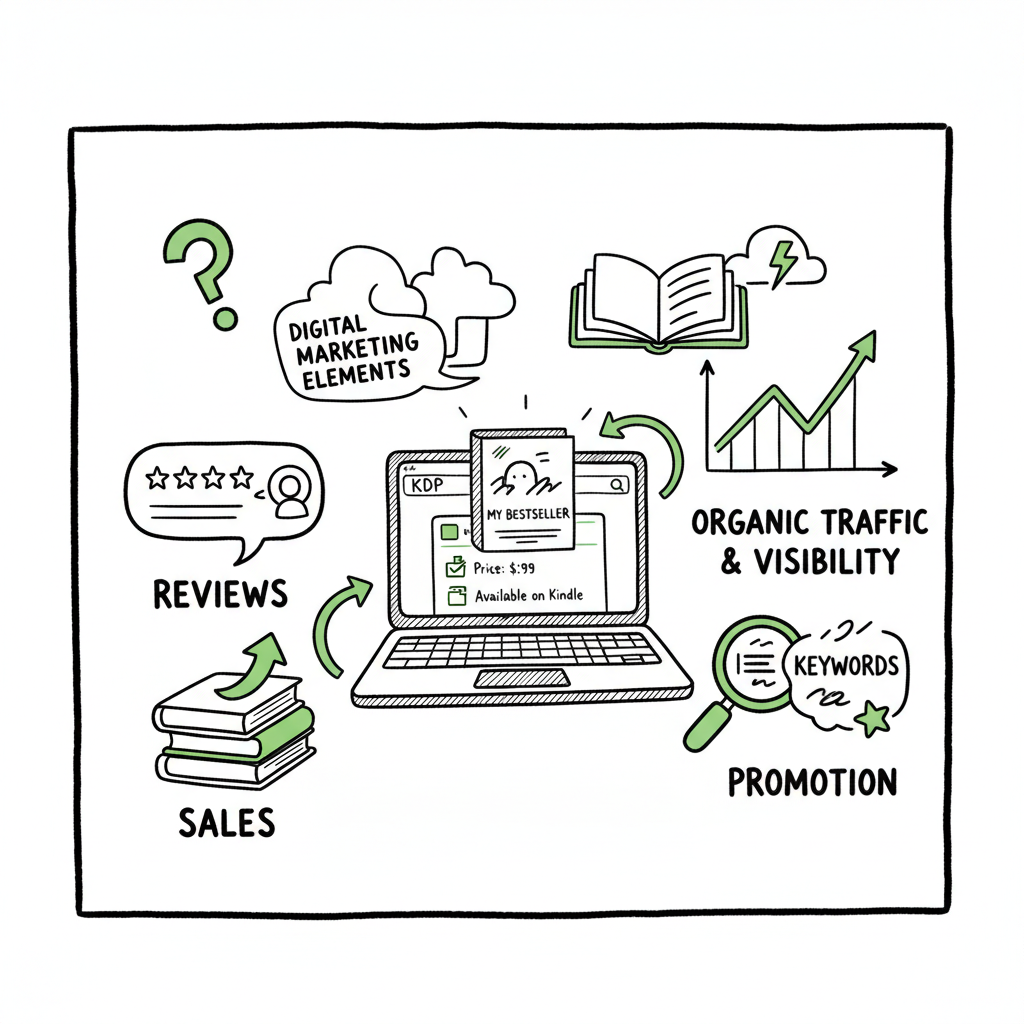
Organic traffic for KDP books comes from unpaid search results and category placements inside Amazon. The A9 (and successor) ranking systems match search queries to listings that look most relevant and are most likely to convert. That means two broad things matter: relevance signals you control (title, subtitle, keywords, categories, description) and performance signals the market provides (sales, conversion rate, reviews).
For a new title, relevancy gets your book shown; performance gets it shown more often and higher. Early sales and positive reviews are especially powerful — they tell Amazon the listing satisfies readers. That’s why authors focus on the first 50–100 orders and the initial review cohort. At scale, this is a performance loop: better conversion → more impressions → more organic sales → better rank.
If you want a hands-on primer on listing-level SEO, see Amazon Book SEO for Authors for a focused walk-through of title and keyword strategies.
A professional cover and clean interior lift conversions. If you need a quick, reliable cover, try a book cover generator to produce print-ready art. If your manuscript needs clean EPUB output, use an EPUB converter to avoid formatting errors that hurt reader experience.
On the conversion side, test price points, A+ content (where available), and ensure your author profile is complete. Every small lift in conversion can multiply search impressions over time.
Practical SEO and listing work that drives organic traffic for KDP books
Start with the parts of the listing Amazon reads and tests when matching queries:
- Title and subtitle: Use a readable title first, then a subtitle with strong target phrases. Don’t stuff keywords; lead with what a reader would search for.
- Backend keywords: Use all available backend slots. Think like a searcher: alternate phrasings, common misspellings, and related terms.
- Description and HTML formatting: Help conversion with scannable bullets, benefit-driven copy, and a clear call to action. A good description turns visits into buys.
- Categories and BISAC codes: Pick the most specific, relevant categories and request additional placement if you can. Less competition in a niche category helps you appear on page one faster.
- Cover and formatting: A professional cover and clean interior lift conversions. If you need a quick, reliable cover, try a book cover generator to produce print-ready art. If your manuscript needs clean EPUB output, use an EPUB converter to avoid formatting errors that hurt reader experience.
On the conversion side, test price points, A+ content (where available), and ensure your author profile is complete. Every small lift in conversion can multiply search impressions over time.
Book creation and publication tooling can streamline the process. If you’re producing paperback and ebook assets at scale, using a consolidated book creation workflow keeps metadata consistent across stores.
Kickstart sales, reviews, and scaling with automation
Purely passive organic success is rare. Use small, controlled actions to seed performance:
- Low-cost promotions: A short free or discounted promotion, participation in Kindle Unlimited, or a small ad campaign can produce the initial sales and reviews Amazon notices.
- Review strategy: Ask readers politely at the back of the book to leave honest reviews. Early, authentic feedback is more valuable than anything you can buy.
- Reinvest and repeat: Use royalties from early wins to fund more promotions or ads that drive visibility for your next book.
When you start publishing more than one title, manual uploads and platform juggling become the bottleneck. That’s where multi-platform publishing and automation matter. A CSV batch upload system that handles Amazon KDP, Apple Books, Kobo, Draft2Digital, and Ingram reduces repetitive work and cuts errors. BookUploadPro automates repetitive uploads, applies platform-specific intelligence, and saves roughly 90% of the time it would take to publish at scale. It’s an obvious upgrade once authors start publishing seriously — automate the upload. Own the distribution.
Practical production links you may need while preparing files:
- For converting manuscripts and clean eBook files, a good EPUB converter speeds the process and avoids rejections.
- If you’re producing paperback and ebook assets at scale, using a consolidated book creation workflow keeps metadata consistent across stores.
- Professional-looking covers matter for conversion; a reliable book cover generator produces predictable results that increase click-through rates.
Automation not only saves time; it reduces listing errors that can block discoverability. Platform-specific intelligence ensures each marketplace gets the metadata it prefers, which improves how those stores surface your titles. For most authors publishing more than a handful of books, automation is the difference between occasional hobby sales and a repeatable revenue engine.
Final thoughts
Organic traffic for KDP books grows when you treat listings like products: optimize for discoverability, optimize for conversion, and then scale distribution without repeating manual steps. Early promotion buys you time; automation makes growth practical.
Visit BookUploadPro.com to try the free trial and see how CSV batch uploads, platform-specific intelligence, and error reduction make wide distribution practical.
FAQ
Q: Can I rely on organic traffic only to build a career on KDP?
Not at first. Organic traffic compounds once you have relevance and performance, but new titles typically need a push — small ads, promos, or inclusion in Kindle programs — to gain the initial momentum.
Q: How should I pick keywords for KDP?
Think like a reader. Use short, specific phrases and alternate wordings across title, subtitle, and backend fields. Avoid repeating the same exact phrase multiple times; diversify to capture related searches.
Q: Does wide distribution hurt my Amazon rank?
No. Wider availability can increase overall sales and reviews, which are positive signals. Just keep metadata consistent across platforms so readers find the same book and cover regardless of store.
Q: What’s the most common listing mistake that kills organic potential?
Weak covers and unclear descriptions. Those reduce conversion, which limits impressions. Another common issue is inconsistent metadata across retailers, which fragments search signals.
Q: Are there risks with automation or bulk uploads?
Bulk processes can save time, but keep metadata consistent and test changes on small batches before scaling. Start with a few titles to validate accuracy.
Q: Do multi-platform stores help long-term growth?
Yes. Diversifying distribution increases reach and can improve overall visibility, but maintain consistent branding and metadata across stores.
Sources
- Amazon Kindle SEO: How to Grow Traffic & Book Sales – SellerMetrics
- Why Relying on Organic Sales Will Destroy Your Self-Publishing
- My INSANELY EFFECTIVE Book Launch Strategy For Amazon KDP
- Organic sales – KDP Community
- Optimizing Your Amazon Book Listings For Better Sales – YouTube
Organic Traffic for KDP Books Estimated reading time: 8 minutes Key takeaways Organic traffic for KDP books is driven by Amazon’s algorithm and depends on relevance, conversions, and early momentum. Optimize listings (title, subtitle, keywords, description, categories) and improve conversion signals (cover, price, reviews) to win unpaid visibility. Seed initial sales with small promotions or…