Nonfiction Book Niches That Sell for Self-Publishers
Nonfiction Book Niches That Sell: A Practical Guide for Self-Publishers
Estimated reading time: 9 minutes
Key takeaways
- Choosing a clear, targeted niche makes marketing predictable and repeatable.
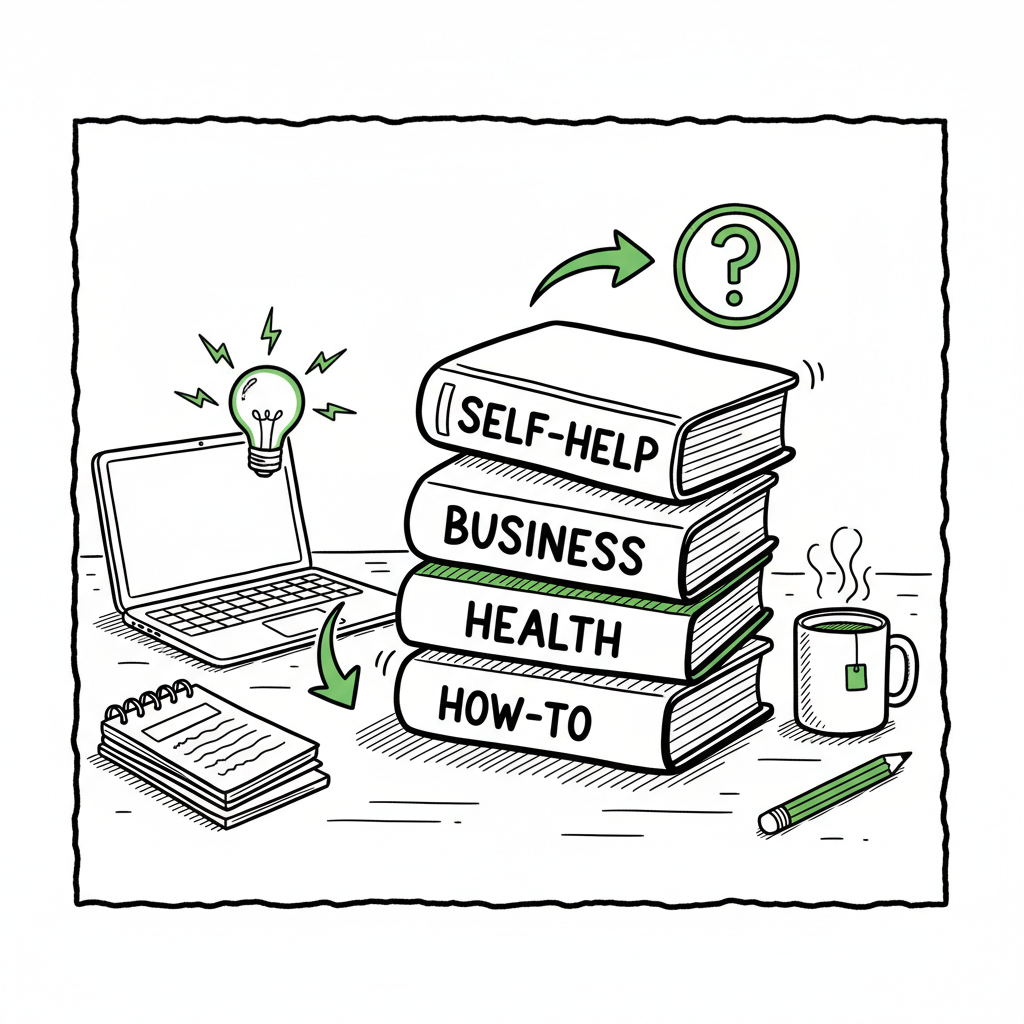
- Several reliable nonfiction categories consistently sell: self-help, business, how-to, health, and low-content planners.
- Once you publish multiple titles, automating uploads and distribution across platforms saves time and reduces errors.
Table of Contents
- Why niche choice matters for scale
- Top nonfiction niches that sell and why they work
- How to validate a nonfiction niche before you write
- Publishing at scale: distribution, formatting, and automation
- Practical scaling process
- FAQ
Why niche choice matters for scale
The most successful indie authors are not writing random books hoping one catches fire. They pick a specific audience and serve it repeatedly. That focus makes titles easier to find, easier to market, and easier to turn into series or companion products.
If you’re new to niche research, start with practical lists and proven categories rather than trends. For a quick primer and examples, see Book Niches That Sell. That page gives concise topic ideas you can test before investing months in a manuscript.
Top nonfiction niches that sell and why they work
Not every topic is equally commercial. Below are dependable nonfiction niches that sell well for self-publishers, and why they keep working.
- Self-help & personal development
- Demand is steady. Readers look for practical, short fixes: habits, focus, confidence, and productivity.
- Books that promise a specific outcome (e.g., “30-day habit reset”) perform better than vague promises.
- Business, freelancing, and entrepreneurship
- Actionable guides on side hustles, freelancing systems, or simple marketing tactics attract buyers willing to pay for results.
- Case studies, templates, and checklists add perceived value.
- Personal finance & money management
- Budgeting, debt reduction, and beginner investing are perennial needs.
- Niche subtopics (cash envelopes, frugal living for single parents) can outperform broad finance titles.
- Health, dieting, and practical wellness
- Focused cookbooks, quick habit changes, or niche diets sell well.
- Specialty formats (meal planners, recipe collections) are easy to package and promote.
- How-to and hobby guides
- Instructional books for crafts, home repair, and hobbies reach passionate buyers.
- Projects with photographed steps or printable patterns increase perceived usefulness.
- Low-content books (journals, planners, logbooks)
- Fast creation, low cost, and steady evergreen demand make these attractive for scaling.
- Design quality and niche positioning (gratitude journal for nurses, meal planner for keto) matter.
These niches are not fads; they respond to predictable human needs. The advantage for publishers is that once you find a repeatable title structure, you can produce and market multiple related books.
How to validate a nonfiction niche before you write
Validation saves time. Do these simple checks before you write:
-
Search demand
- Check Amazon category pages and bestseller lists in your target niche.
- Read customer reviews of top books to see what problems readers still need solved.
-
Keyword signals
- Look for consistent search terms in titles and subtitles. If several bestselling books share similar phrasing, that’s a sign of stable demand.
-
Price and product fit
- Are buyers willing to pay for similar books? Low price points can still work at volume, but higher-priced guides with templates or workbooks can boost per-sale revenue.
-
Competition quality
- A crowded category with low-quality offerings is an opportunity; a crowded category with high-quality incumbents is harder to break into.
-
Scale potential
- Can the idea support more than one book? A series, workbook, planner, or short-course companion multiplies lifetime value.
Publishing at scale: distribution, formatting, and automation
Once you plan multiple titles, manual uploads become a bottleneck. Scaling means three operational controls: consistent formatting, wide distribution, and batch automation.
Formatting and file prep
Good formatting reduces returns, negative reviews, and platform errors. If you create paperbacks and ebooks, standardize templates for trim sizes, margins, and fonts so every new title follows the same process.
For EPUB conversion, use a reliable tool rather than hand-editing files; that saves time and keeps output consistent. If you need a dependable EPUB conversion, try a dedicated EPUB conversion service to simplify the step.
Covers matter. A consistent series look and a clean thumbnail increase click-throughs. If you need tools for cover generator, a book cover generator can speed production while keeping visual quality consistent.
When you produce both paperback and ebook versions, a single workflow that outputs print-ready PDF and EPUB files will avoid repetitive manual fixes. For end-to-end book creation process that handles both formats, consider specialized tools that integrate with publishing pipelines.
Wide distribution
Selling on Amazon is necessary for most authors, but wider distribution multiplies sales and discovers different reader segments. Distribute to:
- Amazon KDP
- Kobo
- Apple Books
- Draft2Digital (aggregator)
- Ingram (global print distribution)
A unified approach to metadata, pricing, and editions ensures your titles are discoverable across channels. It’s common to keep a single master CSV of book metadata and assets so platforms get the same information without repeated manual entry.
Automation and batch uploads
When you publish more than a handful of titles, manual uploads break down. Automation handles repetitive tasks: filling metadata, uploading files, setting prices, and assigning categories.
BookUploadPro automates repetitive uploads across Amazon KDP, Kobo, Apple Books, Draft2Digital, and Ingram. The platform uses CSV batch uploads and platform-specific intelligence to cut about 90% of the time spent on distribution, reduce errors, and make wide distribution practical. For authors publishing multiple series or editions, automating the upload is an obvious upgrade once you start publishing seriously. Automate the upload. Own the distribution.
Practical scaling process
- Build a master spreadsheet (title, subtitle, series, description, keywords, prices, ISBN, asset filenames).
- Use a standard interior template and a consistent cover style.
- Batch-generate EPUB and print PDFs from your master files.
- Use an automation tool to push batches to each retailer, then verify metadata and sales channels.
FAQ
Q: Which nonfiction niche makes the most money fastest?
A: Fast money usually comes from solving a pressing problem with a clear promise (e.g., quick productivity fixes, budgeting plans). But sustainable income comes from repeatable series and multiple related products.
Q: How many books should I publish before automating?
A: When uploads start to feel repetitive—that’s the right signal. Many authors automate after 5–10 titles. Automation pays off because it saves time and reduces listing errors.
Q: Can I publish low-content books and still build a brand?
A: Yes. Low-content titles can build steady revenue if they target specific buyer groups and maintain consistent design and usefulness.
Q: Do I need different files for each retailer?
A: Kind of. Retailers accept similar formats but often require tweaks (cover bleed for print, specific EPUB settings). A streamlined process that outputs platform-ready files is the most efficient approach.
Q: Should I automate for small catalogs?
A: Even a modest catalog can benefit from automation to save time and reduce repetitive data entry.
Sources
- Market reports and niche trend data (industry publications and marketplace reports)
- Amazon KDP category and bestseller pages
- Book publishing platforms’ official documentation
Final thoughts
Choosing the right nonfiction niche is part research, part discipline. Start with predictable readers, validate quickly, and put a repeatable production and distribution system in place. When you publish multiple titles, automation and wide distribution stop being optional and become the backend of a real publishing business.
Visit BookUploadPro.com to learn more and try the free trial.
Nonfiction Book Niches That Sell: A Practical Guide for Self-Publishers Estimated reading time: 9 minutes Key takeaways Choosing a clear, targeted niche makes marketing predictable and repeatable. Several reliable nonfiction categories consistently sell: self-help, business, how-to, health, and low-content planners. Once you publish multiple titles, automating uploads and distribution across platforms saves time and reduces…