Low Competition Book Niches for Self-Publishers 2026
Low competition book niches: Practical paths for self-publishers in 2026
Estimated reading time: 8 minutes
Key takeaways
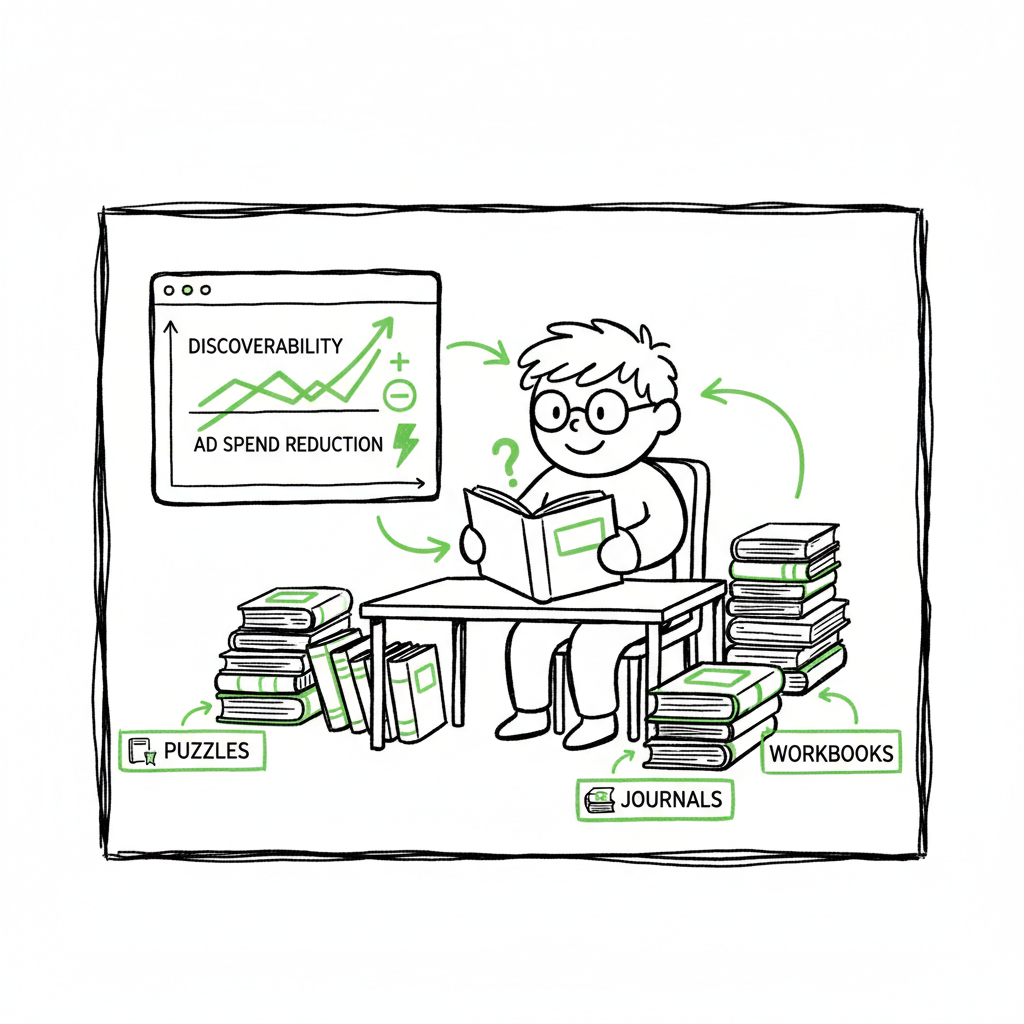
- Targeting low competition book niches improves discoverability and reduces ad spend; niche down to specific audiences and problems.
- Medium-content niches—puzzles, activity workbooks, targeted journals—often beat generic low-content books because they have higher barriers to entry.
- Use multi-platform automation to scale: CSV batch uploads, platform-specific intelligence, and repeatable interiors make wide distribution practical.
Table of Contents
- Why low competition book niches matter
- Where to find underserved niches
- Top low competition book niches for 2026
- How to scale multi-platform distribution without repeating work
- Final thoughts
- FAQ
- Sources
Why low competition book niches matter
Low competition book niches give new and active self-publishers a real chance to get noticed. When top books in a market have fewer than 500 reviews, a well-made title can rank and sell steadily without expensive ads. For authors who publish multiple titles, choosing niches that are specific—age ranges, formats, or use cases—means each book has a clearer buyer and a higher chance to convert.
If you want curated examples and quick comparisons, Book Niches That Sell for extra lists and ideas that pair well with the strategies below. Picking the right niche early lets you focus on quality interiors, covers, and keyword relevance instead of guessing at a crowded market. cover generator helps you get a professional look quickly, and a reliable EPUB converter can save time and reduce errors when preparing files.
Where to find underserved niches
Start with demand signals, then check supply. Use these practical steps:
- Scan best-seller pages and note sub-topics where top listings have low reviews or weak covers.
- Look at teacher and parent communities for recurring requests (activity books, workbooks, planners by use-case).
- Use keyword tools set to 2026 phrases (e.g., “air fryer Mediterranean recipes 2026”) to capture seasonal or trend-aligned searches.
- Prefer medium-content formats—puzzles, workbooks, activity books—because they raise the bar for copycats and reward quality.
When you prepare an interior, remember production steps early: create a reliable paperback and ebook file and make clean EPUBs for stores that require them. If you need a tool for formatting and conversions, a dedicated EPUB converter can save time and reduce errors.
Top low competition book niches for 2026
Below are niche types that consistently show gaps between demand and quality supply. Each entry includes a simple example you could build and scale.
Puzzle and activity books (medium-content)
Example: “Easy Mazes for Kids Ages 3–5” or “Maze Puzzle Book for Adults With Solutions.” These take more design work than blank journals, which reduces casual competition.
Niche children’s activity books
Example: “Dot Marker Space Activity Book” or “I Spy: Backyard Edition.” Parents and teachers buy repeatedly when the theme is specific and educational.
Targeted workbooks and educational packets
Example: “Early STEM Workbook for Toddlers” or “Creative Writing Workbook for Tweens.” These perform well because teachers and parents need usable content.
Practical low/no-content journals with a clear use
Example: “Beekeeping Tracker Logbook” or “Life Skills Journal for Teens With Autism.” Specific utility beats generic note-taking books.
Specialty cookbooks
Example: “Plant-Based Slow Cooker Recipes” or “2026 Mediterranean Diet Air Fryer Cookbook.” Unique recipe sets and clean photography raise buyer confidence.
Hobby trackers and logbooks
Example: “Knitting Project Log” or “Homebrewing Batch Tracker.” Narrow hobbies have committed buyers and low competition.
Quality matters: interiors, layout, and covers still win. A high-converting cover distinguishes even a niche with low competition—if you aren’t a designer, use a reliable cover tool to get a professional result quickly.
How to scale multi-platform distribution without repeating work
When your niche choice proves out, repeat the title into adjacent niches and multiple formats. Scaling by hand creates repeated errors and wastes time; automation removes those bottlenecks.
What to automate
- CSV batch uploads: prepare a spreadsheet with metadata, keywords, pricing, and file links to push dozens of titles at once.
- Platform-specific intelligence: let the system map trim sizes, file types, and delivery rules to each store (Amazon KDP, Kobo, Apple Books, Draft2Digital, Ingram).
- Error reduction: automated validation cuts rejected files and listing errors, saving hours of back-and-forth.
Why multi-platform matters
Single-platform publishing narrows reach. Some readers use Apple Books or Kobo instead of Amazon; having the same title across stores increases cumulative sales and discoverability. For publishers with many titles, the time saved compounds—BookUploadPro’s approach typically yields ~90% time savings on uploads once you standardize files and metadata. Automate the upload. Own the distribution.
Production tips that scale
- Produce a reusable interior template for each niche type (puzzles vs. workbooks vs. trackers).
- Batch-generate covers from a template set, and if you need an automated option for generating covers, a dedicated cover generator handles sizing and export correctly.
- Convert master manuscripts to EPUB once and validate the output; a reliable EPUB converter keeps your ebook files clean for Apple and Kobo.
- Keep a “formats” master: one source of truth you export to paperback, hardcover, and EPUB so updates are fast.
- When you expand into new niches, reuse metadata bundles and tweak keywords for the sub-niche.
Platform workflow example
- 1. Pick a validated niche and finalize interior and cover.
- 2. Export one clean EPUB and one print-ready PDF.
- 3. Upload via CSV to a multi-platform service that maps fields to each retailer, or use platform UIs if you have only a title or two.
- 4. Monitor early sales and reviews, then iterate.
Automating these steps makes wide distribution practical and frees you to create more titles or improve marketing. For many active self-publishers, a multi-platform publishing service is an obvious upgrade once they intend to publish seriously.
Final thoughts
Low competition book niches are most valuable when you combine a clear buyer, quality product, and an efficient distribution plan. Start with small, well-defined markets—puzzles, targeted activity books, niche workbooks, and hobby trackers—and build repeatable production templates. Use automation for uploads and format conversions so you can scale without repeating manual work.
FAQ
Q: What counts as a “low competition” niche?
A: A niche where top books have low review counts (often under 500), where buyers search for specific needs, and where listings are not dominated by large, polished publishers.
Q: Are low-content journals still worth it?
A: Yes, when they are specific. Generic notebooks are crowded; targeted use-case journals (e.g., cleaning checklists, specialist trackers) sell better.
Q: How much effort do puzzle or activity books require compared to blank journals?
A: More effort up front. Interiors need design and, for puzzles, verified solutions. That extra work reduces competition and increases buyer trust.
Q: Should I publish on multiple platforms?
A: Yes. Different platforms reach different readers. Multi-platform distribution increases total reach and smooths revenue across stores.
Q: What’s a simple first automation step?
A: Standardize metadata into a CSV and export one validated EPUB. That allows batching uploads or moving to a multi-platform tool quickly.
Q: How can I ensure quality to deter copycats?
A: Focus on thorough interiors, clear use-case definitions, and professional covers; higher upfront quality reduces copycat appeal and boosts buyer trust.
Sources
- https://livingwriter.com/blog/most-profitable-amazon-kdp-niches-top-10/
- https://lowcontentprofits.com/best-kdp-niches-2023/
- https://bookbeam.io/blog/find-profitable-kdp-niches/
- https://www.youtube.com/watch?v=vJubPbzxdNg
- Book creation tools: https://www.bookautoai.com
- EPUB converter: https://www.bookautoai.com/epub-converter
- Cover generator: https://www.bookautoai.com/book-cover-generator-processing
Low competition book niches: Practical paths for self-publishers in 2026 Estimated reading time: 8 minutes Key takeaways Targeting low competition book niches improves discoverability and reduces ad spend; niche down to specific audiences and problems. Medium-content niches—puzzles, activity workbooks, targeted journals—often beat generic low-content books because they have higher barriers to entry. Use multi-platform automation…