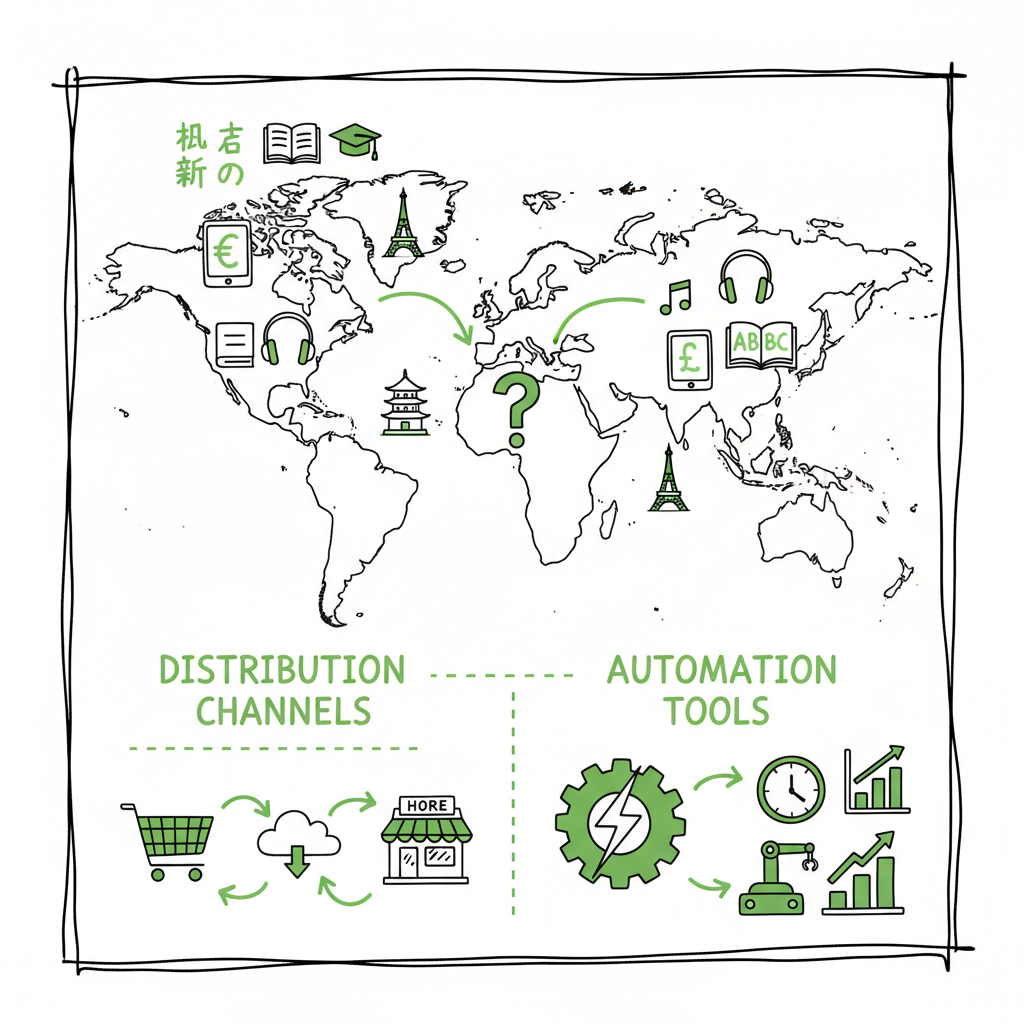
International Book Niches Where to Publish and Scale
International Book Niches: Where to Publish and How to Scale
Estimated reading time: 9 minutes
Key takeaways
- International book niches reward localization: language, culture, and distribution channels matter more than a generic global title.
- Focus on high-opportunity regions (Asia‑Pacific, Europe, emerging markets) and formats (ebooks, audiobooks, education) to increase reach and revenue.
- Use automated multi‑platform publishing to scale reliably: CSV batch uploads, platform intelligence, and error reduction make wide distribution practical.
Table of Contents
- Overview
- High‑opportunity international niches
- Localize, format, and distribute
- Scale publishing with automation
- FAQ
- Sources
Overview
“International book niches” describes categories and formats that sell well outside the primary English market. These niches are driven by local languages, regional trends, and growing digital access. If you write for a single market, you’re missing demand in other regions where readers prefer local language, local topics, or different formats. That’s why learning where niches line up with distribution channels is practical publishing strategy, not speculation.
Early on, map opportunity by region, format, and competition. A clear example: short non‑fiction about entrepreneurship can perform differently in India, Japan, and Brazil because of language, cultural framing, and local platforms. If you’re testing ideas, track both reader demand and how hard it is to reach those readers. For quick market validation and to expand beyond English-first markets, see how well your idea lines up with known Book Niches That Sell and target the platforms that readers use locally.
High‑opportunity international niches
Demand and competition vary by region. Here are practical niches to watch and why they work.
Asia‑Pacific
- Regional languages (Mandarin, Hindi, Bahasa) often outsell English titles for fiction and local non‑fiction. Mobile reading and affordable ebooks push volume.
- Fast growth in young adult fiction, local romance, and language learning content.
Europe
- Multilingual markets reward quality translations, regional history, and educational titles.
- Audiobooks and subscription models are strong; consider shorter, series-based formats that perform well in KU‑like systems.
North America
- Strong for niche non‑fiction (business, self‑help, memoir) and audiobooks. Competitive but large.
Emerging markets (Middle East, Africa, Latin America)
- Textbooks, children’s books, and localized practical non‑fiction can outperform imported English titles. Growth is fast where literacy initiatives and school procurement drive demand.
How to pick a niche
- Start with reader intent: is this book solving a problem, entertaining, or fulfilling curriculum needs?
- Measure competition on local stores and social channels, not just Amazon.com.
- Consider format: audiobooks and ebooks unlock international reach faster than print; educational content can rely on institutional sales.
Localize, format, and distribute
Localization is a practical process: translation + cultural editing + format choices. Each step affects royalties and distribution.
Translation and cultural editing
- Professional translation or vetted native editors are essential. Don’t assume machine translation is final; cultural tone and idioms matter.
- For serial work, invest in a style guide so sequels and covers stay consistent.
Cover design and conversion
- Covers should respect regional visual norms; colors and typography that work in one market may underperform in another. If you need automated cover options, a cover generator can accelerate production while keeping consistent branding.
- Convert to platform-friendly formats: EPUB is the standard for many stores and must be validated for metadata and layout. Use a reliable EPUB converter to avoid rejections.
- For print, verify trim sizes and interior margins on each platform; paperback templates differ per store.
Formats and metadata
- Offer multiple formats (epub, mobi where needed, audiobook, paperback) to capture different reader habits.
- Local keywords, translated descriptions, and correct BISAC/subject codes increase discoverability on local storefronts.
- Price strategically: local purchasing power and VAT rules affect optimal pricing.
Distribution channels
- Not every platform is equal in every market. Amazon dominates some regions, but local stores, aggregators, and subscription services matter elsewhere.
- For paper distribution, look at regional print partners to reduce cost and delivery time.
Practical links to tools (editorial)
– If you create ebooks and paperbacks at scale, a production workflow can help you generate files and metadata reliably across platforms.
Scale publishing with automation
Publishing a few titles is manual work. Publishing dozens or hundreds needs a repeatable system. That’s where unified multi‑platform automation matters.
Why automation
- CSV batch uploads and platform‑specific intelligence save time. Manual entry for each store and each language is the main bottleneck.
- Automation reduces human error in metadata, cover uploads, and pricing. That lowers rejection rates and speeds time to market.
- When you publish seriously, automating uploads is an obvious upgrade: you spend less time on repetitive tasks and more on writing and marketing.
What an automated workflow should do
- Accept CSV or spreadsheet batches with metadata, language, and format flags.
- Generate platform‑specific packages (EPUB with correct manifest, high‑res covers, paperback interiors).
- Run validation checks that mimic store rules to catch errors early.
- Distribute to Amazon KDP, Apple Books, Kobo, Draft2 Digital, and Ingram with a single operation.
- Report status and flag stores that need manual review.
BookUploadPro in practice
- BookUploadPro automates the repetitive work across Amazon KDP, Kobo, Apple Books, Draft2Digital and Ingram, offering ~90% time savings on batch uploads.
- Key features: CSV batch uploads, platform‑specific intelligence, error reduction, and unified reporting. It makes wide distribution practical and affordable, with a free trial to test at scale.
- This workflow is helpful when you target multiple niches or languages; instead of redoing uploads per market, you prepare once and distribute everywhere.
Practical tip: use a product page or market test before full translation and production. If a title proves traction in one language, automate the rollout of translated editions.
FAQ
Q: Which international niches are easiest to test quickly?
A: Short non‑fiction and children’s picture books in local languages are quick tests. They need modest production and can validate demand before you invest in large translations.
Q: Do I need separate ISBNs per country?
A: ISBN rules vary. Many platforms accept the same ISBN for multiple territories, but check distributor and retailer requirements. When in doubt, follow the store’s guidance.
Q: How do I price books for multiple currencies?
A: Use local pricing tiers and factor in VAT where applicable. Some aggregators adjust prices automatically; use automation to apply regional pricing rules in bulk.
Q: How should I handle audio rights?
A: Keep audio rights separate if you plan for wide distribution. Audiobook production is costly but valuable in markets with strong audio consumption.
Q: Do I need to localize everything at once?
A: Start with the strongest demand areas and scales progressively. Localize strategically to maximize early ROI.
Final thoughts
International book niches give authors practical ways to expand reach and revenue. The work that pays is not glamour but systems: localize accurately, format correctly, and distribute efficiently. When you move beyond one‑off uploads to a repeatable workflow, publishing in multiple languages and markets is manageable and cost‑effective.
Sources
- Book Publishing Market Companies, Research & Trends 2024-2030
- Books Market Size, Share & Growth | Industry Report, 2033
- Books Market Size, Industry Trends & Forecast Report 2025 – 2030
- Books Market Size, Share | Forecast Report [2033]
- International Success: Selling Niche Titles Beyond the Prime Home
- International Book Markets Case Study
- AI Market Research Tool: Find Profitable Book Niches in Minutes
- 7 Most Profitable eBook Niches for 2025: Your Guide to High-Selling
International Book Niches: Where to Publish and How to Scale Estimated reading time: 9 minutes Key takeaways International book niches reward localization: language, culture, and distribution channels matter more than a generic global title. Focus on high-opportunity regions (Asia‑Pacific, Europe, emerging markets) and formats (ebooks, audiobooks, education) to increase reach and revenue. Use automated multi‑platform…