Future of Amazon SEO for Books — 2026 Guide for Authors
future of amazon seo for books: What authors must do in 2026
Estimated reading time: 9 minutes
Key takeaways
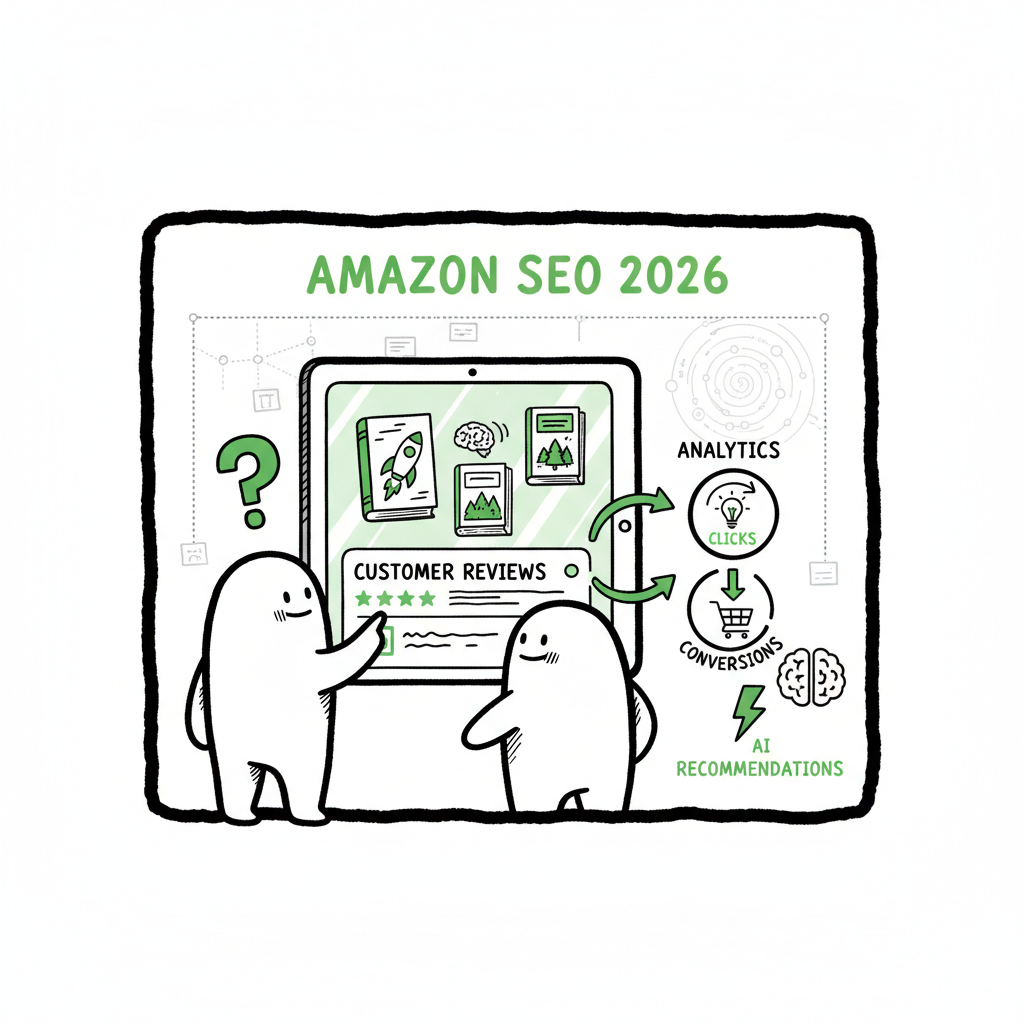
- Amazon’s ranking now mixes keywords with real buyer signals: clicks, time on page, and conversions matter more than exact-match phrases.
- Practical gains come from better pages: clear covers, sample content, A+ sections, and steady pricing/stock to keep conversion metrics high.
- Automation and batch workflows unlock scale: upload once, publish everywhere, and focus time on writing and marketing.
Table of Contents
- Why the future of Amazon SEO for books matters
- Practical tactics that still move the needle
- How automation changes multi-platform publishing
- Final thoughts
- FAQ
Why the future of Amazon SEO for books matters
The phrase future of amazon seo for books is shorthand for a practical shift: Amazon’s search is moving from pure keyword matching toward a performance-driven, AI-layered system. That means words in your title and backend still matter, but they share weight with how shoppers respond to your listing. Click-through rates, time spent reading the sample, and purchases — plus returns and stock — feed the algorithm. For authors who want reliable discoverability, focusing on those performance signals is the efficient path.
Early adopters who study buyer behavior and improve the product page see steady gains. For hands-on guidance about optimizing listings, consult resources like Amazon Book SEO for Authors to understand keyword research and metadata best practices while you work on conversion-focused changes.
Practical tactics that still move the needle
Amazon’s A10-era behavior rewards listings that keep readers engaged. Here’s what to optimize, with an operator’s eye for what actually improves rankings.
- Title, subtitle, and backend keywords: Use long-tail, reader-focused phrases. Think like a shopper searching for a precise need (e.g., “quiet bedtime stories for toddlers” rather than only “children’s books”). Backend fields should be concise and avoid punctuation; pack in relevant synonyms and subgenres.
- Sample and A+ content: Give readers a clean, useful sample. A+ pages with a strong author bio, excerpt, and clear benefit statements help both conversion and Rufus-like assistants. If your book includes visual interior content, show a polished preview.
- Cover and visuals: Covers still sell. Good cover art reduces bounce and increases clicks. If you need a quick, consistent pipeline for covers, consider a book cover generator to produce high-quality art that matches genre expectations.
- Reviews and social proof: Early reviews matter more than ever. Aim for consistent, honest review gathering (author newsletters, ARC readers) and respond to feedback where appropriate. Review velocity influences visibility through conversion signals.
- Pricing and stock management: Competitive pricing and reliable inventory prevent ranking dips. Sudden out-of-stock events or frequent price swings can suppress visibility because the algorithm values stable availability and predictable conversions.
- Formats and discovery: Make your book available in the formats your audience prefers. Audiobook and voice-friendly descriptions help voice and conversational searches. Make sure your EPUB and file formats are clean and accessible; tools for EPUB conversion simplify this step and reduce formatting errors that harm the sample experience.
- Visual and voice search readiness: Use clear cover images, alt text where supported, and conversation-style copy in descriptions. Optimizing for spoken queries (questions and benefits) helps for audiobook and voice discovery.
These tactics matter because they drive behavior. When a listing converts better, Amazon promotes it. SEO is less about tricking an index and more about presenting a product buyers want.
How automation changes multi-platform publishing
If you publish more than one book, manual uploads become the bottleneck. Automation flips that equation: you spend minutes to prepare a CSV, and platforms receive consistent, correct metadata, cover files, and interior formats.
What automation should do for you
- Batch CSV uploads that map title, subtitle, series, contributors, categories, and backend keywords to each retailer.
- Platform-specific intelligence that adapts files and metadata for Amazon KDP, Kobo, Apple Books, Draft2Digital, and Ingram without manual rework.
- Error checking that prevents common rejections (file type problems, margin issues, missing rights statements).
When you scale, publishing quality and consistency count more than chasing isolated keyword wins. For example, automating uploads across retailers makes wide distribution practical and preserves your listing’s conversion integrity. It cuts time by roughly 90% compared with manual entry and reduces avoidable errors that hurt discoverability.
Platform-aware formatting is also vital. A clean EPUB and correct internal navigation prevent sample glitches that translate into lost page reads. If you’re producing multiple formats, a reliable EPUB converter will save time and reduce issues that interrupt a reader’s experience. And when you add print, the right paperback files and templates speed time to market while keeping covers and interiors aligned.
Putting it together at scale
- Standardize assets: a master manuscript, a single high-res cover, and a CSV of metadata.
- Validate locally: proof the EPUB, check thumbnails and sample pages.
- Upload once across channels: let the system adjust specifics for each store.
- Monitor performance: track CTRs, pages read, and conversions by SKU to know what to tweak next.
With this setup, you focus on improving content and marketing, not retyping metadata for every store. When your listings are consistent, platform algorithms can evaluate true buyer response rather than noisy data caused by manual inconsistency.
Final thoughts
Amazon search is evolving into a system that rewards good product pages and real buyer satisfaction. Keywords still help readers find you, but conversion and engagement now carry equal or greater weight. For serious authors, the operational decision is clear: stop repeating uploads and start investing in conversion-ready listings and automated distribution.
BookUploadPro automates repetitive uploads across Amazon KDP, Kobo, Apple Books, Draft2Digital, and Ingram. It offers CSV batch uploads, platform-specific intelligence, and error reduction that make wide distribution practical — an obvious upgrade once you publish at scale. Automate the upload. Own the distribution.
Visit BookUploadPro.com to try the free trial..
FAQ
Will keywords stop mattering?
No. Keywords still guide discovery. But they are one signal among many. Use focused long-tail keywords and back them with great listing performance.
How fast will AI assistants change rankings?
AI recommendations will evolve, but core ranking factors—conversion, CTR, engagement—remain central. Treat AI as an additional layer that benefits from clearer descriptions and better visuals.
Is automation only for large publishers?
No. Automation saves time at any volume and becomes cost-effective quickly for authors publishing multiple titles or formats.
Can I keep control of creative assets when I automate?
Yes. Good automation preserves your master files and uses templates to ensure consistent presentation across stores.
Are automation tools worth the investment for indie authors?
Yes. They save time, maintain consistency, and free you to focus on writing and marketing.
Sources
- Amazon SEO tips (2026)
- Top SEO Trends 2026: Complete Guide for Digital Agencies
- Amazon SEO Patch Notes 2026 – Rufus has This Impact (video)
- Amazon SEO in 2026: What’s Changed and What Still …
future of amazon seo for books: What authors must do in 2026 Estimated reading time: 9 minutes Key takeaways Amazon’s ranking now mixes keywords with real buyer signals: clicks, time on page, and conversions matter more than exact-match phrases. Practical gains come from better pages: clear covers, sample content, A+ sections, and steady pricing/stock to…