Fiction Niches That Sell on Amazon for KDP Authors
Why fiction niches that sell on amazon work
Estimated reading time: 9 minutes
Key takeaways
- Targeted fiction niches earn more than broad genres when you match reader expectations and series potential.
- Romance, mystery/thriller, sci‑fi/fantasy, women’s fiction, and niche kids/YA subgenres consistently convert on Amazon.
- Publishing at scale—good covers, clean EPUBs, and batch uploads—turns a single book into steady income.
- Use tools and automation to reduce busywork: CSV batch uploads, platform rules, and platform-specific intelligence matter.
- Once you publish seriously, automating uploads across stores is an obvious upgrade.
Table of Contents
- Why fiction niches that sell on amazon work
- Top fiction niches and how they perform
- Pick a niche and publish at scale
- FAQ
Why fiction niches that sell on amazon work
Fiction niches that sell on Amazon succeed because readers look for repeatable experiences. They want a certain tone, character type, or emotional payoff. When an author delivers that reliably, readers subscribe to the series, leave reviews, and buy more books.
Early in your publishing journey it helps to study patterns rather than guess. For a practical overview, see Book Niches That Sell — a quick read that shows which audience problems translate into sales. Smart authors balance demand with competition: pick a niche specific enough to stand out, but large enough to support series or repeat purchases.
Top fiction niches and how they perform
Some niches have steady, predictable demand on Amazon. Here are the most reliable options and what to expect from each.
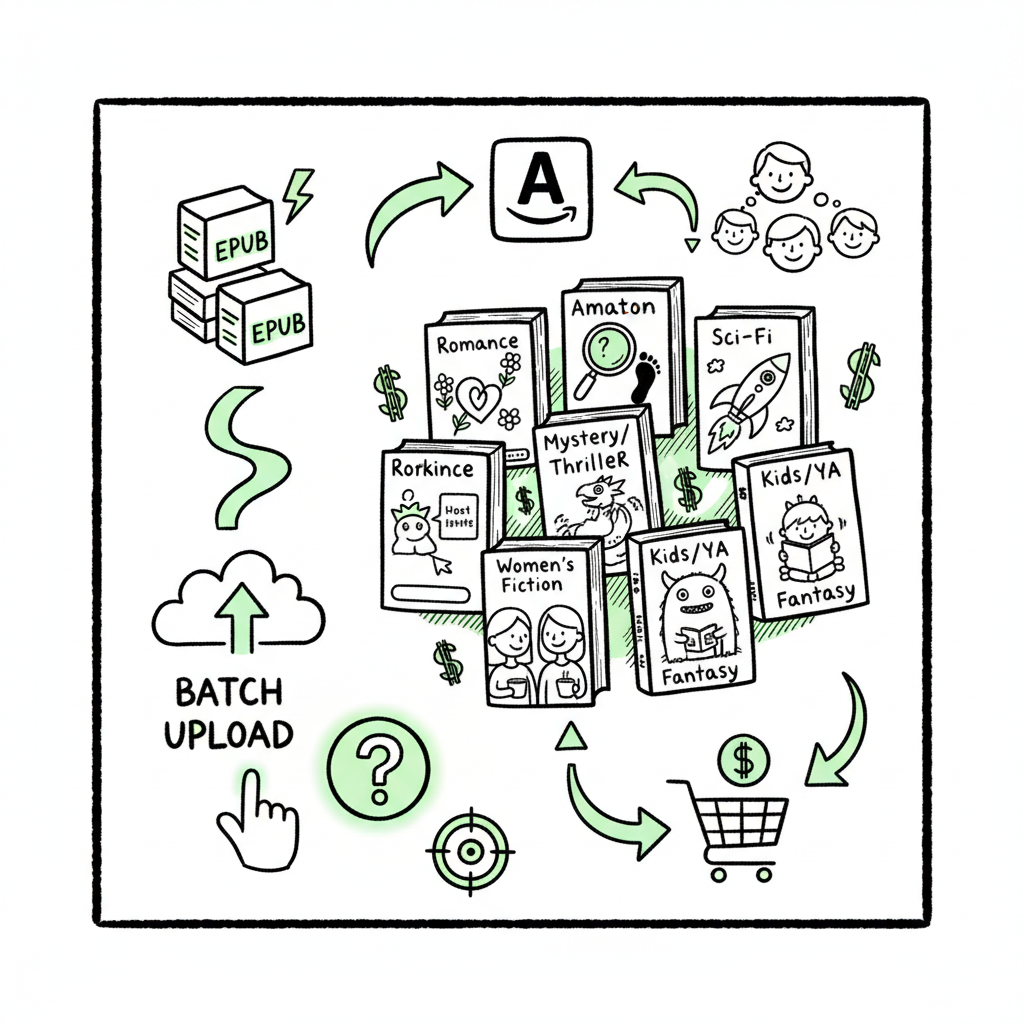
- Romance (contemporary, subgenre romance): High volume and a voracious readership. Heat, emotional arcs, and series hooks work best. Romance is saturated, but good production and consistent releases pay off.
- Women’s fiction: Broader than romance, focused on female protagonists dealing with life changes. Strong character work and emotional resonance sell well.
- Mystery / Thriller / Suspense: Readers here chase plot and pacing. Serialized detectives or recurring protagonists make series successful. Promotions and Amazon categories can amplify visibility.
- Science Fiction & Fantasy: World-building rewards long-term readers. Series, spin-offs, and shared universes multiply lifetime value.
- Kids & YA niche subgenres: Targeted YA (LGBTQ+ contemporary, mythic retellings) and kids’ series (spooky middle‑grade, mythology adventures) have less saturation and loyal readerships.
Practical note: Kindle Unlimited changes the math. Long series and higher page counts can generate stable income through page reads. For many authors, enrolling a series in KU is worth testing once you have multiple books ready.
Pick a niche and publish at scale
Choosing a niche is the start. Turning that niche into income requires a reliable process you can repeat.
-
1. Validate demand without over-research
- Look at Amazon categories, bestseller ranks, and recent releases in your target subgenre.
- Read 20–30 customer reviews of top sellers to learn common praise and complaints. Those signals tell you what readers expect.
-
2. Write for the reader you choose
- Deliver the emotional beats or plot mechanics that readers expect.
- Plan a series or boxed set from the start if the niche rewards repeat reads.
-
3. Production basics that matter
- Cover: A genre-appropriate cover sells. If you don’t design covers yourself, use a professional tool or generator to produce consistent series art that reads well at thumbnail size: Book Cover Generator Processing.
- Formatting and EPUB: Clean, validated EPUB files reduce returns and bad reading experiences. Use an EPUB converter that preserves images, chapters, and metadata to avoid platform rejections: EPUB Converter.
- Paperback and ebook creation: If you plan print and digital, use a single workflow that exports both formats and keeps metadata consistent across platforms. A full book creation workflow tool can simplify this from manuscript to final files: Book Creation Workflow.
-
4. Publish across stores efficiently
- Publishing to multiple stores (Amazon KDP, Kobo, Apple Books, Draft2Digital, Ingram) multiplies reach but also multiplies busywork. That’s where automation matters. Batch uploads via CSV, platform-specific intelligence to avoid validation errors, and consistent metadata reduce time and mistakes. Services that automate uploads can save roughly 90% of manual entry time and make wide distribution practical. For authors who want to scale, automating the upload is an obvious upgrade once you start publishing seriously — automate the upload. Own the distribution.
-
5. Pricing, promos, and series strategy
- Price competitively for discovery. Use permafree starters or discounted first-in-series tactics where allowed.
- Enroll series in Kindle Unlimited selectively. KU can boost income for long‑form series through page reads.
- Build a simple newsletter or back matter funnel to capture readers once you have repeatable releases.
-
6. Monitor and iterate
- Track sales rank and reviews after release. Adjust covers, blurbs, or categories if readers misinterpret your book.
- Repeat what works. The goal is reliable publication cadence and incremental improvement.
FAQ
Which fiction niche makes the most money quickly?
Romance and certain thrillers can move fastest because of high reader demand and repeat buying. However, “quick” earnings usually come with high competition and require strong covers, blurbs, and release cadence.
Is Kindle Unlimited necessary?
No, but KU helps many authors with series. If you have multiple books and a loyal audience, KU often provides steadier income through page reads. Test it with one series before committing.
Do I need print versions?
Print expands discoverability and revenue, especially for giftable genres and kids’ books. Use a consistent workflow to minimize added effort.
How do I avoid category or metadata mistakes across platforms?
Follow each retailer’s category and metadata rules. Use automation tools with platform-specific intelligence to reduce errors and speed uploads.
Should I enroll in Kindle Unlimited early on?
KU can provide steady income for long‑form series, but it’s wise to test with a single series first to gauge performance and page-read rewards.
Sources
Final thoughts
Picking the right fiction niche on Amazon is part art, part system. The art is delivering the reader experience your niche expects. The system is creating reliable production and distribution: covers, clean EPUBs, consistent metadata, and automated uploads across stores. When those pieces run smoothly, you can publish more books, learn faster, and build steady reader income.
If you’re ready to move beyond one-off releases, consider a tool that handles CSV batch uploads, platform rules, and error reduction so you can focus on writing and series strategy. Visit BookUploadPro.com to try the free trial.
Why fiction niches that sell on amazon work Estimated reading time: 9 minutes Key takeaways Targeted fiction niches earn more than broad genres when you match reader expectations and series potential. Romance, mystery/thriller, sci‑fi/fantasy, women’s fiction, and niche kids/YA subgenres consistently convert on Amazon. Publishing at scale—good covers, clean EPUBs, and batch uploads—turns a single…