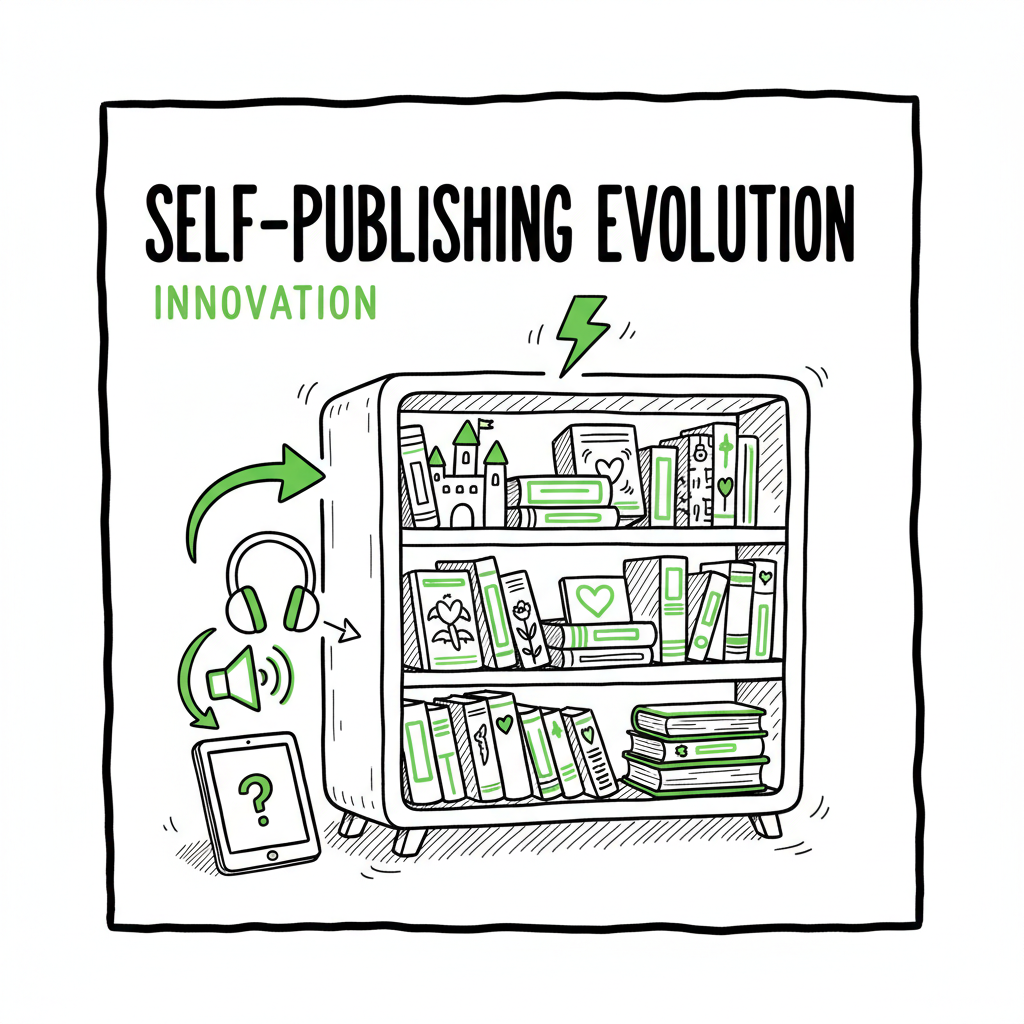
Book Niche Trends 2026 for Indie and Self-Publishers
Book niche trends 2026: what self-publishers need to start publishing today
Estimated reading time: 7 minutes
Key takeaways
- The biggest book niche trends 2026 favor genre blends, short formats, and formats optimized for audio and direct sales.
- Authors who standardize multi-platform workflows and use batch uploads will move faster and make wider distribution practical.
- Tools that handle EPUB conversion, batch uploads, and platform rules reduce errors and save roughly 90% of manual prep time.
Table of Contents
- Key takeaways
- Trends overview — what’s driving niches
- Formats, distribution, and workflow
- Turning trends into a multi-platform publishing plan
- FAQ
- Sources
Trends overview — what’s driving niches
The phrase book niche trends 2026 captures the shifts I see every week: readers want emotionally rich stories that arrive in flexible formats, and creators want faster ways to get those books everywhere. Social platforms like BookTok still shape what sells, but the underlying behavior is a hunger for specific blends—romantasy, climate-tinged speculative fiction, quiet literary work with strong hooks, and short, bingeable series.
Two practical forces power these trends. First, format innovation: AI-assisted audiobooks and short-form serials make it cheaper to produce audio and ebook slices of a larger story. Second, distribution options: indie authors are increasingly selling direct and using wide distribution at scale. If you want quick market tests, resources that list promising niches are useful; a focused read on Book Niches That Sell gives tactical examples you can test quickly.
Why this matters in plain terms: niche clarity shortens marketing cycles. When you know the sub-niche and the best format—say, a 60–90 minute AI-assisted audiobook for a romantasy novella—you reduce wasted effort on the wrong cover, metadata, or distribution channel.
What’s rising right now
- Genre blends: Romantasy, domestic thrillers with speculative elements, and climate literary fiction that reads like contemporary drama.
- Short-series and novellas: Readers want lower time investment and fast payoffs; serial publishing keeps them coming back.
- Audio-first experiments: AI narration lowers cost barriers, making audiobooks viable for backlist and short works.
- DIY direct sales: Shopify, Patreon, and Kickstarter plus smart mailing lists drive higher margins for authors who own their audience.
These shifts reward authors who treat publishing like a repeatable operation, not a one-off project.
Formats, distribution, and workflow for busy indie authors
Formats matter more than ever. Ebooks remain core for discovery, but audiobooks and print-on-demand paperbacks are how many readers commit. The efficient stack for 2026 looks like: clean manuscript → single-source EPUB → optimized paperback file → audio file (human or AI) → simultaneous platform uploads.
If you work with EPUBs, use a conversion tool that preserves chapter metadata and the book’s internal navigation; proper EPUBs reduce rejection rates and improve platform acceptance. For streamlined EPUB work, a reliable EPUB converter takes the manual friction out of the process and keeps files consistent across platforms. When you create paperbacks or ebooks, a central tool for producing files, covers, and proofs avoids repeated layout fixes and format regressions.
Practical file rules to follow
- Produce one clean source manuscript and convert it to EPUB and platform-specific files rather than editing separately for each store.
- Use a single cover master and export versions sized to each store’s spec; this lowers the chance of rejected uploads.
- For print, confirm spine and bleed from the start—fixing a paperback file after upload wastes time.
How automation reduces overhead
Automation tools that support CSV batch uploads and platform-specific rules are now essential when you publish multiple titles. They reduce repetitive fields, apply categories consistently, and catch platform errors before submission. In our experience, batch processes with platform intelligence cut manual upload time by roughly 90% and reduce simple errors that cause delays.
If you produce variants—ebook, paperback, audiobook—automating the upload step removes a major scaling bottleneck. Make wide distribution practical: one source, multiple targets, fewer mistakes.
Note on covers and audio
If you’re designing covers or using generators, keep a working master and export variants for each store. When you plan audio, evaluate AI narration for short works and human narration for flagship releases. If your workflow includes cover generation or batch image processing, use tools that integrate with your upload pipeline so cover files move with metadata automatically.
(When you explicitly create paperbacks or ebooks as part of this workflow, central tools that handle book creation reduce manual setup and errors.)
Turning trends into a multi-platform publishing plan
A practical plan for a single author publishing multiple titles should answer three questions: what to write, what format to prioritize, and how to get it to readers.
-
1) Decide what to write
Pick niches that match your strengths and reader behavior. Fast wins in 2026 come from targeting hungry micro-communities—readers who want exactly one thing: a short romantasy series, climate speculative short stories, or compact nonfiction on a specific habit. Your aim isn’t to chase every trend; it’s to own a small space.
-
2) Choose formats strategically
Start with the format that gets you to market fastest and aligns with reader habits in your niche. For many niches, that’s:
– Ebook first for discovery
– Paperback for credibility and direct sales events
– Short audiobook for impulse consumption
If you convert manuscripts to EPUB correctly, the rest of the formats follow more cleanly. Efficient EPUB conversion saves time and avoids platform rework.
-
3) Build a repeatable pipeline
Treat publishing like an assembly line. Steps to formalize:
– Manuscript: final draft in a single source file
– Covers: master file with export presets
– Files: do one EPUB conversion and derive other exports
– Metadata: use the same title, subtitle, series, and keyword strategy across platforms with platform-specific tweaks
– Uploads: batch upload with CSV where possible, or use tools that automate per-platform rules
Why the pipeline matters
The first time you do everything manually, you’ll learn one-off lessons. The second time, you’ll want those lessons encoded into a process. That’s the point where a multi-platform publishing tool becomes an obvious upgrade: unified uploads, CSV templates, platform intelligence, and error-reduction checks let you send the same book to Amazon KDP, Kobo, Apple Books, Draft2Digital, and Ingram without copying and pasting thirty fields.
Where automation fits
Automation isn’t a replacement for quality control; it’s the way to scale without breaking the system. With the right platform you get:
– Unified multi-platform publishing
– CSV batch uploads to speed repeated releases
– Platform-specific intelligence that applies the right metadata and covers
– Fewer upload errors and faster time-to-live
Automate the upload. Own the distribution.
FAQ
Q: Which niches are safest to pursue in 2026?
A: Look for high-engagement micro-niches that align with your voice: romantasy, genre-blends that include real-world issues, and focused nonfiction topics with clear hooks.
Q: Should I invest in audiobooks now?
A: Yes for short works and backlist testing—AI narration makes this affordable. For flagship titles that represent your brand, prioritize a professional narrator.
Q: Do I need to upload to every store?
A: No. Start where your readers are, then widen distribution. Wide distribution becomes practical once you automate uploads and file generation.
Q: How much time does automation save?
A: For repeatable workflows and multiple titles, expect roughly 80–90% time savings on uploads and file prep compared with entirely manual processes.
Q: Are cover generators acceptable for professional sales?
A: They can be—if you treat the result as a master file and test variants. Maintain one high-quality master and export store-specific sizes to avoid platform rejections.
Final thoughts
The book niche trends 2026 favor authors who think operationally. The creative edge still matters, but the biggest wins come from combining a clear niche, format focus, and a repeatable workflow that gets your work to readers across stores. When authors start publishing seriously, automation that handles CSV batch uploads, platform-specific rules, and multi-format file generation becomes essential.
Sources
- Book Contents in 2026: Trends, Strategies & Industry Insights
- 2026 Trends And Predictions For Indie Authors
- Reading trends in 2026: Genres shaping modern readers
- Global Book Marketing Trends: What Authors Should Expect in 2026
- Reading and Publishing Predictions: Book Trends to Watch for in 2026
- 7 Book Publicity Trends for 2026
Visit BookUploadPro.com to try the free trial..
Book niche trends 2026: what self-publishers need to start publishing today Estimated reading time: 7 minutes Key takeaways The biggest book niche trends 2026 favor genre blends, short formats, and formats optimized for audio and direct sales. Authors who standardize multi-platform workflows and use batch uploads will move faster and make wider distribution practical. Tools…