Best Book Niches for Self Publishing That Sell in 2026
Best Book Niches for Self Publishing
- Niches that solve a specific problem or serve a narrow audience sell more reliably than broad categories.
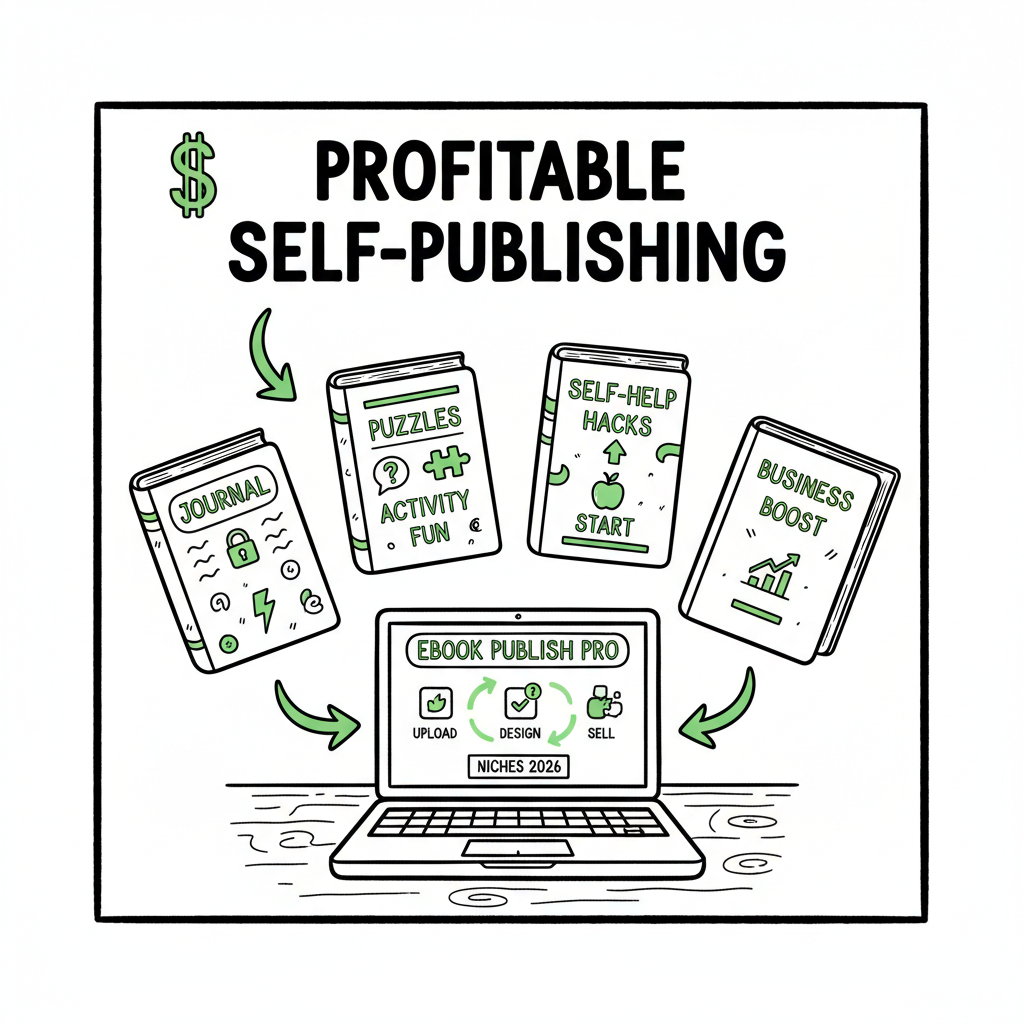
- Low- and medium-content books (journals, puzzles, activity books) plus targeted nonfiction (self-help, diet, business) are top opportunities in 2026.
- Scale matters: use batch uploads, platform-aware metadata, and quality covers to turn a profitable niche into steady revenue.
- When you publish seriously, a multi-platform upload tool saves time, reduces errors, and makes wide distribution practical.
Table of Contents
- Why niching matters and where money lives
- Best book niches for self publishing: profitable options in 2026
- Scaling publishing: production, formats, and distribution
- Frequently asked questions
Why niching matters and where money lives
Choosing the best book niches for self publishing is more than a trend game. It’s about matching a clear reader need with fast, repeatable production. For a primer on profitable niches, see Book Niches That Sell.
Broad categories like “romance” or “self-help” attract lots of authors and readers, but they also hide intense competition. Narrow niches—romance subgenres, a specific diet cookbook, or a kids’ activity theme—let a new author get visibility faster and build repeat buyers.
If you need a short primer to spot categories that often work, see our guide to Book Niches That Sell. Early focus on search terms, customer intent, and predictable formats reduces wasted effort. Low-content books also let you test niches quickly and learn what sells before investing in longer works.
Best book niches for self publishing: profitable options in 2026
Here are practical niches that show steady demand and scale well for indie authors in 2026.
Low- and medium-content
- Journals and planners (habit trackers, niche fitness logs): low production cost and steady, repeat purchases.
- Activity and puzzle books for kids (mazes, spot-the-difference, dot-to-dot): evergreen and easy to vary by theme.
- Coloring books (targeted themes like insects for toddlers, trucks for preschoolers): high margin and repeatable templates.
Nonfiction with clear, narrow promises
- Practical self-help (productivity checklists, life systems for specific conditions): buyers want solutions.
- Diet and cooking (air-fryer keto recipes, Mediterranean meal plans): specific diets with devoted followings.
- Business and skills (beginner guides to selling on marketplaces, budgeting for new parents): action-oriented books sell.
Fiction that rewards series
- Romance subgenres (contemporary, paranormal, niche tropes): readers buy series and boxed sets.
- Fantasy and sci‑fi with tight world rules (urban fantasy, grimdark micro-series): loyal readers and high lifetime value.
Why these niches work
- Low barriers for entry: fast creation or short runs reduce risk.
- Repeat buyers: series, themed journals, and planners create multiple purchase paths.
- SEO-friendly: specific long-tail keywords make discoverability practical even for new authors.
Scaling publishing: production, formats, and distribution
Once you know the niche, the work is operational. Scaling means producing consistent, platform-ready files and listing them correctly across stores.
Production checklist (practical)
- Cover: a strong, niche-aware cover is non-negotiable. If you use automated tools, a reliable cover generator speeds up iteration and keeps visual quality consistent.
- Interior files: set templates for page size, margins, and bleed so every book meets each retailer’s specs.
- Formats: create paperback, hardcover (if needed), and ebook files—convert cleanly to EPUB when you need wide ebook distribution.
- Metadata: write keyword-rich, honest titles and descriptions that match buyer intent.
Helpful tools and shortcuts
- For covers, a cover generator can produce consistent templates that match your niche quickly.
- Use an EPUB converter to ensure your ebook displays correctly across stores and devices.
- If you publish both paperback and ebook, a single book creation workflow reduces conversion errors and manual formatting.
Distribution strategy
- Publish wide: Amazon KDP is essential, but readers use many stores. Upload to Apple Books, Kobo, Draft2Digital, and Ingram to cover bookstores and libraries.
- Platform-specific intelligence: each distributor treats metadata differently. Adjust descriptions and categories to match the platform’s discovery patterns.
- Batch uploads: when you have many books or variations, CSV batch uploads and automated routines save enormous time and cut manual mistakes.
Why BookUploadPro matters
When you start publishing more than a handful of titles, manual uploads become a bottleneck. BookUploadPro automates repetitive uploads across Amazon KDP, Kobo, Apple Books, Draft2Digital, and Ingram. That means near 90% time savings on repetitive steps, fewer errors, and consistent listings across stores. CSV batch uploads and platform-aware intelligence make wide distribution practical. Automate the upload. Own the distribution. It’s an obvious upgrade once authors start publishing seriously.
Practical tips for quality at scale
- Keep a single source spreadsheet for each book and generate copies for new themes or series.
- Run one quality check on cover, interior, and metadata before batching live uploads.
- Monitor early sales and reviews for a new title; treat them as signals to tweak metadata or cover art.
Frequently asked questions
FAQ
Q: Which niche gives the fastest returns?
Low-content books—journals, puzzles, coloring books—tend to show returns faster because they are cheaper and quicker to produce. They also let you test themes quickly.
Q: Should I start with fiction or low-content books?
It depends on your strengths. If you write long fiction and can sustain a series, fiction offers high lifetime value. If you want speed and volume, low- and medium-content books offer faster feedback and revenue.
Q: How important is the cover?
Very. A niche-accurate cover is often the first reason someone clicks. Use consistent templates and test variations. A good cover paired with correct metadata beats an average cover in the same niche.
Q: Do I need different files for each store?
Often yes. Ebook formats are usually EPUB for wide distribution, and some platforms accept or prefer specific file types. For print, trim size and bleed rules vary by vendor. Use an EPUB converter and standardized print templates to avoid rework.
Q: How can I avoid getting rejected by platforms?
Follow each retailer’s content and formatting guidelines. Batch uploads and platform-aware checks reduce simple errors that trigger rejections.
Sources
- https://www.philparker-fantasywriter.com/post/self-publishing-trends-for-2026
- https://livingwriter.com/blog/most-profitable-amazon-kdp-niches-top-10/
- https://miblart.com/blog/self-publishing-trends-this-year/
- https://lowcontentprofits.com/best-kdp-niches-2023/
- https://www.youtube.com/watch?v=7DqGbDUxDxA
Final steps
Visit BookUploadPro.com to try the free trial and see how multi-platform automation fits your publishing workflow.
Estimated reading time: 3 minutes
Best Book Niches for Self Publishing Key takeaways Niches that solve a specific problem or serve a narrow audience sell more reliably than broad categories. Low- and medium-content books (journals, puzzles, activity books) plus targeted nonfiction (self-help, diet, business) are top opportunities in 2026. Scale matters: use batch uploads, platform-aware metadata, and quality covers to…