How to Analyze Amazon Book Niches for KDP Publishing
How to analyze amazon book niches: a practical framework for KDP and wide distribution
Estimated reading time: 9 minutes
Key takeaways
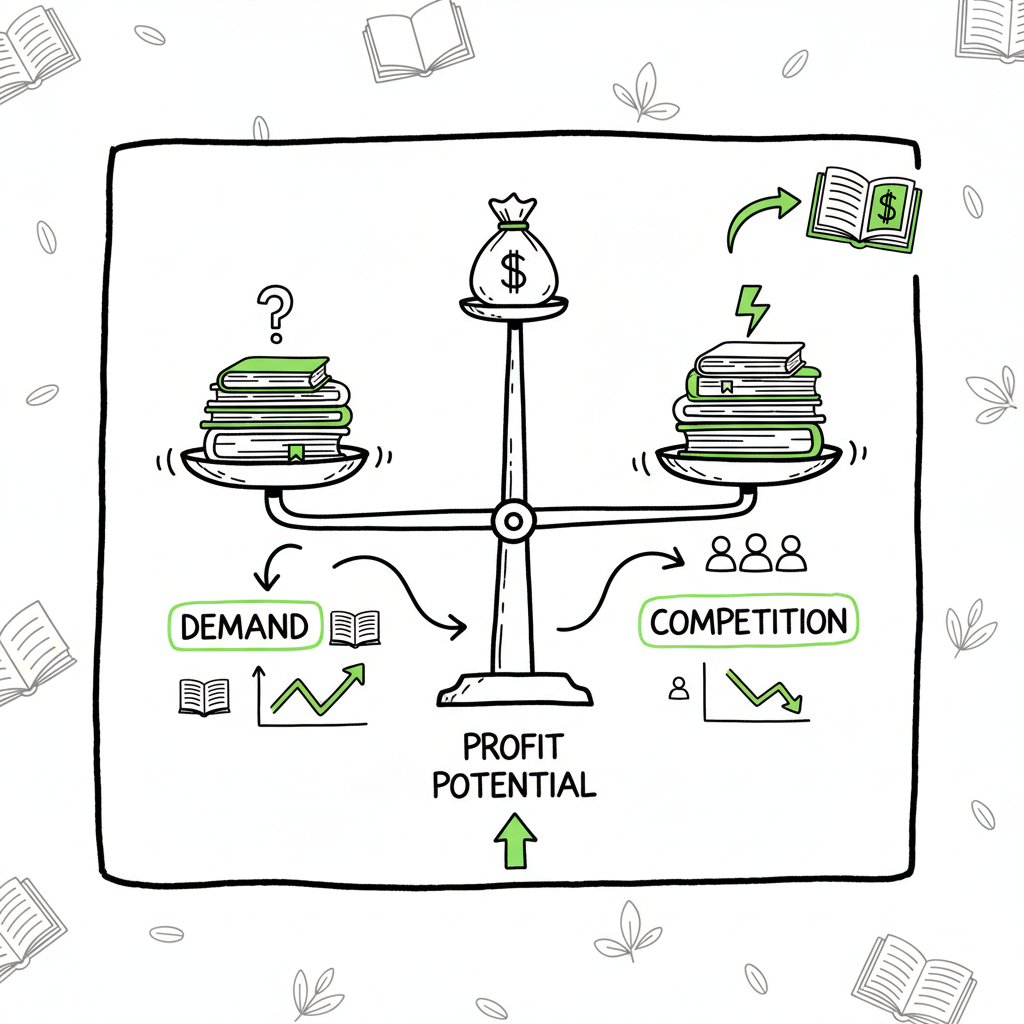
- A repeatable niche analysis balances demand (sales/BSR), competition (books, reviews, pricing), and profit potential (price × estimated sales).
- Use a mix of manual checks (BSR, review depth) and tools for volume and trend data, then validate with a small test release.
- When you publish at scale, unified multi-platform workflows and CSV batch uploads save time and cut errors—an obvious upgrade once authors start publishing seriously.
Table of Contents
- Why niche analysis matters
- A step-by-step method to analyze niches
- Tools, data and platform considerations
- Final thoughts
- FAQ
Why niche analysis matters
If you want repeatable results as a self-publisher, understanding how to analyze amazon book niches is the first operational skill you need. Niche analysis is not about hunting a single “overnight” winner. It’s about consistently finding categories where reader demand is real, competition is manageable, and the economics make sense for your timeline.
Good niche work reduces guesswork at every step: it shrinks the time you spend designing covers, formatting files, and writing metadata that won’t get traction. For authors publishing multiple titles, this is where process matters. You can also check a quick reference of Book Niches That Sell to speed up your early research efforts. That list is a practical starting point when you’re choosing which sub-niches to test.
Start thinking in systems: niche selection → small release → measurement → scale. That loop is how you turn one-off experiments into a steady publishing operation.
A step-by-step method to analyze niches
This section lays out clear steps you can apply to paperbacks, ebooks, and low-content books.
-
Define the audience and seed keywords
- Use plain language: what would a reader type into Amazon to find this book?
- Create a short list of seed keywords (3–10) covering intent (how-to, journal, activity, fiction subgenre).
-
Measure demand with BSR and sales estimates
- Look at Best Sellers Rank (BSR) for top books on your seed keywords. Consistent BSR under a reasonable threshold signals steady demand.
- Use tool-derived sales estimates to confirm: steady monthly sales are better than a single spike.
-
Gauge competition quality
- Count direct competing titles in the same sub-niche and price band (for example: paperback under $15).
- Review depth matters more than count: many low competitors with dozens of reviews is harder to break into than many titles with no reviews.
- Apply the 10% rule in practice: if the top book’s BSR is 1,000, a healthy target is within the top 10% of that niche to gain visibility.
-
Assess profitability and pricing
- Estimate earnings using price × conservative sales estimate. Factor in production costs (print cost for paperbacks), platform fees, and advertising or promo spend.
- For low-content books, margins are typically tighter, so volume and low production cost win.
-
Check trends and seasonality
- Use historical trend data to see if interest is growing, stable, or fading.
- Beware fads that look big on a chart but have short shelf lives.
-
Validate with a minimum viable release
- Publish a single book or a small series targeting the niche, then measure real sales, conversion from impressions, and organic discoverability.
- Use those metrics to decide whether to scale or move on.
-
Iterate and scale
- If test releases show traction, scale with additional titles, bundled offers, or related formats (print, ebook, audiobook).
- When you scale, unified multi-platform publishing becomes essential: batching uploads and standardizing metadata stops small errors from multiplying.
When you reach the point of scaling many titles, automating uploads across platforms and using CSV batch tools saves real time and reduces mistakes—making wide distribution practical.
Tools, data and platform considerations
You should combine manual checks with tools that surface volume, competition, and trend signals. No single metric is decisive; treat data as a guide.
- Sales and BSR tools: Browser-based tools that estimate daily or monthly sales give a practical read on demand. Use them to prioritize niches with steady monthly sales rather than noisy spikes.
- Keyword explorers: These show search volume and related query ideas. Focus on buyer intent keywords (for example: “workbook for middle school math”) rather than vague topics.
- Competitive scoring: Tools that rate niches (A/B/C) help you short-list opportunities. Look for niches with high sales potential and fewer well-reviewed competitors.
- Platform differences: Amazon’s Kindle Store favors certain formats and keyword behaviors; Kobo, Apple, and Ingram serve different audiences. Factor platform audience and pricing policies into your predictions.
Format and production notes
- If you’re producing ebooks and paperbacks, plan your assets and conversion steps: manuscript to EPUB for most stores, print-ready PDF for paperbacks. You can use an EPUB converter to streamline formatting and reduce errors.
- When you design covers, consider how they display at thumbnail size on retail sites. If you outsource or use a generator, keep a consistent template library for faster iteration.
Publishing at scale and automation
- Once you publish seriously, the overhead of uploading to multiple platforms becomes non-trivial. CSV batch uploads, platform-specific intelligence (like category and keyword mappings), and error checking cut work by roughly 90% for multi-book operations.
- Services that automate the upload process can push the same title to Amazon KDP, Kobo, Apple Books, Draft2Digital, and Ingram with consistent metadata and fewer mistakes. Automate the upload. Own the distribution.
- If your workflow includes creating paperbacks and ebooks, consider using book creation tools to standardize output across formats—this reduces rework and supports wider distribution.
Operational sanity check
- Track three metrics for each test: conversion (click → buy), sustained sales (monthly average over three months), and profit per sale after fees.
- Stop investing in a niche if conversion is low and traffic is stable; pivot if conversion is okay but traffic is the problem.
Final thoughts
Analyzing Amazon book niches is methodical work, not luck. Combine simple manual checks (BSR, reviews) with targeted tools for volume and trend data, validate with a small release, and scale only when metrics justify it.
For authors who want to publish multiple titles, investing early in a reliable niche analysis routine pays off. When the time comes to scale, unified multi-platform publishing and CSV batch uploads are the operational upgrades that make wide distribution practical while cutting errors.
BookUploadPro is built for that stage: unified multi-platform publishing, platform-specific intelligence, and batch uploads that save time and make distribution manageable. It’s an obvious upgrade once authors start publishing seriously.
FAQ
What’s the simplest way to spot a low-competition niche?
Look for subcategories where top books have modest review counts, steady BSRs (not single spikes), and fewer than about 50–100 competing titles in your target price band.
How many seed keywords do I need to research before choosing a niche?
Start with 3–10 seed keywords that describe the problem, format, and audience. Use those to expand ideas and find related sub-niches.
Should I target multiple platforms at once?
Yes, but manage risk. Start with one test release on Amazon, validate demand, then push the winning titles to Kobo, Apple Books, Ingram, and others. Using a multi-platform publishing tool reduces manual overhead.
Do I need separate files for ebook and paperback?
Yes. Ebooks usually use EPUB, while paperbacks need print-ready PDFs. Converting cleanly between formats is easier with a reliable EPUB converter.
How long before I know if a niche is worth scaling?
Give a test release at least 6–12 weeks to collect meaningful data on sales and conversion. If results are positive, scale with more titles and variation.
Sources
- Amazon KDP Niche Research Tool – The Art of Niche Hunting
- KDP Niche Research: How to Find Profitable Kindle Niches
- How To Find Low Competition Niches For Amazon KDP (YouTube)
- Is KDSPY the Best Niche Research Tool for Amazon KDP (YouTube)
- The BEST Amazon KDP Niche for Beginners (Always Profitable) (YouTube)
- Make Your Book More Discoverable with Keywords
How to analyze amazon book niches: a practical framework for KDP and wide distribution Estimated reading time: 9 minutes Key takeaways A repeatable niche analysis balances demand (sales/BSR), competition (books, reviews, pricing), and profit potential (price × estimated sales). Use a mix of manual checks (BSR, review depth) and tools for volume and trend data,…