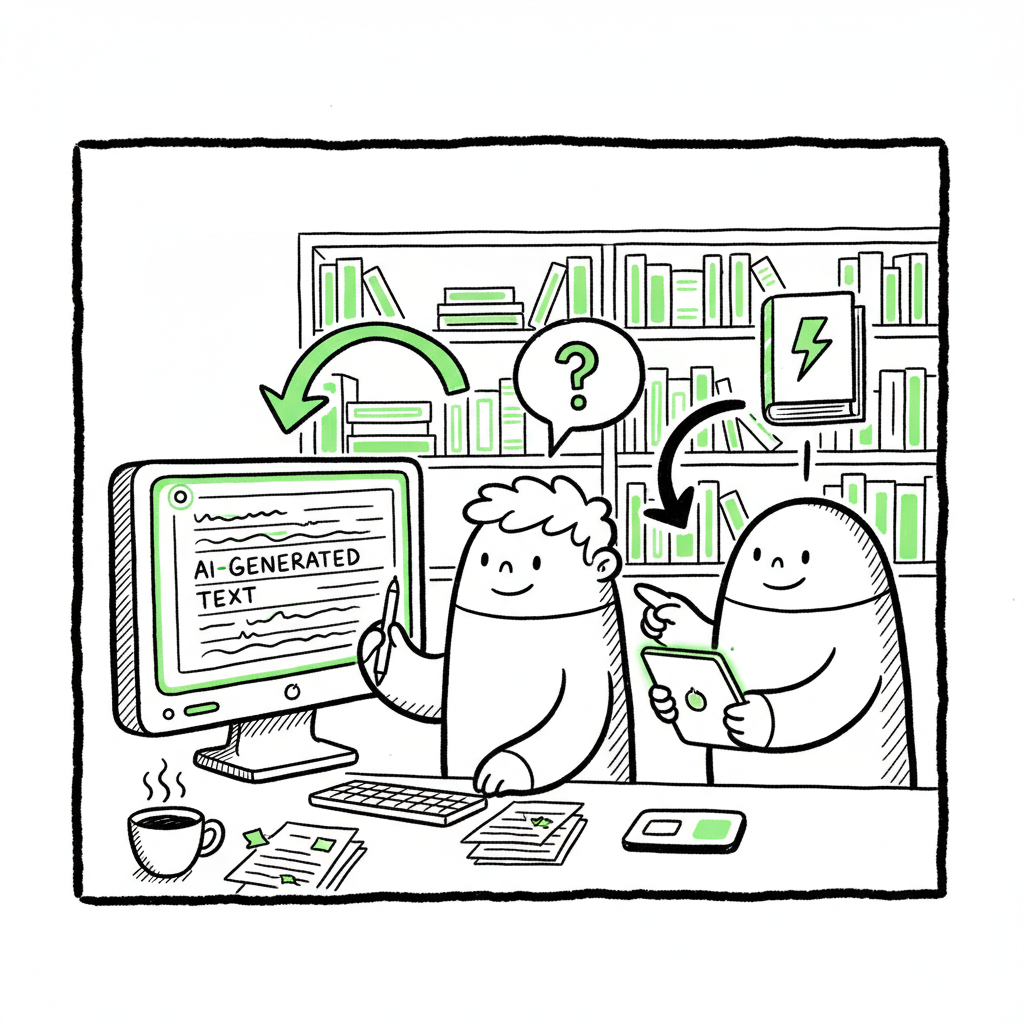
AI for Book Production – Generate and Publish Faster
AI for Book Production: How to Generate Books Faster and Publish Wide
Estimated reading time: 12 minutes
Key takeaways
- AI for book production speeds up drafting, editing, formatting, and marketing—but it does not remove the need for human review.
- A practical AI full-book workflow pairs automated generation with targeted human checkpoints for quality, copyright, and voice.
- For multi-platform distribution, automation that includes CSV batch uploads and platform-specific intelligence saves time and reduces errors—making wide distribution practical.
Table of Contents
- How AI fits the book production pipeline
- Practical AI full-book workflow that actually ships books
- Automation for multi-platform publishing at scale
- Risks, rights, and human checkpoints
- FAQ
- Sources
How AI fits the book production pipeline
AI for book production is no longer a novelty. Today’s tools touch every stage of creating a title: idea research, outlines, chapter drafting, editing, layout, cover options, metadata, and marketing assets. That’s why authors who want to publish seriously are thinking beyond single features and toward a full workflow that can move a manuscript from concept to retail-ready files.
If you want a quick practical primer on using AI in publishing end to end, see our AI in Self Publishing Guide for step-by-step examples and platform-specific notes. AI shines at repetitive and time-consuming tasks: creating multiple draft chapter options, suggesting layouts for print and eBook, and generating dozens of blurb variations for A/B testing. It also accelerates research and formatting, which traditionally take weeks when handled manually.
But speed is only one benefit. When used carefully, AI reduces manual errors in formatting and metadata, and it can produce consistent results across many titles. That makes it a fit for authors and small publishers who need scale without ballooning overhead.
How the technology helps
- Ideation: rapid topic research and competitive keyword suggestions.
- Drafting: fast first drafts and alternate chapter takes.
- Editing: readability, pacing checks, consistency reports.
- Formatting: automated ebook and print layouts, including table of contents and front/back matter.
- Marketing: blurbs, descriptions, email sequences, and basic ad copy.
Common use cases you’ll see in practice
- AI generate books fast: for low-cost series content, course materials, or short non‑fiction, authors use AI to produce near-complete drafts quickly, then edit for voice and accuracy.
- AI content creation publishing: publishers use AI to fill specific niches identified through data, then refine for quality, reducing time-to-market.
- AI full book workflow: from outline to EPUB and print-ready PDF, modern stacks can output a finished file in hours instead of weeks.
Practical tools vary. Some systems focus on creative drafting, others on formatting and layout. The most useful setups combine strengths—drafting intelligence with formatting automation and platform-aware export.
Practical AI full-book workflow that actually ships books
A scalable workflow treats AI as a force multiplier, not a replacement for judgment. Below is a practical sequence you can follow for a single title. Each step notes where AI helps and where humans must act.
1) Market signal and topic validation (AI-assisted)
– Use AI to summarize niche trends and identify gaps. Ask it for top questions readers ask on a topic or for common subtopics across top-selling titles.
– Human step: verify uniqueness and ethical fit. Do not publish derivative content or claims that can’t be sourced.
2) Outline and structure (AI-assisted, human-directed)
– Generate several outlines that differ in scope, chapter order, and depth. AI can produce a table of contents and suggested subheads for each chapter.
– Human step: choose the outline that matches your voice and audience. Combine AI suggestions as needed.
3) Chapter drafting (AI heavy / human editing)
– For speed, prompt AI to draft chapters based on the approved outline. You can ask for multiple versions of a chapter to pick the best passages.
– Human step: edit for accuracy, voice, originality, and pacing. This pass is essential. Treat AI output as raw material that needs shaping.
4) Developmental and line editing (AI-assisted)
– Use AI tools to check readability, flag inconsistencies, and suggest tighter sentences. AI can also spot repeated facts or character name errors in fiction.
– Human step: a substantive editor or the author should confirm narrative choices and fact checks. AI can miss context.
5) Covers and marketing assets (AI-assisted design + human selection)
– AI can generate dozens of cover mockups and taglines. Use those options to speed A/B testing.
– Human step: refine the chosen design and confirm rights. If you create a cover, consider processing with a dedicated tool to meet platform specs—cover images must match retailer size and spine calculations exactly. If you are creating a cover with automated tools, a processing service helps ensure print-ready accuracy.
6) Formatting and file generation (AI-automated)
– AI and automation tools can create EPUBs and print-ready PDFs. For EPUB converter conversion and validation, a purpose-built converter removes many formatting headaches and validates metadata.
– Human step: spot-check the final EPUB and PDF on multiple devices. Confirm image placement, table of contents links, and kerning if necessary.
7) Metadata, descriptions, and launch content (AI-assisted)
– AI can produce multiple title variations, subtitles, and product descriptions tailored to retailer search behavior.
– Human step: pick and tweak metadata to match your positioning.
8) Distribution and upload (automated)
– For multi-platform releases, batching uploads via CSV and platform-aware exports cuts time drastically. Automation reduces copy-paste errors and ensures consistent metadata across retailers.
– Human step: review pricing, territory rights, and delivery confirmation.
Automation for multi-platform publishing at scale
Once you publish more than a handful of titles, manual uploads become a bottleneck. That’s where a unified publishing automation makes an operational difference.
Why multi-platform matters
– Each retailer has different strengths. Amazon KDP still drives volume, but Apple Books, Kobo, Draft2Digital, and Ingram reach different readers and channels.
– Wider distribution increases discoverability, mitigates platform risk, and opens different revenue streams (libraries, international markets, specialty retailers).
What scale requires
- CSV batch uploads: a template that maps a single spreadsheet to multiple retailer fields avoids repetitive entry.
- Platform-specific intelligence: the automation should handle quirks like SKU rules, category selection differences, and metadata mapping.
- Error reduction: automated validation flags missing ISBNs, wrong dimensions, or unsupported file types before you submit.
Where AI adds value in scale
- Bulk metadata generation: produce consistent blurbs, keywords, and descriptions for dozens or hundreds of titles.
- Format normalization: ensure EPUB and print files match retailer expectations automatically.
- Variant generation: create region-optimized descriptions or localized metadata.
How BookUploadPro fits operationally
Unified multi-platform publishing: BookUploadPro automates uploads to Amazon KDP, Kobo, Apple Books, Draft2Digital, and Ingram from one workflow.
~90% time savings: by batching and validating files before upload, teams avoid repetitive form entry and common rejections.
Why this is an obvious upgrade
If you publish seriously—multiple series, backlist refreshes, or frequent updates—automation shifts effort from data entry to creative work. Automate the upload. Own the distribution.
Practical rollout tips
- Start with a pilot of 5–10 titles. Use automation to publish those and measure time saved and error reduction.
- Keep a human QA step before final submission. Even the best automation benefits from one final review.
- Use CSV templates as living documents. Update them as retailer rules change.
Risks, rights, and human checkpoints
AI helps, but it introduces real risks. A pragmatic approach accepts trade-offs and mitigates them.
Common risks
- Originality and copyright: AI can produce text that resembles training data or other works. You must check for accidental similarity and avoid direct copying.
- Quality perception: readers may notice generic phrasing or structural issues if AI output is not humanized.
- Platform policy and disclosure: retailers and industry groups are still refining rules about AI-generated content. Be aware of any disclosure expectations.
- Fact errors and hallucinations: AI can invent details or misstate facts.
Practical safeguards
- Humanization pass: always run a substantive human edit to adapt tone and style. This is where you create an authorial signature.
- Citation and fact check: for non-fiction, verify every factual claim or statistic. Keep sources documented.
- Copyright review: use plagiarism checks and legal counsel for borderline cases, especially when using AI to reproduce public-domain or derived works.
- Labeling and transparency: follow platform rules. When in doubt, include an author note describing writing methods if required or recommended.
Checklist for a safe AI production cycle
- Track prompt history and major edits so you can explain content origins if needed.
- Keep a master file with version history and who approved each stage.
- Use tools that support controlled generation—settings that limit hallucinations and encourage specificity.
- Maintain backup human resources: a reliable editor, a fact checker, and a designer to finalize assets.
Ethical considerations
- Avoid mass-producing low-value content that clogs the market. Focus on reader value rather than output volume alone.
- When collaborating with co-authors or contributors, be transparent about AI use.
- Respect privacy and consent when generating content about real people.
Final operational point
AI is a productivity tool. Treat it like a power tool: it delivers speed and scale but needs careful handling, protective checks, and skilled operators.
FAQ
Q: Can AI really produce an entire book?
Yes—AI can generate a full manuscript from an outline. But most successful authors use AI for rapid drafting and then perform rigorous editing and fact checks. The best results combine AI speed with human judgment.
Q: How fast can I publish with AI?
Timelines vary by book type. Short non-fiction or micro-series can move from idea to upload in days with an efficient workflow. Longer narrative or research-heavy works will still require weeks for quality editing and validation.
Q: Do I need special tools to make EPUB or print files?
Reliable EPUB conversion and print-ready processing reduce errors dramatically. Automated converters clean up common issues like image sizing, broken links, and table of contents tags. If you plan to produce many books, a dedicated converter and cover processing step are worth the investment.
Q: Will retailers ban AI-generated books?
Retailer policies are evolving. Some platforms require transparency around AI usage in specific cases. Follow platform rules and industry guidance, and be prepared to add a disclosure if required.
Q: How does automation help with distribution?
Automation centralizes file prep and metadata, supports CSV batch uploads, and applies platform-specific rules so you can push many titles without repetitive entry. This reduces errors and saves time.
Q: Where should I invest human effort?
Prioritize voice, originality, and fact-checking. Those areas determine reader satisfaction and long-term reputation.
Sources
- Complete Guide to AI-Powered Book Publishing – Manuscript Report
- The AI in Publishing Impact From Manuscripts to Market – The Urban Writers
- How AI is Changing the Landscape of Book Publishing and Copyright – Combined Book Exhibit
- AI Publishing: The Future of Book Publishing – Spines
- AI Book Writer | Publish Your Book Faster with Publishing.ai
- AI Best Practices for Authors – The Authors Guild
- The Rise Of AI In Publishing Workflows – PublishOne
- Integrating AI Into Traditional Publishing Workflows – Color House Graphics
Final thoughts
AI for book production changes the operational game: it lowers the time and cost of drafting, accelerates formatting and marketing, and makes wide distribution feasible. The practical path forward combines automated generation and validation with targeted human editing, rights checks, and design decisions. For authors and publishers scaling to multiple platforms, automation that understands retailer rules and supports batch uploads is an obvious operational upgrade.
Visit BookUploadPro to explore unified multi-platform publishing and try the free trial.
AI for Book Production: How to Generate Books Faster and Publish Wide Estimated reading time: 12 minutes Key takeaways AI for book production speeds up drafting, editing, formatting, and marketing—but it does not remove the need for human review. A practical AI full-book workflow pairs automated generation with targeted human checkpoints for quality, copyright, and…