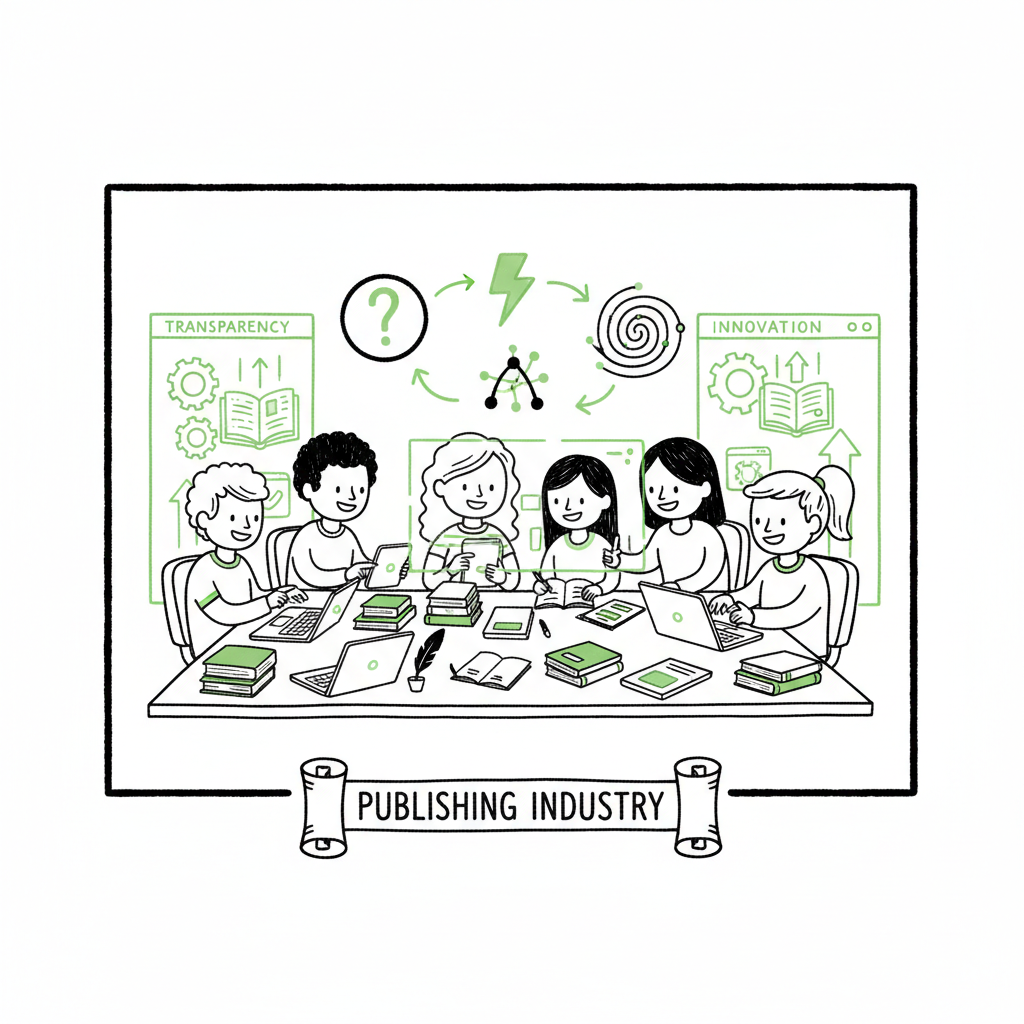
Ethical AI in Publishing Practical Guide for Authors
Ethical AI in Publishing: Practical Guide for Self-Publishing Authors
Estimated reading time: 9 minutes
Table of Contents
- Why ethical AI in publishing matters for self-publishers
- Practical practices: transparency, verification, and rights
- Tooling and workflows for responsible AI-assisted book production
- Final thoughts
- FAQ
- Sources
Why ethical AI in publishing matters for self-publishers
Artificial intelligence can speed up tasks that used to take weeks: proofreading, metadata writing, cover mockups, and formatting. But speed brings responsibility. Ethical AI in publishing is about treating AI as a tool—one that amplifies your work but does not replace your judgment or ownership.
Many major publishers and scholarly outlets require authors to disclose AI use, and they insist that a human remains fully responsible for the content. That same discipline benefits self-publishers. If you use AI to draft descriptions, generate images, or format files, document it and verify outputs for accuracy, bias, and originality.
For a clear, practical primer on how AI fits into a self-publishing workflow, see Ai In Self Publishing Guide.
Using AI ethically protects you from three common risks:
– Copyright problems from unverified outputs.
– Inaccurate or biased content that harms your reputation.
– Platform penalties or gatekeeping when disclosure is required.
Ethical practice isn’t a moral-only choice. It’s pragmatic. Honest, verifiable use of AI reduces the chance you’ll have to pull a book, reformat it, or deal with takedown claims. It also keeps your brand stable as you scale.
Practical practices: transparency, verification, and rights
This section lays out concrete, repeatable actions you can put into your publishing routine.
1) Document AI use
- Keep a short log for each book: which AI tools you used, for what task, and what prompts or settings produced the results.
- If you used AI for a chapter draft, a cover mockup, or data analysis, note that in your project files and any submission notes you send to partners or reviewers.
2) Disclose appropriately
- For marketplaces and readers, a short disclosure on the acknowledgments page or a metadata note is usually sufficient: e.g., “Parts of this book were edited using AI tools. The author verified all content and remains responsible for accuracy.”
- If a platform or publisher requires specific wording, follow that. When in doubt, be clearer rather than cryptic.
3) Verify accuracy, originality, and bias
- Treat AI output like a first draft. For factual claims, verify with reliable sources and add citations or edits as needed.
- Run unique passages through plagiarism checks and manual inspection. AI models can inadvertently mirror training data.
- Read for bias: AI can reflect skewed perspectives. If your book touches on identity, history, or scientific claims, extra care is warranted.
4) Manage rights and licenses
- Avoid tools that assert ownership or restrictive rights over what they produce. Read terms of service before you commit significant work through any provider.
- When using third-party image assets or training datasets, confirm that you have the right to commercialize the outputs.
5) Protect sensitive data
- Never upload private third-party documents, confidential emails, or identifiable personal information into general-purpose AI tools unless you have explicit permission and the tool guarantees secure, allowed use.
- For sensitive tasks, use vetted enterprise or offline models that meet your privacy needs.
6) Keep human authorship clear
- Do not list AI as an author or co-author. AI can be acknowledged as a tool, but the author must retain responsibility and credit.
These practices cut across book formats. Whether you’re producing a paperback, ebook, or audiobook, the same accountability applies.
Note on book creation workflows: if you convert manuscripts to EPUB or generate paperback files, use reliable tools that produce standards-compliant outputs. For example, professional EPUB converters reduce formatting errors and make distribution smoother; a good EPUB converter can save time while reducing mistakes that lead to re-uploads or returns. If you need a one-stop option for converting and processing files, tools exist to automate that step and keep it auditable.
Tooling and workflows for responsible AI-assisted book production
If you publish more than a single book, tooling matters. Ethical practice scales best when it’s built into the production machinery. Below are operational patterns that keep ethics and efficiency aligned.
1) Standardize prompts and templates
- Keep a library of vetted prompts for tasks like metadata creation, blurb drafts, or chapter outlines. Test them and annotate known failure modes so you don’t repeat mistakes.
- Save templates for acknowledgments, disclosure language, and data logs so they’re consistent across titles.
2) Automate repetitive uploads — without losing checks
- Manual uploads across platforms eat time and introduce errors. Use multi-platform upload tools that accept CSV batch inputs and platform-specific metadata mappings.
- Automation should include validation steps: automated checks for image size, font embedding in PDFs, ISBN consistency, and format conversions.
BookUploadPro is built for that scale: unified multi-platform publishing with CSV batch uploads, platform-specific intelligence, and error reduction that can save roughly 90% of the time spent on repetitive tasks. For authors who publish seriously, it’s an obvious upgrade: BookUploadPro helps automate the upload, stay in control of content, and reduce avoidable mistakes.
3) Keep human review gates in the pipeline
- Even with automation, add manual checkpoints: one pass for factual accuracy, one pass for rights and third-party content, and one final layout check on each platform preview.
- Define who on the team performs each check. If you work solo, give yourself time between passes or recruit a trusted reader to spot issues.
4) Use specialized tools for covers and files
- Cover creation often involves image generation plus layout. When AI tools help create covers, treat the image as a draft that needs rights clearance, composition checks, and polish. If you use an automated cover process, make sure it produces source files you can re-edit.
- For ebook and paperback output, use conversion tools that produce compliant EPUBs and print-ready PDFs. Good converters handle things like embedded fonts, TOC links, and image compression automatically, reducing platform rejections.
If your workflow includes automated cover generation or batch processing, consider a processed pipeline that links cover outputs, EPUB conversion, and distribution. When discussing cover generation or automated processing, you can use a dedicated book cover generator that supports commercial rights and provides re-editable source files.
5) Keep metadata and provenance auditable
- Store logs of what AI tools produced, the prompt used, and any edits you made. A short provenance statement in your project folder helps if questions arise later.
- For book metadata, include a brief content note if AI was used to create significant text or images. Keeping this in your records is quick and protects your publishing lifecycle.
6) Platform-aware intelligence matters
- Different storefronts have different rules for image sizes, allowed content, and metadata fields. Use tools that are aware of those differences so you don’t mis-upload a file that works on one store but fails on another.
- Platform-aware validation prevents common rejection causes and makes wide distribution practical.
Practical example of a responsible workflow
- Draft chapters with an AI writing assistant, but mark AI-derived sections in your log.
- Human edit for accuracy, style, and originality.
- Design cover using an AI-assisted generator, confirm commercial rights, and refine in a layout app.
- Convert manuscript to EPUB with a trusted converter to ensure standards compliance.
- Batch-upload files and metadata via a multi-platform tool, run validation checks, and manually review platform previews.
- Publish and add a short disclosure in the acknowledgments and metadata.
Practical notes on covers, EPUBs, and book creation
- When generating or commissioning a cover, use a solution that documents rights and delivers re-editable art files; that makes platform updates and print changes cheaper and faster. A robust book cover generator can speed mockups while keeping rights clear.
- For EPUB conversion, prefer converters that validate against EPUBCheck and preserve accessibility features like readable TOC and alt text for images. A proper EPUB converter saves time and reduces refund risk.
- When producing a paperback or ebook at scale, use a platform or service that supports both formats and preserves your source files for future editions; this avoids rebuilds and maintains consistency across formats.
Final thoughts
Ethical AI in publishing is practical and operational. It’s about building predictable checks into your process so AI speeds work without adding legal or reputational risk. For self-publishers, that means documenting AI use, verifying outputs, protecting rights, and choosing tools that help rather than hinder compliance.
When distribution becomes a numbers game, automation is the sensible next step. BookUploadPro focuses on the plumbing: CSV batch uploads, platform-specific intelligence, and wide distribution without the repetitive tedium. Automate the upload. Own the distribution. At scale, that combination keeps your production efficient while your ethical practices stay intact.
If you use AI for specific tasks—cover generation, EPUB conversion, or creating ebook and paperback files—choose tools that make rights clear and outputs editable. That way you get the speed of AI and the security of human oversight.
Visit BookUploadPro.com to try a free trial.
FAQ
Q: Do I have to tell readers I used AI to write parts of my book?
A: No universal law forces you to disclose to readers, but transparency is best practice. If you used AI for substantive writing, a short note in the acknowledgments or metadata mitigates risk and builds trust. Some platforms or publishers may require disclosure—check their policies.
Q: Can AI be an author?
A: No. AI cannot hold authorship or legal responsibility. Use clear, human authorship credit and treat AI as a tool.
Q: How do I check for AI-generated plagiarism?
A: Use standard plagiarism checkers as a first pass, then manually inspect flagged passages. AI can produce text that resembles its training data, so human review for phrasing, facts, and attribution is essential.
Q: What privacy risks come with using AI tools?
A: Don’t upload private communications, contract materials, or identifiable third-party data into general-purpose AI tools. For sensitive data, use secure, approved platforms or local models with appropriate safeguards.
Q: How can I scale publishing while staying ethical?
A: Standardize prompts, log AI use, add mandatory human review gates, and use platform-aware automation that validates files before upload. Batch CSV uploads and platform intelligence reduce repetitive errors while preserving control.
Q: Are automated cover generators risky?
A: They can be safe if they provide clear commercial rights and editable source files. Always confirm licensing terms and verify that generated imagery does not closely mimic protected works.
Q: Which file formats should I deliver?
A: For ebooks, EPUB is widely accepted and accessible; validate with EPUBCheck. For print, use print-ready PDFs with embedded fonts and correct margins. Good converters help ensure these outputs meet platform requirements.
Q: Will platforms penalize me for using AI?
A: Platforms care about content quality, originality, and legal rights—using AI isn’t inherently penalized. Problems arise when outputs violate copyright, contain misinformation, or break platform rules. Clear records and rights checks reduce risk.
Sources
- Best Practice Guidelines on Publishing Ethics – Wiley Author Services
- AI in Publication Ethics – ACSM
- Ethical best practices in scholarly publishing | Lippincott Journals
- Publishing ethics authorship and contributorship journals – Cambridge
- Generative Artificial Intelligence (AI): Ethical Use – George Mason University
- AI Best Practices for Authors – The Authors Guild
- Artificial intelligence policy – Sage Publishing
Ethical AI in Publishing: Practical Guide for Self-Publishing Authors Estimated reading time: 9 minutes Table of Contents Why ethical AI in publishing matters for self-publishers Practical practices: transparency, verification, and rights Tooling and workflows for responsible AI-assisted book production Final thoughts FAQ Sources Why ethical AI in publishing matters for self-publishers Artificial intelligence can speed…