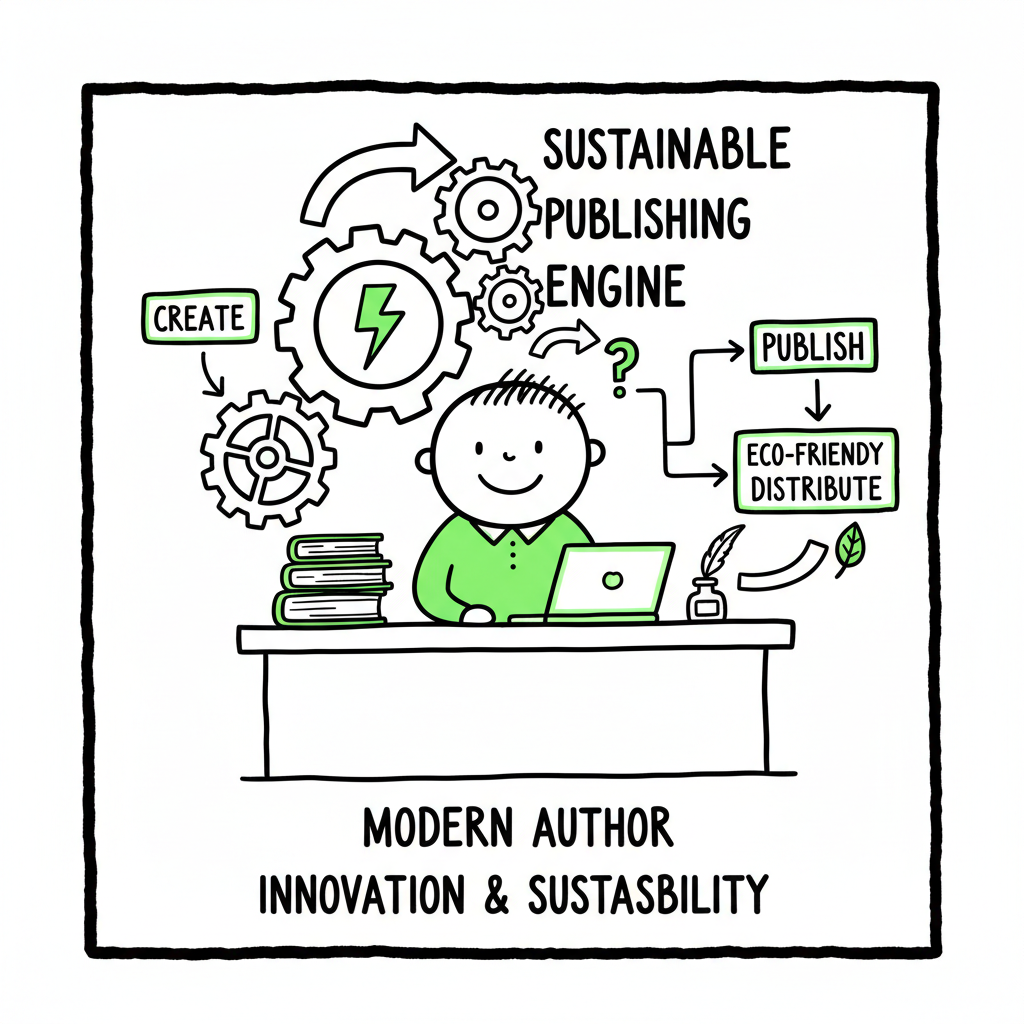
Author Entrepreneurship for Sustainable Publishing Business
Author Entrepreneurship: Building a Sustainable Publishing Business
Estimated reading time: 14 minutes
Key takeaways
- Author entrepreneurship means treating writing like a business: product thinking, systems, and predictable distribution.
- Build a lean publishing engine: clear product lines, repeatable production, and automated distribution to multiple retailers.
- Use tools that automate uploads and format handling to cut time and reduce errors — freeing you to write and market.
- Start simple: validate with a single title, then scale with series, audio, and rights exploitation.
Table of Contents
- Why author entrepreneurship matters
- From idea to revenue: setup, production, and distribution
- Marketing, scaling, and operations
- FAQ
Why author entrepreneurship matters
Author entrepreneurship starts with a mental shift: you are not only a creator, you are also the owner of a product line. You can read Self Publishing As A Business to see how structure, accounting, and product thinking change the game. That doesn’t mean losing craft. It means placing craft inside a system that finds readers, tests price points, and turns attention into repeated sales. In the current market, writing alone rarely builds a sustainable career; the missing piece is the consistent business work behind each title.
Treating your publishing as a business lets you make faster, clearer decisions about what to write, how to price, and where to distribute. If you’re ready to move from hobbyist to owner, read Self Publishing as a Business to see how structure, accounting, and product thinking change the game. This is the difference between a single book that fades and a catalog that earns predictably.
Author entrepreneurship blends creative routines with practical systems:
- Product thinking: each book is an asset with lifecycle and revenue expectations.
- Repeatable production: templates, checklists, and partners that reduce time per book.
- Multi-format distribution: paperback, ebook, audio, translations, and licensing.
- Marketing ops: email funnels, advertising experiments, and audience segmentation.
When you organize around these elements, publishing stops being a sporadic hobby and becomes a scalable business. The rest of this article walks through the setup and the practical systems you can use to scale without burning out.
From idea to revenue: setup, production, and distribution
Create simple, testable product lines
Start by thinking in product lanes. A lane could be short nonfiction guides, serialized fiction, or a niche craft series. Each lane should have:
- A clear reader promise (what the reader gets).
- A next-step product (ebook → paperback → course → membership).
- Pricing logic (intro price, full price, and discount rules).
Test with one title. Validate demand with a small ad spend, newsletter signups, or pre-order activity. If the economics show promise, replicate the format and cadence. The goal is not to write faster — it’s to publish with consistent quality and predictable costs.
Business basics that matter
You don’t need a complicated legal structure at launch, but you do need clarity on revenue and expenses. Track:
- Royalties by platform
- Advertising and marketing spend
- Production costs (editing, cover, formatting)
- Taxes and basic bookkeeping
Low-cost tools and a simple spreadsheet are fine to start. As you scale, move accounting to dedicated software and consider the right business entity for tax efficiency and liability management.
Production: editing, covers, and formats
Make production predictable. Use templates for manuscript structure, a standard brief for editors, and a clear cover specification. For covers, many authors test several concepts before finalizing — having a production checklist speeds that process and reduces back-and-forth.
If you handle cover design or automate parts of the visual pipeline, consider using an efficient cover tool to process options quickly. A good cover workflow reduces time to market and lets you A/B test thumbnails without restarting the whole project. For authors who convert manuscripts into modern ebook formats, reliable EPUB conversion saves hours and prevents retailer rejections. Finally, when you create paperbacks or ebooks at scale, a centralized tool that handles generation and metadata cuts repeated manual work and keeps output consistent.
Production checklist highlights
- Developmental edit or beta readers
- Line edit and proofread
- Cleaned manuscript for formatting
- Cover design and thumbnail tests
- ISBNs, metadata, and keywords
- Final files for each store (EPUB, MOBI where relevant, print-ready PDF)
Automating distribution to retailers
Manual uploads are the most common bottleneck as authors scale. Each platform has different file requirements, metadata fields, and territory settings. Repeating the same upload across Amazon KDP, Kobo, Apple Books, Draft2Digital, and Ingram can consume days for each new title.
At scale, automation is the obvious upgrade. Using a unified upload system that supports CSV batch uploads and platform-specific intelligence compresses multi-store publishing into a small set of repeatable steps. Automation saves time — often cited as roughly 90% on repetitive upload tasks — and reduces human error, which prevents listing problems and publication delays.
A practical workflow
- Prepare master files (final EPUB for ebook, print-ready PDF for paperback, audio files if applicable).
- Maintain a CSV catalog with metadata and pricing rules.
- Run an automated upload to all selected retailers.
- Review platform validation reports and fix a small list of flagged issues.
- Monitor live listings and royalties.
When you automate, the work shifts from “uploading” to “quality control.” You’ll spend more time improving covers, writing blurbs, and planning launches rather than wrestling with forms.
Tools and integrations that save time
Pick tools that integrate with the formats and stores you use. A tool that understands platform differences (for example, how KDP handles trim sizes or how Apple processes EPUBs) prevents repeated rejections and odd display problems. Look for:
- CSV or batch upload support
- Validation reports that point to exact issues
- Platform-specific templates for pricing and territory settings
Automating uploads makes wide distribution practical. Once you publish multiple titles, the overhead of manual uploads becomes a real cost. At that point, services that offer platform-specific intelligence and batch processing are an obvious upgrade — they let you focus on product and audience growth rather than repetitive tasks. Automate the upload. Own the distribution.
Note on formats and conversions
Converting your manuscript to a clean EPUB and generating a consistent paperback interior are routine but technical steps. If you’re converting files at scale, use a tool that produces validated EPUBs to avoid retailer rejected files. For paperback and ebook generation, use consistent templates so page counts, trim sizes, and image placement don’t cause surprises later.
Production resources (links)
- For automated cover processing, a cover generator processing helps you iterate thumbnail options quickly.
- If you need a reliable EPUB converter, a dedicated tool will save time and prevent errors.
- If you’re generating paperback or ebook files at scale, a central book creation workflow streamlines the process.
Marketing, scaling, and operations
Positioning and pricing
Positioning is a practical process: identify where your title fits in the market and set price based on perceived value and competitive positioning. For fiction series, lower per-book prices with frequent releases often drive faster series growth. For nonfiction, higher single-title prices combined with bundles and courses may work better.
Use simple experiments to find price elasticity:
- Run a short price test with ads at multiple price points.
- Track conversion rates from ad clicks and email opens.
- Use bundles and limited-time discounts to find the ceiling for lifetime value.
Audience and direct sales
Your most valuable asset is a contact list. An email list gives you direct access to readers without depending on retailer algorithms. Start collecting emails early: offer a short freebie, a first-chapter download, or an exclusive short story. Keep your list engaged with regular, predictable touchpoints — not always sales pitches, but value-driven content that reminds readers you publish on a cadence.
Diversifying income
Author entrepreneurship depends on diversified income:
- Multiple formats: ebook, paperback, audiobook.
- Ancillary products: workbooks, short reports, templates.
- Rights: foreign language licensing, film/TV options, and serial rights.
- Memberships and subscriptions: Patreon-style support or a paid newsletter.
- Courses and speaking.
Each new format or channel reduces dependence on a single retailer. Many authors find that once they have three to five titles and an automated production pipeline, adding an audio edition or translation becomes a profitable step rather than a high-friction project.
Scaling operations
Scale needs predictable systems. Hire or contract for repeatable tasks: editing, cover production, formatting, and customer service. Keep the following operational principles:
- Standardize briefs for contractors.
- Maintain a single metadata source (CSV) and use it to push updates to all retailers.
- Schedule releases on a calendar and reserve time for promotion windows.
- Track unit economics per title so you know what to scale and what to sunset.
How automation fits into growth
Automation is not just speed; it’s quality control and consistency. When you publish dozens of titles, inconsistent metadata or cover oddities will cost you visibility and credibility. Consolidating uploads into a single platform that understands each retailer’s quirks removes that risk. Typical benefits include:
- Reduced manual errors in metadata and pricing
- Faster updates across all stores when you change a price or correct a blurb
- Batch processing for seasonal promotions or series releases
BookUploadPro and the lean publishing engine
When authors reach a point where uploads, corrections, and multi-store checks take more time than writing, a publishing automation service becomes a practical investment. BookUploadPro automates repetitive uploads across Amazon KDP, Kobo, Apple Books, Draft2Digital, and Ingram. Its features emphasize:
- Unified multi-platform publishing with platform-specific intelligence
- CSV batch uploads for catalogs and metadata
- Error reduction and validation reporting
- ~90% time savings on repetitive tasks
- Affordable pricing with a free trial for new users
For authors publishing seriously, that automation is an obvious upgrade — it frees you to write more, test markets, and build the revenue lines that make author entrepreneurship sustainable.
FAQ
Q: What exactly is author entrepreneurship?
A: Author entrepreneurship is the practice of building a publishing business around your writing. It mixes craft with product thinking, systems for repeatable production, multi-format distribution, and metrics to guide decisions.
Q: How many books do I need before this becomes worth it?
A: There’s no fixed number, but once manual uploads and corrections take more than a few hours per title, automation pays. Many authors find the break-even point around 4–6 titles, especially if they publish in multiple formats.
Q: Do I lose creative control if I treat publishing like a business?
A: No. The business layer helps you make choices that keep creative control while improving reach and revenue. Systems allow you to publish more consistently without diluting quality.
Q: Will automation hurt my relationships with retailers?
A: No. Automation standardizes your inputs and reduces errors that can damage listings. A system that respects platform rules actually improves retailer experience and reduces the need for manual remediation.
Q: How should I prioritize formats: paperback, ebook, audiobook?
A: Prioritize based on your audience and margins. Ebook is usually cheapest to produce and fastest to distribute. Paperback provides discoverability in physical retail via Ingram. Audiobook is growing fast but has higher production costs and can be worth it for narrative fiction and long nonfiction.
Q: Is automation worth it for indie authors?
A: Yes — it helps you scale, reduces repetitive tasks, and frees time for writing, marketing experiments, and exploring new formats.
Final thoughts
Author entrepreneurship is an operational approach. It asks you to treat books as products while protecting the creative work that makes them valuable. Start with a simple product lane, prove demand, and then build repeatable production and distribution systems. Use automation to remove repetitive tasks so you can focus on writing, marketing experiments, and expanding formats.
When the time comes to stop wrestling with uploads and start scaling, unified multi-platform publishing tools and CSV batch workflows are practical, cost-effective choices. They reduce errors, compress timelines, and make a catalog-based business realistic for indie authors. Automate the upload. Own the distribution.
Sources
- https://publishdrive.com/business-tips-for-authors.html
- https://barkerbooks.com/how-to-start-a-business-book/
- https://kindlepreneur.com/how-to-start-a-publishing-company/
- https://www.thecreativepenn.com/businessbook/
- https://www.publishing.com/blog/how-to-start-a-publishing-business
- https://www.christianpublishingshow.com/how-to-be-a-successful-author-entrepreneur/
Author Entrepreneurship: Building a Sustainable Publishing Business Estimated reading time: 14 minutes Key takeaways Author entrepreneurship means treating writing like a business: product thinking, systems, and predictable distribution. Build a lean publishing engine: clear product lines, repeatable production, and automated distribution to multiple retailers. Use tools that automate uploads and format handling to cut time…