
In this guide
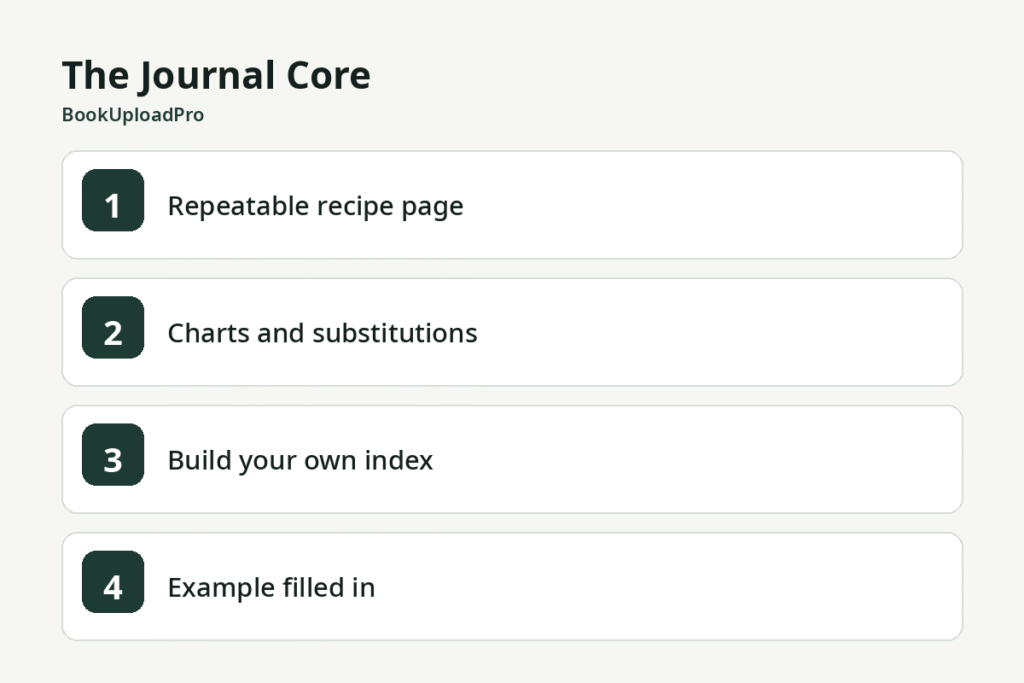
A blank recipe journal sells because of what surrounds the blanks. The core is a repeatable recipe page: title, source or occasion, servings, prep and cook times, ingredients in two columns, numbered method lines with enough ruling to write on, and a notes and rating strip. Around that core, the value pages justify the price over a notebook: conversion and temperature charts, substitution tables, an index the buyer builds as they go, sections divided by course with tabs or divider pages, and a few pages of prompts (family favorites, holiday menus, recipes to try). Design decisions that matter in print: lay flat friendly margins, one recipe per spread for long methods, and paper thinking, since buyers write in pen and thin show through disappoints:
Key takeaways:
- Ingredient lists are facts, and facts are not copyrightable; the method text, headnotes, photos, and arrangement of a published recipe are creative expression, and those are protected. Adapt the dish, never transcribe the text:
- A genuine adaptation means your own testing and your own words: change the dish meaningfully (technique, proportions, flavor direction), cook it, and write the method as you actually made it. Swapping a few words in someone else’s steps is a copy with edits, not an adaptation.
- Credit is good manners, not a legal shield: naming your inspiration is honest and readers respect it, but permission is the only thing that licenses protected text or photos.
Designing the journal interior, practically
Build the master recipe page once and repeat it exactly; consistency is what makes a journal feel professional. Count the pages against print economics: journals commonly run 100 to 200 pages, and every page costs print money whether it carries content or not, so price from the print cost up: Add a completed example recipe at the front in a friendly hand style layout so buyers see how the pages want to be used, and put your charts where hands can find them mid cook, inside the back cover spread is prime territory. The creation workflow for the verbal parts, prompts, charts lists, section ideas, is a documented strength of AI assisted drafting, while the layout stays design work:
The adapted cookbook, done right
Start from dishes, not pages: cook the dish you found, change it toward your table, cook it again, and write up your version from your own notes. Your cookbook then contains your recipes in the honest sense, tested, re proportioned, re voiced. Keep a source log in your project files (dish, inspiration, what you changed, dates cooked) so your adaptation is documented if anyone ever asks. That log plus genuine testing is the difference between a cookbook and a scraping operation, and readers can taste it:
FAQ
How do I create a blank recipe journal that buyers fill in with their own recipes?
Design one excellent repeatable recipe page (ingredients columns, ruled method lines, notes and rating), repeat it consistently, and surround it with value pages: conversion charts, substitutions, a build your own index, course dividers, and a filled in example at the front. Count pages against print cost before pricing.
Can I publish a cookbook if the recipes are adapted from ones I found online?
Yes, if the adaptation is real: ingredient lists are unprotected facts, but you must cook the dish, change it meaningfully, and write the method entirely in your own words from your own testing. Never transcribe published method text or use their photos; keep a source and changes log.