
In this guide
- The series question
- When DIY is genuinely enough
- FAQ
- Canva vs BookCoverly style designers and hiring on Fiverr, which route gives the best cover for the money?
- GetCovers or Miblart vs doing my own cover in Canva, which is better for a series look?
- Do I need a professional cover designer or can I design my own cover in Canva?
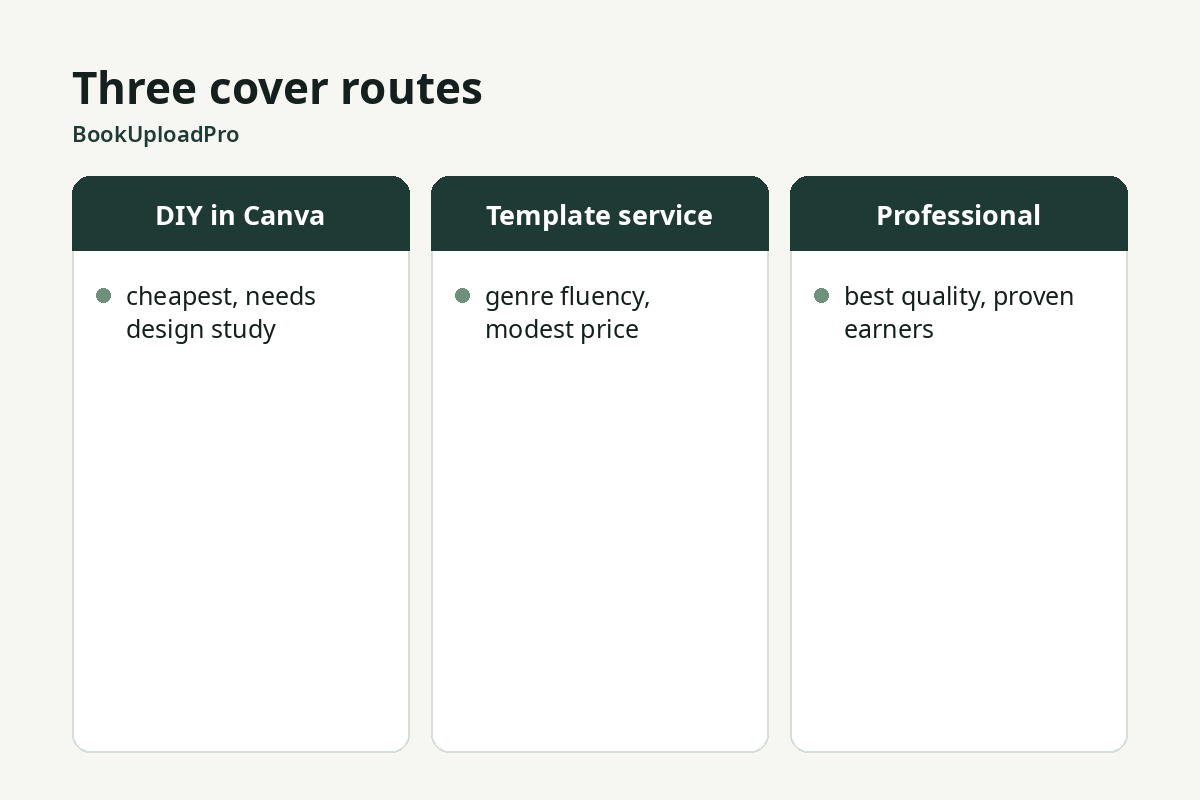
The honest ranking by result per dollar surprises people: a good premade or template based design service usually beats a beginner’s DIY cover and a cheap untested freelancer, because cover design is a genre language, and services that make book covers all day speak it fluently for modest money. DIY in Canva wins on cost and control, but only in the hands of an author who will study their category’s top twenty covers and ruthlessly copy the conventions. A skilled professional wins outright on quality and series branding, at a price that makes sense once a book or series is earning. Best cover for the money, for most self publishers: a book cover service working from your brief, with DIY reserved for the genuinely design capable and pros for proven earners.
Key takeaways:
- Judge every route by the thumbnail test in your category: place the draft among the top ten covers in your niche at small size. If it looks like it belongs and its title reads, the route worked, whatever it cost.
- Template and premade services (the BookCoverly style operations, and designer marketplaces like GetCovers and Miblart) sell genre fluency cheaply: real typography, correct mood, print files included. Their risk is sameness, mitigated by customizing title treatment and colors.
- Fiverr is a lottery with good tickets in it: the best sellers there are working cover designers with deep book portfolios, the worst are generalists. Hire only from a portfolio of published covers in your genre.
The series question
A series look is a system, not a cover: consistent typography, a repeatable layout grid, a color story, and a badge or numbering device, designed once and applied per book. This is where services pull ahead of DIY most clearly, because they deliver the system and its source files, so book four costs less and matches book one exactly. A Canva DIY series can hold together if you lock a template on book one and never improvise, but drift creeps in one reasonable tweak at a time until the shelf looks like cousins rather than siblings. Whichever route, decide the series system before designing book two, ideally before launching book one. Covers also carry metadata duties, since your print cover’s title and subtitle must match your listing.
When DIY is genuinely enough
Nonfiction with a clean, bold, type led category style is the most forgiving territory: many top selling business and how to covers are essentially typography and one strong image, achievable in Canva by a careful author. Fiction, especially romance, fantasy, and thriller, is the least forgiving: illustrated and photographic conventions are dense, and readers spot an outsider cover instantly. Spend where the genre punishes amateur work, save where it does not, and always spend the free hour first: screenshot your draft inside a grid of your competitors at thumbnail size, because that is the shelf your buyer is browsing. If your cover disappears or shouts wrongly, no price was low enough. For what a rejection grade cover problem looks like at upload, see our cover bleed and quality guides.
FAQ
Canva vs BookCoverly style designers and hiring on Fiverr, which route gives the best cover for the money?
For most authors, the template and premade design services: professional genre fluency at a modest fixed price, print files included. Canva DIY is cheapest but only competitive with real design study; Fiverr ranges from excellent to unusable, so it pays only when you hire from a proven book cover portfolio in your genre.
GetCovers or Miblart vs doing my own cover in Canva, which is better for a series look?
The services, usually, because a series needs a designed system with source files that each new volume reuses exactly. DIY series covers drift over time as small tweaks accumulate. If you do DIY a series, freeze the book one template and treat its layout, fonts, and colors as law.
Do I need a professional cover designer or can I design my own cover in Canva?
You need a cover that passes the thumbnail test among your category’s best sellers. Skilled designers and good cover services get there reliably; Canva gets there when you study the category’s conventions and copy them closely, which is realistic for type led nonfiction and hard for convention dense fiction. Decide by genre and by honest self assessment, not by budget alone.