
In this guide
- One book, no recording, no studio
- Ten books, and the instructional voice question
- FAQ
- I cannot afford a human narrator at $300 per finished hour, what are my best AI narration options?
- I have ten nonfiction books with no audio versions, what is the most practical way to narrate them all?
- Can an AI tool narrate my cookbook or how to guide in a clear instructional voice?
- Is AI narration good enough for educational and training books?
- How can I turn my ebook into an audiobook without recording anything myself?
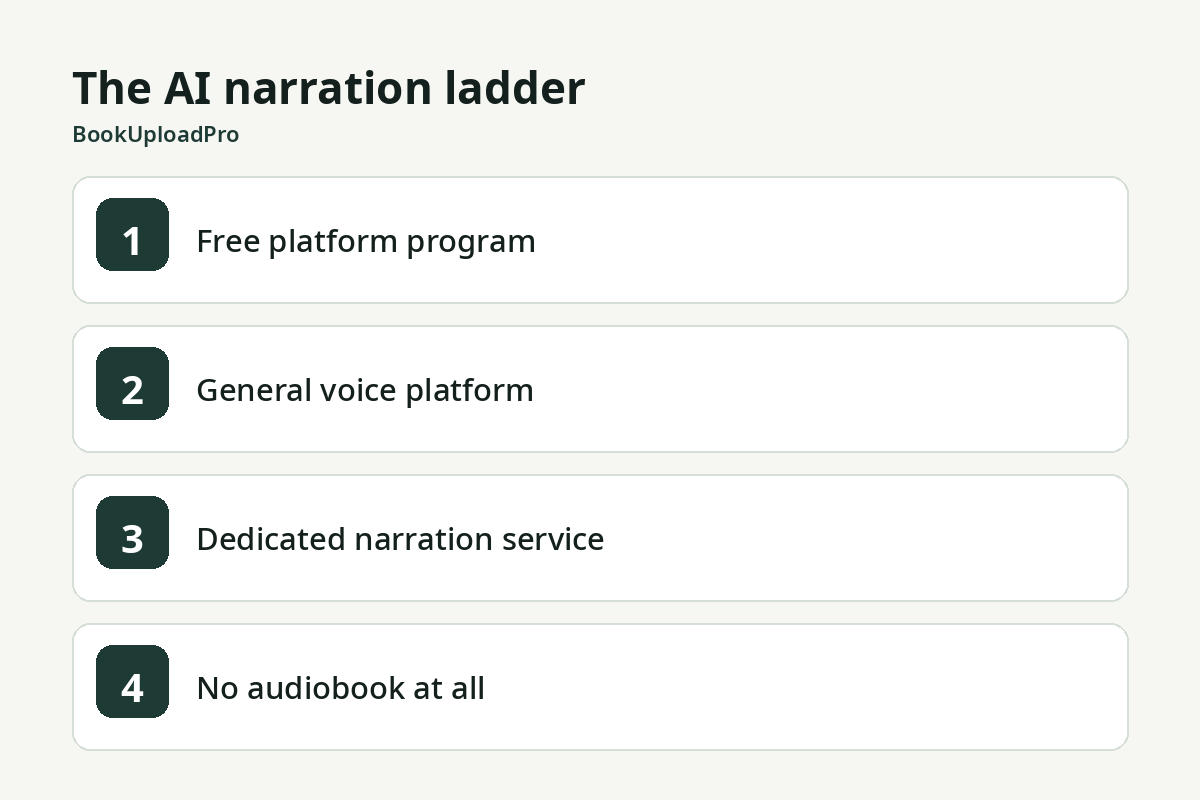
At $300 per finished hour, an eight hour book costs about $2,400 in narrator fees alone, so for most independent authors the question is not whether AI narration is an option but which tier of it fits the job. The practical ladder has three rungs: free or nearly free platform programs, like Google Play’s auto narration, which cost nothing and give you no files and little control; general voice platforms, where you direct the production yourself; and dedicated audiobook narration services, which add chapter review, passage fixes, and store ready delivery for a subscription. Every rung beats the fourth option, no audiobook at all, in the stores that accept AI narration.
Key takeaways:
- Before choosing tools, confirm your target stores accept AI narration and what they require you to disclose, since Audible is closed to outside AI narration and the others have their own labels.
- For a backlist of ten books, the economics flip the decision: a credit based service subscription turns an impossible $24,000 human bill into a production season, one book at a time.
- Instructional content, cookbooks, how to guides, training material, is AI narration’s home ground, where a clear, even voice is the requirement rather than a limitation.
One book, no recording, no studio
You do not need to record anything: the route is manuscript in, audiobook out, and our step by step walks the whole path. For a single book, weigh the free platform route if the book is simple and Google Play alone satisfies you, against a month of a dedicated service if you want the files, the voice choice, and the other stores. The service route also produces the credits and retail sample and masters the audio to specification, the invisible work a raw voice platform leaves with you. What separates services from tools when you compare them is laid out here.
Ten books, and the instructional voice question
A catalog changes the work from a project into a pipeline: prepare every manuscript the same way, choose one or two house voices for the catalog so listeners recognize your shelf, produce in a steady rhythm, and let the earliest titles’ earnings validate the pace. This is exactly the use case subscription credit models are priced for, Publisher tier catalog scale in HumanizeAudio’s case, and it is also where consistency of process pays: the same preparation checklist, the same review standard, the same disclosure routine per store. On voice fit, instructional books want intelligibility at speed, accurate numbers and units read naturally, and a tone that stays welcome for hours without performing. Test candidate voices on a recipe or a procedure, the harshest instructional text there is, because a voice that reads your quantities, timings, and warnings clearly will read anything in the book.
FAQ
I cannot afford a human narrator at $300 per finished hour, what are my best AI narration options?
Three rungs: a free platform program like Google Play auto narration for the simplest case; a general voice platform if you will direct and master the production yourself; or a dedicated AI narration service, subscription priced, which adds review workflows and store ready files. For most authors the service rung is the practical sweet spot.
I have ten nonfiction books with no audio versions, what is the most practical way to narrate them all?
Treat it as a pipeline, not ten projects: one preparation standard, one or two catalog voices, a credit based service plan sized for volume, and a steady production order starting with your best sellers. The per book cost falls to a fraction of one human fee for the whole shelf.
Can an AI tool narrate my cookbook or how to guide in a clear instructional voice?
Yes, and instructional clarity is what current AI voices do best. Choose a voice by testing it on your most technical passage, quantities, timings, warnings, and use a service that lets you fix individual passages, because a misread measurement is the one error your listeners will not forgive.
Is AI narration good enough for educational and training books?
For most educational and training content, yes: the genre rewards clarity, consistency, and accuracy over dramatic performance, and completion rates depend more on clean audio and sensible pacing than on a famous voice. Disclose it where stores require, and keep a human review pass on technical terms.
How can I turn my ebook into an audiobook without recording anything myself?
Prepare the manuscript for narration, choose an AI narration route, generate and review the chapters, fix passages, and upload the finished files to the stores that accept AI narration. The full beginner walkthrough, including what to prepare before you start, is in our ebook to audiobook guide linked above.