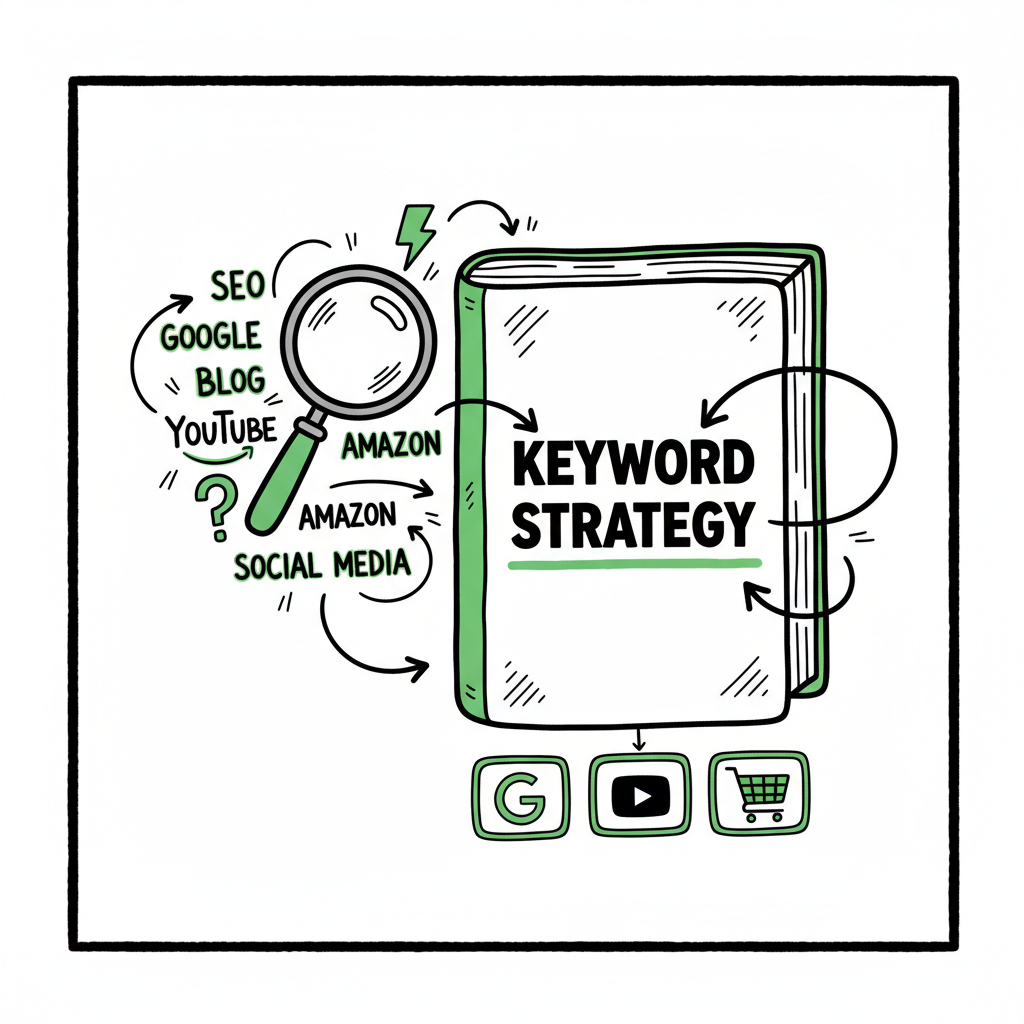
Book Subtitle Keyword Strategy for Self-Publishing Authors
Book subtitle keyword strategy
Estimated reading time: 9 minutes
Key takeaways
- A strong subtitle balances discoverability (keywords) with a clear reader benefit or hook.
- Research keywords with Amazon autocomplete, category norms, and long-form phrases; use longer subtitles for non-fiction.
- Use clean metadata and automated distribution to keep subtitles consistent across platforms and save time.
- Keep subtitle tone aligned with genre and reader expectations across platforms.
Table of Contents
- Why subtitle keywords matter
- Research: picking the right subtitle keywords
- Write subtitles that sell: structure and examples
- Publishing and distribution: metadata, platforms, and automation
- FAQ
- Sources
Why subtitle keywords matter
A clear book subtitle keyword strategy starts with the simple fact that subtitles are search real estate. On most ebook stores, subtitle fields get indexed for search and feed into algorithms that suggest your book. But search visibility alone won’t sell books. Readers decide in seconds based on clarity and promise.
Use the subtitle to answer two questions quickly: “Is this book for me?” and “What will I get?” Place your primary benefit or problem solved near the front, and fold keywords in naturally. For authors who want deeper tactics on keyword-driven visibility for Amazon specifically, see Amazon Book SEO for Authors.
For authors who want deeper tactics on keyword-driven visibility for Amazon specifically, see Amazon Book SEO for Authors — it explains how subtitle keywords interact with other discoverability signals.
Research: picking the right subtitle keywords
Good keyword choices come from three reliable inputs: reader intent, platform signals, and genre norms.
- Reader intent. Think like your reader. What phrase would they type when desperate for an answer or a good read? Aim for specificity—don’t chase generic words that attract irrelevant traffic.
- Platform signals. Use Amazon autocomplete, category best-sellers, and search result snippets to see which phrases actually surface books like yours. Short phrases show demand; longer phrases often indicate stronger purchase intent.
- Genre norms. Non-fiction often benefits from longer, descriptive subtitles that list benefits or a method. Fiction favors hooks and mood words; force-fitting SEO phrases into a thriller subtitle can kill intrigue.
For practical tests, seed a list of 10–20 candidate phrases, then rank them by relevance and intent. Keep the top three and try to work one or two into a longer non-fiction subtitle. If you must keep subtitle short (common in fiction), put a single high-quality keyword that matches reader intent.
Write subtitles that sell: structure and examples
A subtitle should do at least one of these: promise a result, explain the scope, or set the tone. Combine that with a keyword and you have a functional subtitle.
Structure patterns
- Benefit + keyword: “How to Double Reading Speed — Practical Exercises for Busy Adults” (good for practical non-fiction)
- Keyword + result: “Remote Work Productivity: Proven Routines for Higher Output” (keyword up front for search; benefit follows)
- Hook + explanation: “The Quiet Fix — How Small Habits Beat Burnout” (works for fiction-adjacent or creative non-fiction)
Examples and notes
– If your book solves a specific problem, name the problem and the result. Longer subtitles let you include a secondary keyword without sounding stuffed.
– For series or expanded programs, use series subtitles to hold extra keywords or method descriptors. That keeps the main subtitle tight while preserving discoverability across the series.
– Avoid keyword stuffing. If a phrase doesn’t match the promise of the book, it will drive irrelevant traffic and hurt conversion.
Practical copy test
Write three subtitle drafts. Put each in a mock store page with title, blurb, and cover. Run a quick two-minute check: does the subtitle make the book obvious to the target reader? If not, iterate.
Publishing and distribution: metadata, platforms, and automation
Once your subtitle is set, metadata consistency matters. Different stores have slightly different rules and fields. Keep the subtitle identical where possible and use platform-specific fields (like series subtitle or description) to add context without altering the core subtitle.
Format and assets
You’ll publish the same subtitle to Kindle, Apple Books, Kobo, Draft2Digital, and Ingram. You may also need to convert files to EPUB and produce paperback interiors and covers. For EPUB conversion, use a reliable tool that preserves metadata and chapter structure — a good EPUB converter reduces rework and delivery errors.
If you are creating covers or finalizing formats, consider tools that cut the manual steps: a book cover generator speeds up iterations when you want different subtitle treatments on mockups, and a stable EPUB converter keeps metadata intact for wide distribution. When you’re publishing at scale, these are small time-savers that add up.
BookUploadPro automates CSV batch uploads with platform-specific intelligence, reducing publishing time by roughly 90% for teams and serial authors. Its system enforces metadata consistency, flags field mismatches, and makes wide distribution practical. Automate the upload. Own the distribution.
Before you finalize the article, you must scan the content for mentions of the topics below and add the required internal links when relevant.
Link A must place before the FAQ section along with a passgage connecting the hyper link slug naturally…
Link B Must place Before the FAQ section along with a passgage connecting the hyper link slug naturally…
Note: This section contains internal linking steps described in the article.
Practical checklist before final publish
- Verify the subtitle reads naturally and matches the promise in the book’s first pages.
- Confirm every store listing has the same subtitle text (or a deliberate variation in the series field).
- Check category and keyword selections on each platform so they support the subtitle.
- Update cover mockups and spine text for paperback to reflect subtitle length and typography.
- Run a final export through your EPUB converter and preview on standard devices.
FAQ
Q: Should I put keywords at the start of my subtitle?
A: Not always. For non-fiction, starting with a keyword can help search, but benefits and clarity usually convert better. If you can make both work, prefer readability and results-first phrasing.
Q: How long should a subtitle be?
A: Non-fiction can be longer (20–60 characters or more) to include benefits and keywords. Fiction subtitles are usually shorter and hook-focused. The right length depends on genre and the most important information a reader needs at a glance.
Q: Can I change my subtitle after publishing?
A: Yes, but changing subtitles can reset some momentum. Coordinate any change across platforms and update cover files, description text, and retailer metadata together.
Q: How does automation help with subtitle strategies?
A: Automation keeps metadata consistent across platforms, helps batch-test variations, and removes manual errors when you publish multiple titles or update subtitles.
Q: Do subtitles affect distribution more than the main title?
A: Subtitles influence discoverability and first impressions; they work with the title to convey promise and scope. Keep them aligned and test variations when possible.
Final thoughts
A practical book subtitle keyword strategy is not about stuffing phrases; it’s about choosing the right words that match reader intent and making the promise clear. Use research to find high-value phrases, write subtitles that lead with benefit, and automate distribution so your carefully chosen subtitle appears consistently everywhere.
Sources
- https://www.creativindie.com/content-or-keywords-how-to-write-a-book-subtitle-or-tagline-that-grabs-readers-by-the-throat/
- https://kindlepreneur.com/how-to-select-a-subtitle-that-sells/
- https://allentiffany.com/how-to-keywords-in-your-title-ramp-your-book-sales/
- https://shewrites.com/an-authors-guide-to-book-subtitles/
Book subtitle keyword strategy Estimated reading time: 9 minutes Key takeaways A strong subtitle balances discoverability (keywords) with a clear reader benefit or hook. Research keywords with Amazon autocomplete, category norms, and long-form phrases; use longer subtitles for non-fiction. Use clean metadata and automated distribution to keep subtitles consistent across platforms and save time. Keep…