Book Niches for Series Publishing That Sell in 2026
Book niches for series publishing
Estimated reading time: 11 minutes
Key takeaways
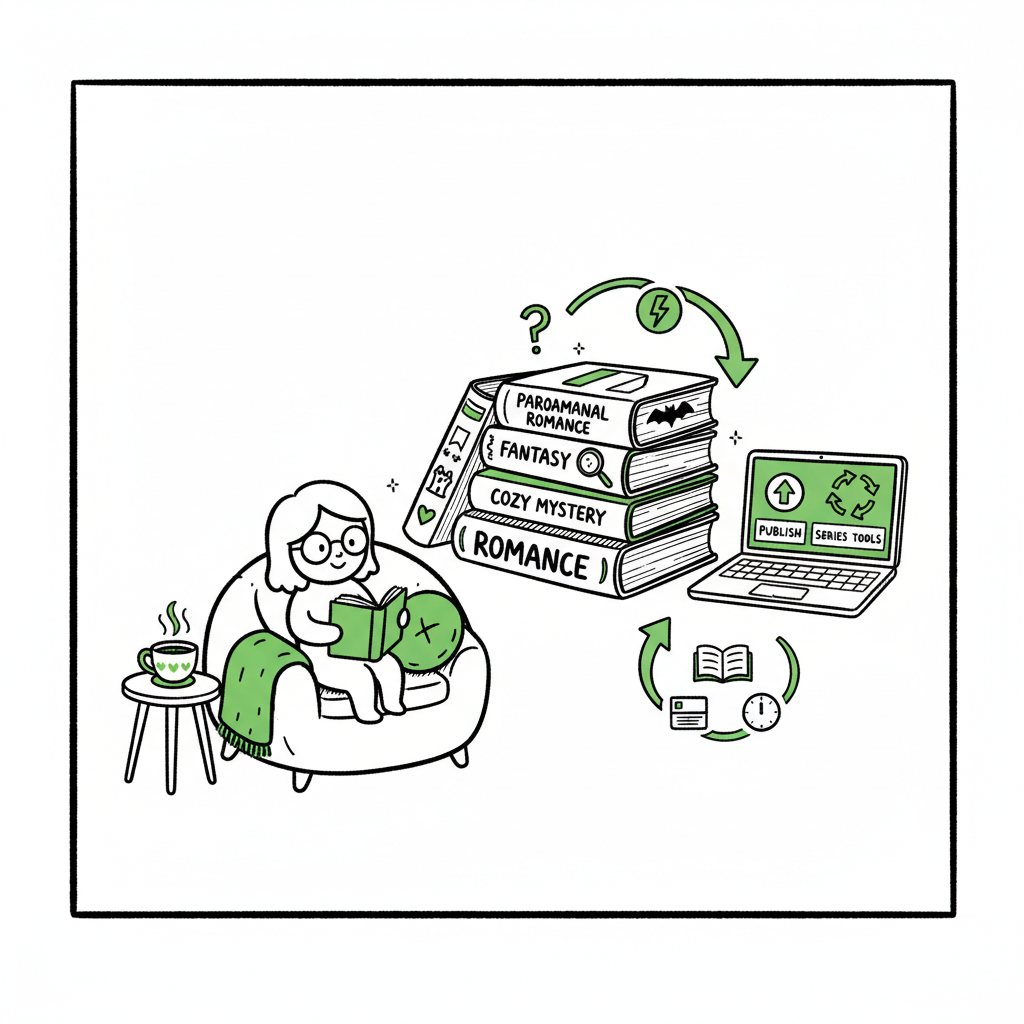
- Series perform best in reader-loyal genres: romance, fantasy subgenres, cozy mystery, and paranormal romance.
- Choose a niche that supports repeat buying, binge reading, and clear reader expectations.
- Use repeatable production and distribution tools to scale: CSV batch uploads, platform-aware metadata, and multi-platform delivery save time and cut errors.
Table of Contents
- Why series publishing works
- Best book niches for series publishing in 2026
- Plan, produce, and distribute your series
- FAQ
- Sources
Why series publishing works
Series publishing changes the game because readers buy into patterns. A reliable voice, a recognizable world, and predictable pacing encourage the same reader to buy multiple installments. That makes “book niches for series publishing” a practical strategy: you’re not just selling one title, you’re building a catalog that compounds.
Series economics favor niches where fans re-read, binge, or collect—romance subgenres, fantasy worlds, cozy mysteries, and paranormal romance lead that list because they create emotional hooks and recurring purchase behavior. If you want a short guide to market demand and practical hot spots, see Book Niches That Sell for a straightforward read on where readers are buying now. Placing your work where readers already show up shortens the path to repeat buyers.
Series also benefit from platform-specific mechanisms: Kindle Unlimited’s page-reads model rewards long backlists, while other stores reward discoverability through consistent metadata and categories. The operational advantage of a series is predictable output: once you have a reliable template for covers, formatting, and metadata, you can move faster and keep quality steady.
Best book niches for series publishing in 2026
Certain niches are inherently easier to scale as series. Below are the practical winners for 2026, based on reader behavior and competition patterns.
- Romance (subgenres): Contemporary romance, romantic suspense, enemies-to-lovers, and small-town romance. Readers expect a series format: same world, different couples, recurring side characters.
- Fantasy subgenres: Urban fantasy, epic serials, grimdark arcs, gaslamp, and historical fantasy. These niches let you expand worldbuilding across multiple books and spin-offs.
- Cozy mystery: Shorter books, steady release cadence, and a loyal audience make cozies efficient to publish as long-running series.
- Paranormal romance and fantasy-romance blends: Emotional stakes plus series hooks create dedicated followings who buy every new release.
- Kids and YA series fiction: If you can commit to multi-book arcs, younger readers and parents will return to a character-driven series.
- Niche nonfiction series: Short how-to bundles, themed workbooks, or serialized business playbooks that solve a specific problem repeatedly.
Why these niches? They share three things: clear reader expectations, low friction to entry for repeat buyers, and the ability to use backlist to feed new promotions. For many authors publishing 25+ books—especially in series—median earnings improve because each new title drives discoverability for earlier books.
A note on low-content vs high-content: Low-content series can be profitable, but high-content fiction in the genres above typically delivers higher per-book value and stronger reader retention.
Plan, produce, and distribute your series
Plan with scale in mind. A practical plan covers voice, length, release cadence, and a reproducible production pipeline.
- Start with a series map. Plot 6–12 story arcs or book themes. Make each title solve a reader expectation—romance resolves a relationship, cozy solves a mystery, fantasy resolves a plot beat. Consistency encourages binge behavior.
- Standardize metadata. Make templates for titles, subtitles, descriptions, tags, and categories. Small naming conventions help algorithms and readers recognize your series.
- Streamline assets. Create a repeatable cover template and interior format you can reuse. If you build covers in batch or generate consistent templates, production time drops substantially. If you need scalable cover creation or batch processing, consider a dedicated cover workflow that integrates with your upload process. For automated cover processing, tools exist to handle cover generation and file preparation quickly.
- Format and convert once. Convert your manuscript to clean EPUBs with a reliable converter so your files meet each retailer’s requirements. A consistent EPUB step reduces rejections and speeds distribution. You can also use an EPUB converter to streamline the process.
- Batch metadata and uploads. Use a CSV-driven workflow to prepare listings at scale. That’s where real time savings come: uploading 10–50 books manually is slow and error-prone; a CSV and platform-aware uploader turns it into a repeatable job.
- Test on one platform, then expand. Confirm formatting and metadata on one store before pushing wide.
While planning, remember production tools are not optional at scale. If you’re producing multiple books per year, automation is an obvious upgrade: CSV batch uploads, platform-specific intelligence, and error reduction make wide distribution practical. Many authors report roughly 90% time savings once they automate upload and distribution tasks. Automate the upload. Own the distribution.
Practical production links
- If you convert to EPUB as part of your pipeline, a tested EPUB converter will save hours and prevent rejections.
- If you create paperbacks or ebooks in volume, look for streamlined book creation tools to batch-generate files and simplify ISBN and trim-size choices.
(These are operational steps—treat the tools as utilities, not gimmicks. The goal is consistent output with fewer mistakes.)
FAQ
Q: Which niche makes the fastest money?
A: Romance and certain fantasy subgenres tend to scale fastest because of repeat buying and Kindle Unlimited page reads. Cozy mystery and paranormal romance can also produce fast returns with loyal readers.
Q: How many books do I need before a series starts earning reliably?
A: Many authors see stronger results after 10–25 books, especially if you maintain a steady release schedule. A deep backlist increases discoverability and compounding sales.
Q: Should I use Kindle Unlimited or wide distribution?
A: Both are valid. KU helps with page-read income and can accelerate list-building for series; wide distribution captures non-Amazon readers and library/aggregator channels. Think in terms of audience, not platforms—use whatever mix reaches your readers efficiently.
Q: How do I avoid reader fatigue in a long series?
A: Vary stakes and subplots, introduce compelling side characters who can become spin-offs, and keep release pacing predictable. Shorter, focused installments work well for binge-reading behavior.
Q: Is cover consistency important?
A: Yes. Readers should recognize your series at a glance. A consistent visual system helps discoverability and builds brand trust.
Final thoughts
Series publishing is a practical, scalable strategy when you pick niches that reward repeat buying and build a reliable production pipeline. Focus on reader expectations, make production repeatable, and use distribution tools that reduce manual work and errors. For authors who want to publish seriously, unified multi-platform publishing and CSV batch uploads are the operational upgrades that turn sporadic releases into a living backlist.
Sources
- Self-publishing trends for 2026 – Phil Parker’s Speculative Faction
- Most Profitable Amazon KDP Niches – Top 10 – LivingWriter
- THIS Book Niche Is The Most Profitable (Most People Pick Wrong)
- 11 Self-publishing Trends in 2026 You Can’t Miss – MIBLART
Visit BookUploadPro.com to try the free trial.
Book niches for series publishing Estimated reading time: 11 minutes Key takeaways Series perform best in reader-loyal genres: romance, fantasy subgenres, cozy mystery, and paranormal romance. Choose a niche that supports repeat buying, binge reading, and clear reader expectations. Use repeatable production and distribution tools to scale: CSV batch uploads, platform-aware metadata, and multi-platform delivery…