Should I Tell Amazon KDP I Used AI? What to Disclose
Should I Tell Amazon KDP I Used AI
Estimated reading time: 8 minutes
Key takeaways
- Amazon KDP requires you to disclose fully AI-generated text, images, covers, or translations; AI-assisted work usually does not require disclosure.
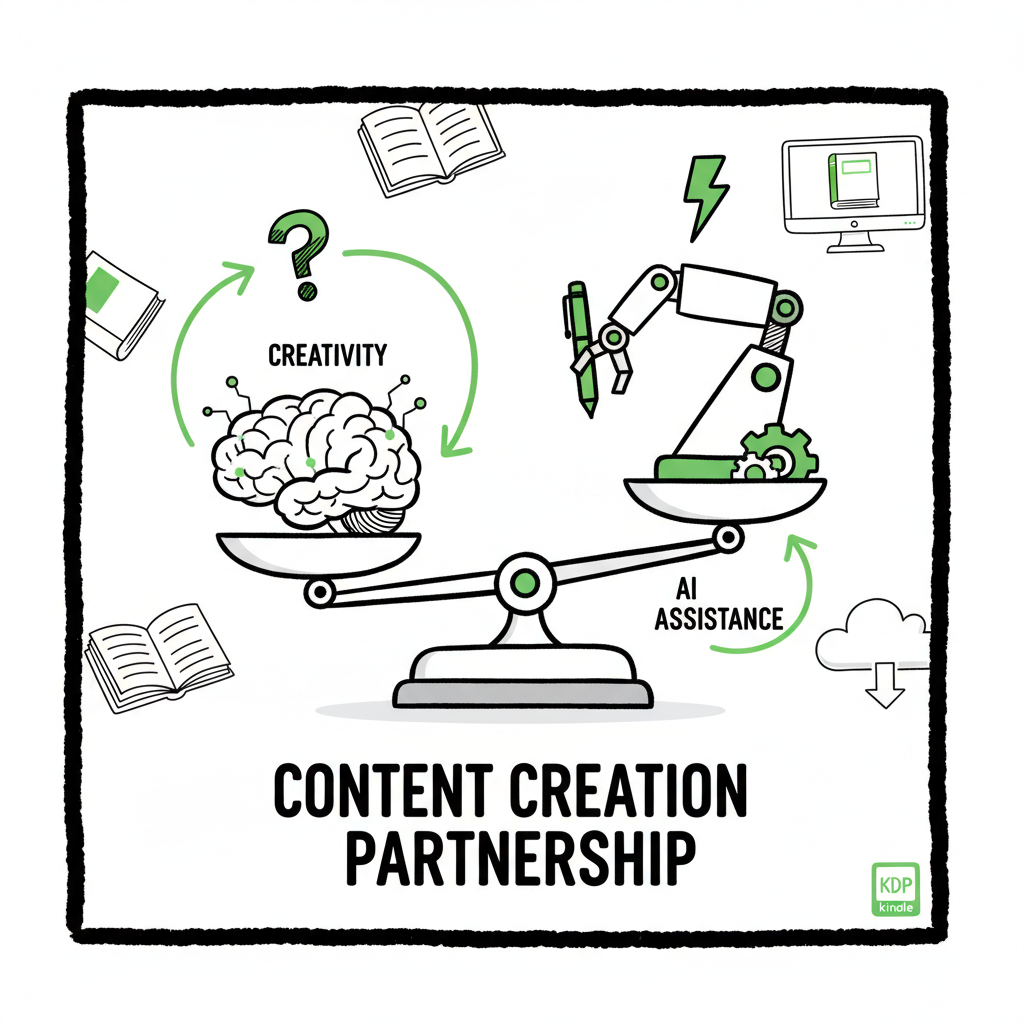
- Honest disclosure protects your account; mix human editing with AI when you want to avoid the “AI-generated” label.
- Use a reproducible, multi-platform upload workflow to reduce error and scale publishing; automation is an obvious upgrade for serious authors.
Table of Contents
- What Amazon KDP requires
- Deciding when to disclose
- Practical multi-platform publishing workflow
- Rights, quality, and enforcement risks
- Final thoughts
- FAQ
- Sources
What Amazon KDP requires
Amazon’s KDP policy draws a clear line: if any portion of your book—text, images, cover, or translation—was generated entirely by AI, you must disclose that fact when you upload or update the title. If you used AI only as a tool—brainstorming ideas, editing, or improving wording—Amazon treats that as human-created content and does not require the disclosure. This is a simple checkbox during the upload process, but it’s important. Failure to disclose full AI generation has resulted in removals and account action in real cases.
If you want a practical walkthrough of the steps involved in complying with KDP’s checkboxes and keeping records of your workflow, see Amazon Kdp Ai Writing for a focused guide on the upload fields and documentation tips.
Deciding when to disclose
The core question is whether the output was generated entirely by AI or whether a human contributed substantive creative control.
- Fully AI-generated: If you asked an AI to produce a complete manuscript, illustrations, or a cover and published that output with minimal human rewriting, check “yes.” Disclosure is required.
- AI-assisted: If you drafted, rewrote, or heavily edited the material by hand, or used AI only for research, outline help, or minor phrasing tweaks, you can check “no.” Keep change logs or revision notes as a best practice.
- Mixed workflows: Many authors combine both. If a chapter was fully produced by AI but later heavily rewritten by you, the safe approach is to document edits and decide based on the extent of human creative input. Amazon’s policy centers on transparency and customer experience; if the final product reflects significant human shaping, disclosure may not be mandatory.
Practical multi-platform publishing workflow
When you publish to KDP and other channels, disclosure choices on one platform don’t absolve you from managing uploads on others. A repeatable, auditable workflow prevents errors and protects accounts:
- Start with a single-source manuscript (DOCX or Markdown) and track revisions. Convert to EPUB only once the text is finalized; if you need a quick conversion, use a reliable tool to avoid metadata or layout issues — for example, convert manuscript to EPUB with a tested converter to preserve formatting.
- Keep cover design files separate. If you used AI to generate images, note that in your records. If you design or retouch covers manually, note the human edits. For cover files you can automate processing using a book cover generator when you need batch production or consistent templates.
- Batch uploads save time and reduce manual errors. BookUploadPro automates CSV-based, multi-platform uploads across Amazon KDP, Kobo, Apple Books, Draft2Digital, and Ingram. The system applies platform-specific intelligence (metadata mapping, file sizing, and distribution rules) so you don’t repeat the same steps five times. At scale, that’s roughly 90% time savings on routine uploads and far fewer human mistakes.
- Test one title end-to-end before batching. Check how metadata, categories, descriptions, and the disclosure checkbox appear on each platform. Platform differences can be subtle; an automated service reduces the friction of keeping every storefront consistent.
For cover generation details, see cover generator processing, for EPUB conversion see EPUB converter, and for a complete publishing workflow see book creation workflow.
Rights, quality, and enforcement risks
Disclosure is the legal and practical baseline. Beyond that, you should manage IP and quality risk:
- IP risk: AI tools can reuse or approximate existing text or images. If the AI output contains unattributed material, you and your publisher are responsible. That’s why authors doing serious publishing often humanize output and run IP checks before release.
- Customer experience: Amazon emphasizes positive experiences. Low-quality AI-only books—poor structure, repetitive language, or malformed images—can be removed regardless of disclosure. Invest time in editing, proofreading, and layout.
- Record-keeping: Keep a simple log: prompts used, major edits made, and dates. If Amazon requests clarification, having a straightforward record reduces friction.
- Multi-platform consistency: If you distribute widely, an error or policy issue on one platform can spread reputational risk. A unified upload approach reduces inconsistencies and makes remediation faster.
Final thoughts
The literal answer to “should i tell amazon kdp i used ai” is: disclose when the content was fully AI-generated; otherwise treat AI as an assistant and document human contributions. For authors publishing at scale, the choice isn’t just about a checkbox—it’s about building a repeatable, auditable workflow that keeps accounts safe and titles live.
If you publish more than a few books a year, an automated upload service becomes an obvious upgrade. BookUploadPro automates multi-platform publishing with CSV batch uploads, platform-specific intelligence, and error reduction so you can focus on writing and editing. Automate the upload. Own the distribution.
FAQ
Q: What counts as “fully AI-generated”?
A: Content created by AI with minimal human rewriting or editing—if the AI produced the final text or images you publish, disclose it.
Q: Will disclosure hurt my book’s visibility?
A: No. Disclosure is a transparency measure. Books that meet quality and IP standards are allowed for sale regardless of disclosure.
Q: Can I mix AI and human work?
A: Yes. Mixing is common. If humans make substantive creative contributions, disclosure often isn’t required, but keep records of edits.
Q: What happens if I fail to disclose?
A: Non-disclosure can lead to book removal or account action. Keep clear records and use the disclosure checkbox to protect your account.
Q: Do I need to disclose AI-generated translations?
A: If the translation was generated by AI and published with little or no human editing, disclosure is warranted. When humans contribute substantial translation tweaks, disclosure may not be required.
Q: How should I document edits and revisions?
A: Keep a simple log with prompts used, major edits, and dates. This helps respond quickly if a platform asks for clarification.
Q: Are there exceptions to disclosure?
A: In cases where AI contributed only minor, non-creative suggestions and humans provided all substantive input, disclosure may not be mandatory; always record the process and refer to platform policies.
Sources
- https://kdp.amazon.com/help/topic/G200672390
- https://authorsguild.org/news/amazons-new-disclosure-policy-for-ai-generated-book-content-is-a-welcome-first-step/
- https://www.neolemon.com/blog/will-amazon-kdp-accept-ai-illustrated-childrens-books/
- https://janefriedman.com/amazon-issues-new-ai-guidelines-for-kdp/
- https://www.youtube.com/watch?v=TowyY6TDh-M
Should I Tell Amazon KDP I Used AI Estimated reading time: 8 minutes Key takeaways Amazon KDP requires you to disclose fully AI-generated text, images, covers, or translations; AI-assisted work usually does not require disclosure. Honest disclosure protects your account; mix human editing with AI when you want to avoid the “AI-generated” label. Use a…