Scribe AI Book Writer Publish Faster Across Platforms
Scribe AI Book Writer (typo/brand overlap): How to Publish Faster Across Platforms
Estimated reading time: 9 minutes
Key takeaways
- “scribe ai book writer (typo/brand overlap)” is a common search phrase; authors should focus on publishing workflow and distribution, not brand confusion.
- Automating uploads to multiple stores saves time and reduces errors — useful once you publish several books.
- Use platform-aware tools for metadata, EPUB conversion, and covers to scale reliably.
Table of Contents
- Introduction
- Why authors choose multi-platform automation
- Practical workflow for high-volume authors
- FAQ
- Sources
Introduction
The term scribe ai book writer (typo/brand overlap) shows up when authors look for AI writing tools and book production help. Whether you’re experimenting with draft generators or refining a finished manuscript, the real bottleneck is getting that book live across stores without repeating tedious steps.
If you publish to Amazon, a good starting point is our guide to Amazon Kdp Ai Writing to understand how platform rules and AI-driven workflows intersect. That guide explains how to attach machine-assisted text to KDP-ready formats and where automation helps or hurts.
This article assumes you already write or commission content and now need a reliable, repeatable path to distribute it widely. The goal is simple: reduce busywork, avoid platform-specific errors, and make wide distribution practical.
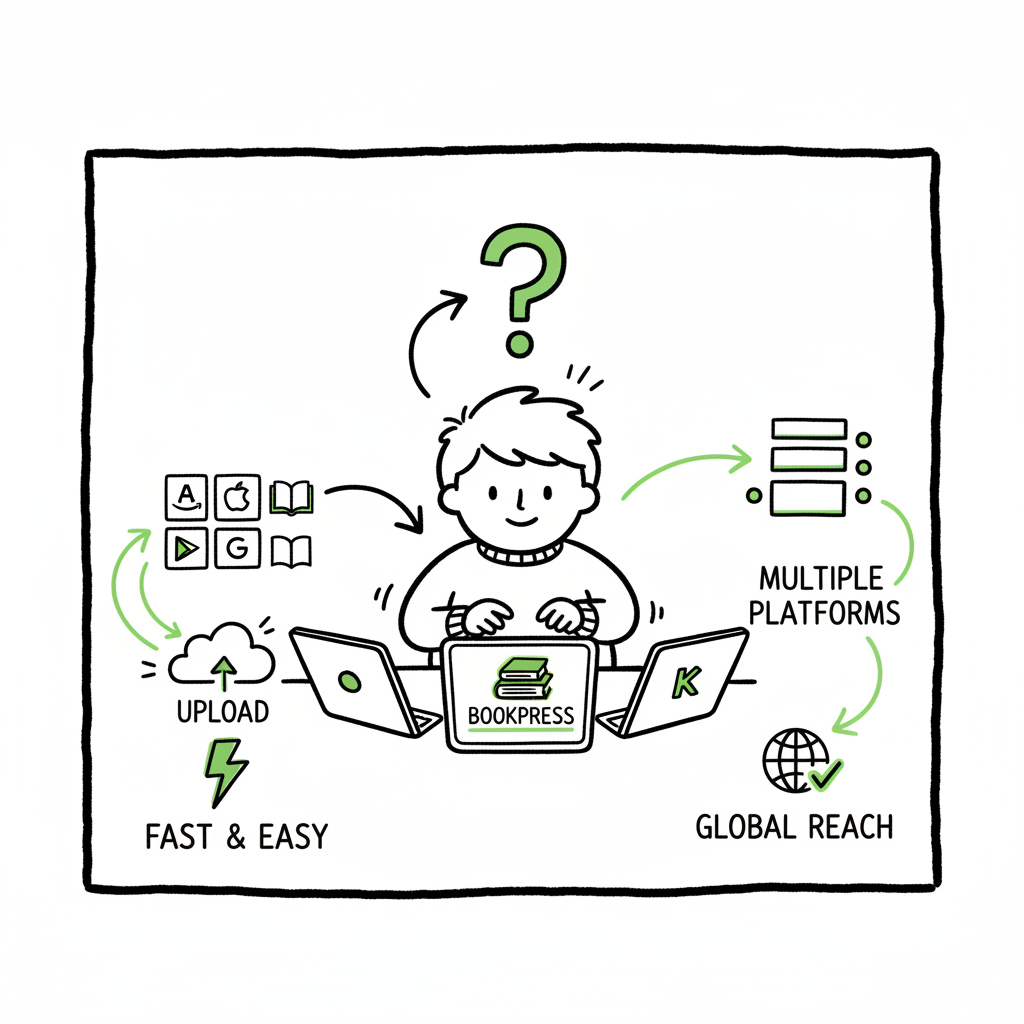
BookUploadPro fits here as an operator-focused service that automates repetitive uploads across Amazon KDP, Kobo, Apple Books, Draft2Digital and Ingram. Expect ~90% time savings on the upload stage, CSV-based batch processing, and platform-aware rules that avoid common rejections. In practical terms, it’s an obvious upgrade once authors start publishing seriously.
Why authors choose multi-platform automation
Once you move beyond a single title, manual uploads become a tax on productivity. Upload forms, cover checks, file conversions and pricing fields repeat across Amazon KDP, Kobo, Apple Books, Draft2Digital and Ingram. Small differences in accepted EPUB files, cover bleed, or metadata formats cause rework.
- Automation matters because it:
- Cuts repetitive steps with CSV batch uploads.
- Applies platform-specific intelligence so you don’t upload a file that will be rejected.
- Reduces human errors caused by copy-paste fatigue.
- Frees time to write, market, and manage sales.
BookUploadPro fits here as an operator-focused service that automates repetitive uploads across Amazon KDP, Kobo, Apple Books, Draft2Digital and Ingram. Expect ~90% time savings on the upload stage, CSV-based batch processing, and platform-aware rules that avoid common rejections. In practical terms, it’s an obvious upgrade once authors start publishing seriously.
Practical workflow for high-volume authors
This section shows a sensible, scalable workflow you can adopt today. It’s not theory — it’s the sequence publishers use when they want reliable, repeatable output.
Manuscript and assets
- Finalize your manuscript in a simple format (Word or Google Docs). Keep chapter styles and a single table of contents.
- Create a print-ready interior for paperbacks and a clean reflowable EPUB for ebooks. If you need a quick, reliable converter, use an EPUB converter to produce validated files that stores accept.
- Design a cover that meets platform bleed and size rules. If you want a fast option, a cover generator helps produce consistent, compliant art for both ebook and paperback.
Metadata and metadata templates
- Maintain a CSV template with title, subtitle, authors, ISBN (if you use your own), keywords, categories, pricing, and territories. Reuse the template for series entries to keep fields consistent.
- Standardize keywords and categories across platforms but allow platform-specific tweaks. Automation applies these mappings without manual re-entry.
Batch preparation and validation
- Run a validation pass to check EPUB and PDF specs, trim white space, confirm ISBNs, and test internal links. Automation tools apply platform rules automatically and catch errors you might miss.
- If you produce both ebook and paperback files, ensure the paperback includes a back cover and spine; the ebook needs reflowable structure and embedded fonts where allowed.
Upload and distribution
- Use CSV batch uploads to push dozens of titles at once. Platform-aware services map your CSV columns to store fields and flag conflicts.
- Monitor rejections and warnings centrally. A good system surfaces which file or field failed and why, letting you fix the source CSV or asset and retry without redoing every step.
Post-publish checks and updates
- Verify storefront pages for formatting issues, image cropping, and price parity.
- Schedule updates to pricing, descriptions, or back-matter across all channels from a central dashboard.
Practical tool notes
- Automate the upload. Own the distribution. Services that combine CSV batch uploads with platform-specific intelligence let you publish widely without scaling headcount.
- When producing covers at scale, a reliable cover generator reduces manual resizing and template errors.
- For the actual file outputs, validated EPUBs avoid time-consuming rejections from Apple or Kobo.
How BookUploadPro helps
BookUploadPro is designed for this kind of work: unified multi-platform publishing, batch CSV workflows, platform intelligence to reduce errors, and practical pricing with a free trial so you can test at scale. It’s an operational upgrade for authors and small publishers who value time savings and reliability.
FAQ
Q: Does automation strip creative control from my book’s presentation?
A: No. Automation handles repetitive tasks and validation. You still control the manuscript, cover design, and final metadata. Automation simply applies those assets consistently and correctly across platforms.
Q: Will automated uploads get my book rejected for quality issues?
A: Automation checks for common format and metadata problems but does not replace editorial review. Always proof the final EPUB and paperback PDF before uploading. Automated validators reduce rejections by catching format mismatches early.
Q: Can I publish both ebooks and paperbacks with the same workflow?
A: Yes. The workflow separates interior files, cover files, and metadata. Use a cover generator for compliant covers and an EPUB converter to produce clean ebook files. Those tools speed production and maintain consistency across formats.
Q: How much time can I save?
A: Typical time savings are around 70–90% on the upload and distribution steps once you standardize templates and use batch processing. The larger your title count, the more pronounced the savings.
Q: Is this affordable for independent authors?
A: Yes. When you consider the time saved and reduction in errors, affordable automation with a free trial becomes cost-effective the moment you publish multiple titles a year.
Final thoughts
If you publish more than one title a year, automation moves from convenience to necessity. Use tools that respect platform differences — validated EPUBs for ebook stores, print-ready PDFs for POD, and smart CSV templates for metadata. These choices let you scale without multiplying administrative work.
Visit BookUploadPro.com to explore unified multi-platform publishing and try the free trial.
Sources
- https://blog.bookuploadpro.com/amazon-kdp-ai-writing
- https://www.bookautoai.com/book-cover-generator-processing
- https://www.bookautoai.com/epub-converter
- https://www.bookautoai.com
- https://bookuploadpro.com
Scribe AI Book Writer (typo/brand overlap): How to Publish Faster Across Platforms Estimated reading time: 9 minutes Key takeaways “scribe ai book writer (typo/brand overlap)” is a common search phrase; authors should focus on publishing workflow and distribution, not brand confusion. Automating uploads to multiple stores saves time and reduces errors — useful once you…