AI Audiobook Generator Guide for Self-Publishing Authors
AI Audiobook Generator: Practical Guide for Self-Publishing Authors
Estimated reading time: 8 minutes
Key takeaways
- AI audiobook generator tools can cut narration time and cost, but quality checks and rights management are essential.
- Use AI narration for backlist, short reads, or test runs; combine human editing for flagship titles.
- BookUploadPro automates multi-platform distribution and batch uploads, freeing time to focus on production and marketing.
Table of Contents
- How an AI audiobook generator works
- Production, quality and rights
- Distribution and multi-platform publishing
- Final thoughts
- FAQ
- Sources
How an AI audiobook generator works
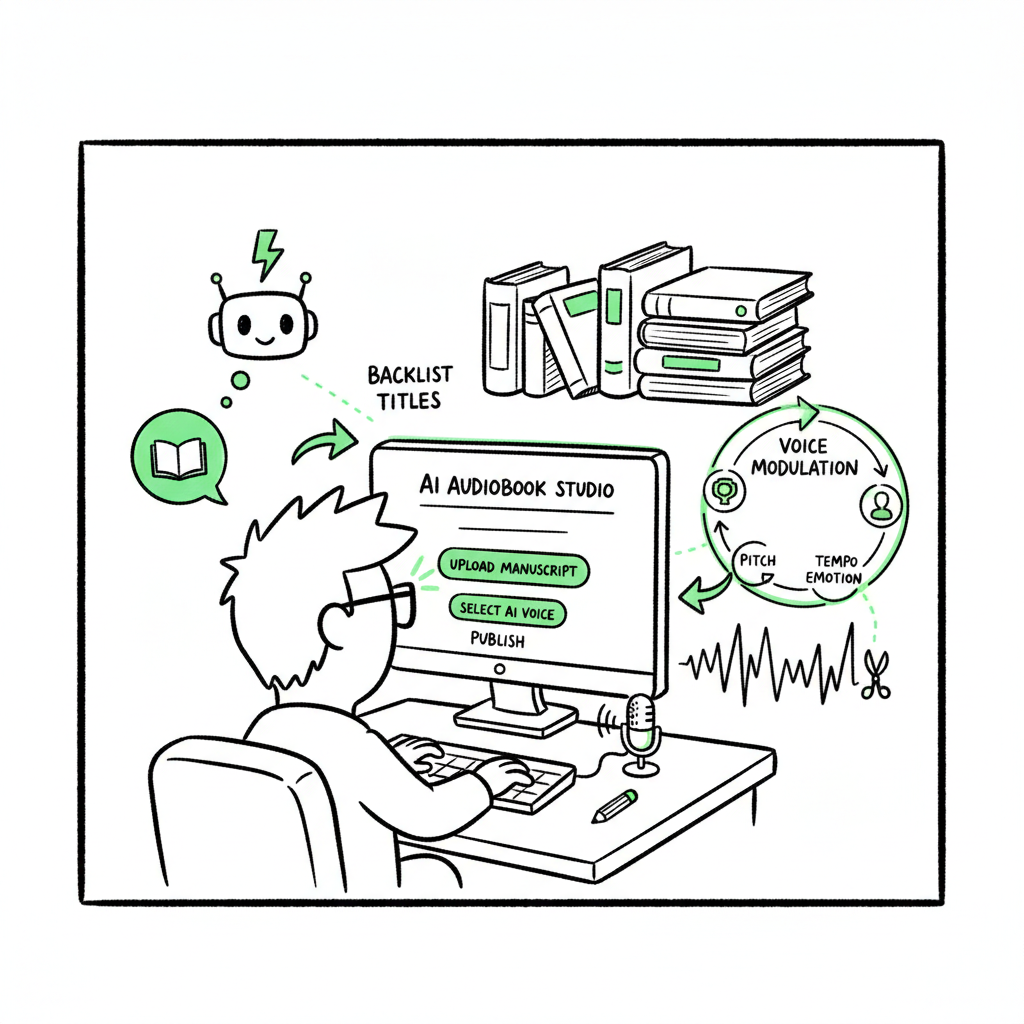
AI audiobook generator tools convert text into natural-sounding spoken audio using machine learning voices. You feed a cleaned manuscript or finalized text, select a voice and pacing, and the tool renders audio files in chapters or a single file. Many tools add basic prosody control so pauses and emphasis feel more natural.
If you already use automated manuscript tools for ebooks, you may be experimenting with Amazon Kdp Ai Writing to draft narration or proof audio. Early passes from an AI generator give you a fast proof of concept: you can hear pace, tone, and line breaks in minutes instead of weeks.
Typical steps in a simple workflow:
- Prepare a final manuscript file and mark chapter breaks.
- Choose a voice profile and run a test chapter.
- Edit where the AI mispronounces names or runs sentences together.
- Export high-bitrate files (WAV or MP3) for review.
AI generators excel on short reads, serialized fiction, or narration for backlist titles where a human narrator’s cost is hard to justify. They’re not a magic shortcut for every book, but they make audiobook production practical at scale.
Production, quality and rights
Quality control is the active part of using an AI audiobook generator. The technology moves fast, but there are predictable gaps you must manage.
What to check
- Pronunciation and names: Feed a glossary of character names and places where possible.
- Pacing and breath: Split or merge sentences to avoid unnatural runs.
- Emphasis and emotion: Use expression tags or post-editing tools when available.
- Consistency: Keep voice settings consistent across chapters for a uniform listening experience.
Rights and contracts
Be deliberate about rights. Some audiobook distributors and retailers have rules about synthetic voices and required disclosures. If your voice model is based on a specific human voice, ensure you have the license to use it commercially. Keep records of voice licenses and export settings with each project.
In addition to rights, consider how files and assets are structured for distribution. If you’ll also create ebooks or print books as part of the release, remember these are separate production tasks. Quick conversions to EPUB are common in the audiobook workflow when you repurpose content; use a reliable EPUB converter to avoid formatting issues. If you’re designing covers or need a publisher-ready wrap, a dedicated cover generator speeds the process; both cover and EPUB steps should be part of your checklist before distribution.
BookUploadPro is a platform that can assist in streamlining these steps, including media management and distribution.
Distribution and multi-platform publishing
An AI audiobook is only valuable if it reaches listeners. Distribution is where BookUploadPro becomes useful at scale.
Why distribution at scale matters
Uploading an audiobook—plus matching ebook and paperback editions—can mean repeating metadata, files, and images across platforms: Audible/ACX, Apple Books, Kobo, Google Play, and wide distributors like Draft2Digital or Ingram. Doing this manually multiplies work and risk of errors.
How automation helps
BookUploadPro automates repetitive uploads across major platforms, using CSV batch uploads and platform-specific intelligence to fit each retailer’s requirements. That reduces manual steps, cuts errors, and often saves authors about 90% of the time involved in multi-platform publishing. When you publish multiple titles, the time savings and expanded reach make automation an obvious upgrade once authors start publishing seriously. Automate the upload. Own the distribution.
Practical tips for using automation with AI audio
- Match files and metadata: Keep a single source CSV with chapter filenames, duration, and ISRCs where needed.
- Platform rules: Let automation adjust file size, bitrate, or chapter limits for each retailer.
- Bundles: Upload ebook, paperback, and audiobook metadata together so stores display the full catalog entry.
- Cover and format checks: Before final upload, confirm cover dimensions and ebook formatting. If you need a fast ebook conversion, a dedicated EPUB converter can save time, and a cover generator helps produce publisher-ready art without back-and-forth design delays.
Tools that handle cover creation, EPUB conversion, and batch publishing remove friction. If you’re book creation workflow as part of the same release, a reliable creation workflow speeds time to market. A separate cover generator and EPUB converter reduce last-minute rework and help you stay consistent across formats.
Final thoughts
AI audiobook generators are a pragmatic tool for authors who want more audio output with less cost. Use them where they make sense—backlist, short reads, serials, or as a first draft for a human narrator to polish. Keep quality control and rights management at the center of your process.
When you move from one or two titles to regular releases, automation for distribution becomes essential. BookUploadPro ties the publishing pieces together: unified multi-platform publishing, CSV batch uploads, platform-specific intelligence, and error reduction make wide distribution practical and repeatable. For authors publishing seriously, it’s an obvious upgrade.
FAQ
Q: Are AI-generated audiobooks allowed by retailers?
A: Policies vary. Some retailers accept AI narration if you hold the rights to the voice model and disclose synthetic narration where required. Check each retailer’s terms before uploading.
Q: Is AI narration cheaper than hiring a narrator?
A: Yes—often by a large margin for many projects. Costs depend on the tool, license, and the level of post-production you apply.
Q: When should I hire a human narrator instead?
A: For flagship releases, high-profile titles, or books where emotional nuance is critical, a human narrator usually delivers better listener engagement.
Q: Can I update an AI-generated audiobook after release?
A: Yes. You can replace files and metadata on most platforms, but coordinate ISBNs/ASINs and retailer rules. Use automation to push updates consistently.
Sources
- https://www.elevenlabs.io/
- https://www.audible.com/
- https://www.apple.com/apple-books/
- https://www.kobo.com/
- https://www.draft2digital.com/
- https://www.ingramcontent.com/
- https://www.bookautoai.com/book-cover-generator-processing
- https://www.bookautoai.com/epub-converter
- https://www.bookautoai.com
AI Audiobook Generator: Practical Guide for Self-Publishing Authors Estimated reading time: 8 minutes Key takeaways AI audiobook generator tools can cut narration time and cost, but quality checks and rights management are essential. Use AI narration for backlist, short reads, or test runs; combine human editing for flagship titles. BookUploadPro automates multi-platform distribution and batch…