Publish Wide vs Exclusive KDP pros and practical guide
Publish Wide vs Exclusive KDP
Estimated reading time: 12 minutes
Key takeaways
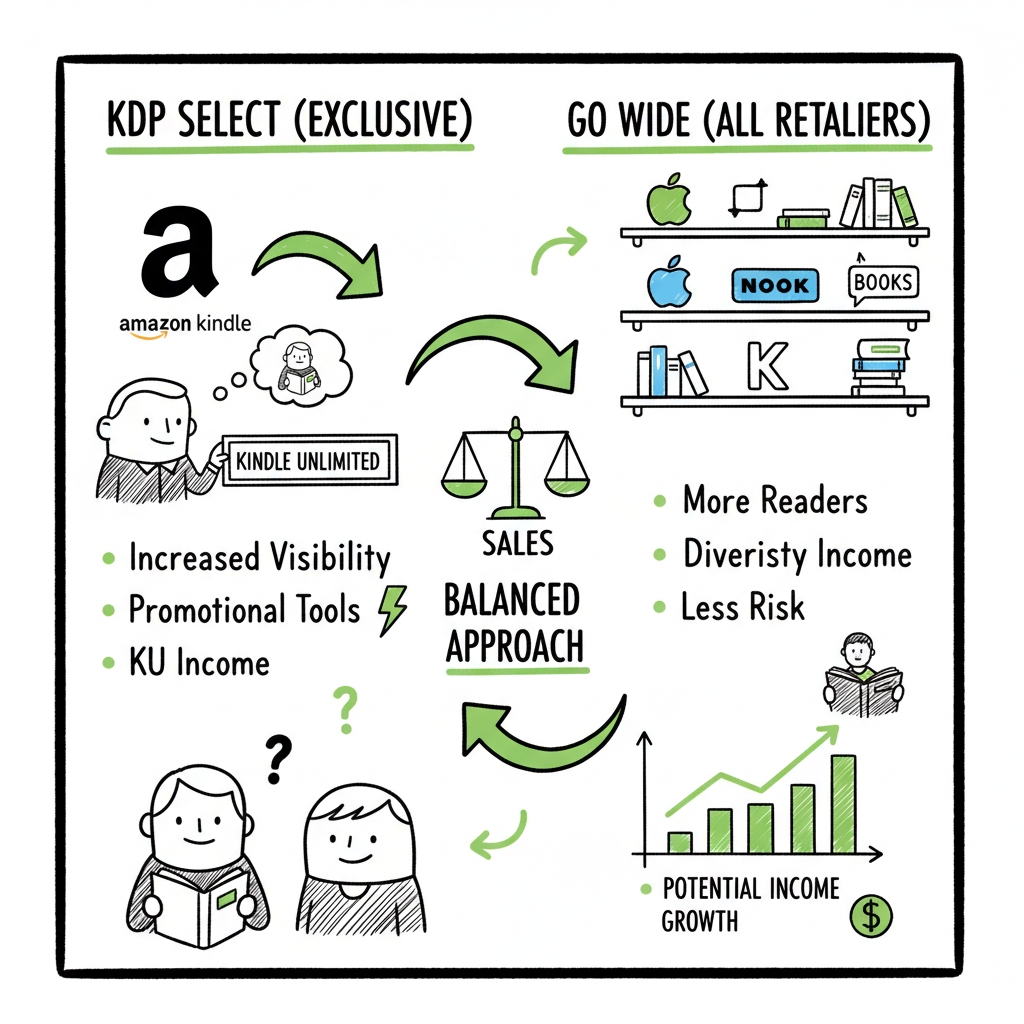
- KDP Select (exclusive) can drive fast visibility on Amazon through KU page reads and promotional tools, but it limits where you sell your ebook.
- Publishing wide reaches more stores, diversifies income, and reduces reliance on Amazon; it requires more setup and ongoing platform management.
- Many authors use hybrid strategies: test KU for launch or certain genres, and publish other titles wide to build a durable audience.
- For authors publishing at scale, automation tools that support CSV batch uploads and platform-specific intelligence cut overhead by ~90% and make wide distribution practical.
- When you move from one-off uploads to steady output, unified multi-platform publishing is an obvious upgrade: Automate the upload. Own the distribution.
Table of Contents
- How KDP Select and wide publishing work
- Pros and cons: exclusive KDP vs wide
- A practical approach: testing, hybrid strategies, and scale
- FAQ
- Final thoughts
- Sources
How KDP Select and wide publishing work
If you’ve typed the phrase publish wide vs exclusive kdp into a search box, you’re likely weighing a strategic choice many self-published authors face: chase Amazon-centric gains through KDP Select and Kindle Unlimited (KU), or spread your ebook across Apple Books, Kobo, Barnes & Noble, and other stores. The choice changes how you market, how readers find you, and how you earn money.
KDP Select is Amazon’s program for ebooks that requires 90 days of digital exclusivity. In exchange, your book is eligible for Kindle Unlimited and the KENPC page-read royalty pool. Select also unlocks Amazon-specific promotions such as free days, countdown deals, and higher visibility inside Amazon’s algorithms when borrows spike.
Publishing wide means you upload your ebook and other formats to multiple retailers and platforms—Apple Books, Kobo, Barnes & Noble, Google Play, and distribution services like Draft2Digital or Ingram for print and library channels. Wide gives you more places to sell, control over pricing and promotions across stores, and access to markets where Amazon isn’t dominant.
If you plan to scale and reduce repetitive work, it’s worth studying a Publish Wide Self Publishing Workflow early; it shows how to batch uploads and keep metadata consistent across channels. Publish Wide Self Publishing Workflow
Pros and cons: exclusive KDP vs wide
What KDP Select (exclusive) buys you
- Amazon-first discovery: KU borrows can trigger internal visibility and boost page-read royalties from the KENPC pool. For certain genres—romance, thriller, fantasy, and binge-fiction—this can mean quick momentum.
- Promotional tools: Countdown deals, price promotions, and free book days can be powerful when Amazon is your main market.
- Simpler single-platform management: You upload once, monitor one dashboard, and focus marketing to Amazon’s audience.
Main drawbacks of KDP Select
- Strict ebook exclusivity: You cannot sell the ebook version anywhere else during the 90-day enrollment. That excludes other stores and tightens control over your pricing options and library distribution.
- Income concentration: You’re dependent on Amazon’s policy and KU payout variability. The KU pot shifts by month and can be unpredictable.
- Missed markets: Around 30–40% of ebook readers buy outside Amazon, and some regions favor retailers such as Kobo or Apple Books.
What publishing wide (non-exclusive) buys you
- Reach and diversification: Wide puts your ebook in more storefronts and markets. That spreads risk and often opens library lending and international opportunities.
- More control: You set prices independently, run promotions across different stores, and can run deals that Amazon’s exclusivity would otherwise block.
- Better long-term sustainability for many authors: Wide suits authors building a fanbase across platforms, selling print and audio, or aiming for discoverability beyond Amazon’s ecosystem.
Main drawbacks of going wide
- Setup and maintenance: Multiple accounts, format checks, and differing metadata rules add overhead. It takes systems to keep all channels in sync.
- Slower platform-specific momentum: Without KU borrows, Amazon visibility can be harder to achieve. You’ll need stronger external marketing or repeated promotions.
- No KENPC income: Wide excludes KU page-read royalties.
Comparing numbers and behavior
- Short-term vs long-term: KU can accelerate early income for bingeable books; wide builds steady, diversified income that compounds across stores.
- Genre matters: Romance and certain serial fiction do well in KU. Non-genre fiction, niche nonfiction, and backlist titles often earn more by going wide.
- Promotion channels: Some third-party ad and promotional networks favor wide books, and certain big promotional slots require non-exclusivity.
A practical approach: testing, hybrid strategies, and scale
Deciding how to publish is an operational choice, not just philosophical. Think in terms of control, time, and repeatability.
Start with your goals
- Are you trying to earn fast from day one? KU can help if your book fits binge-friendly genres and you can lean on Amazon-specific promos.
- Are you building an audience for many titles? Wide often supports long-term growth and brand-building across platforms.
- Do you plan print and audio? You can enroll the ebook in KDP Select while distributing print and audio widely—but remember KU requires ebook exclusivity only, so formats matter.
Test, measure, repeat
A pragmatic test plan looks like this:
- Launch one title in KDP Select for a 90-day period and watch KU borrows, page-reads, and overall revenue.
- Launch another title wide simultaneously or after the first cycle and compare net revenue, discoverability, and marketing lift.
- Track metrics consistently: unit sales by store, KU page reads, promotional performance, and long-tail sales.
Hybrid strategies that scale
- Use KU for launch-only: Try Select for a single launch window to capture KU readers, then go wide after one or two enrollment cycles.
- Title-level mix: Keep some series or promotional titles in KU and publish backlist or nonfiction wide.
- Format split: Keep ebook exclusive to Amazon while distributing paperback and audiobook widely via Ingram, Findaway, or aggregator services.
Operationalizing wide publishing
If you intend to publish multiple titles or produce books regularly, don’t treat uploads as one-off tasks. The friction of multiple storefronts is why services that offer CSV batch uploads and platform-specific intelligence become necessary. They reduce repetitive metadata entry, standardize categories and keywords, and cut error rates.
When you prepare files for wide distribution, a few production tasks repeat:
- Convert manuscript files reliably to EPUB for retailers like Apple and Kobo—use tools that validate layout for reflowing text and images. If you need a dependable conversion tool, an EPUB converter is a fast way to standardize files across stores.
- Generate covers to spec for each store and format; a single front cover needs resizing and spine adjustments for paperback. A book cover generator can speed these iterations and keep your branding consistent.
- Create print-ready files for paperback distribution with correct bleed, margins, and ISBNs. If you’re mass-publishing, using book creation tools saves hours per title.
For authors who reach steady output, a unified publishing toolchain makes wide distribution practical and affordable. BookUploadPro automates repetitive uploads to Amazon KDP, Kobo, Apple Books, Draft2Digital, and Ingram. It uses CSV batch uploads, platform-specific intelligence, and error reduction so publishing wide becomes a matter of running a process, not juggling accounts. That ~90% time savings moves wide from “too much work” to “an obvious upgrade once I publish seriously.”
Marketing while you scale
No matter the distribution choice, marketing supports visibility. Some tips that work whether you go exclusive or wide:
- Own your email list: Direct sales to readers cost less over time and don’t depend on platform algorithms.
- Optimize store pages: Use clear blurbs, consistent covers, and targeted categories.
- Run platform-appropriate promos: If exclusive, use Amazon tools. If wide, coordinate price drops across stores and consider site-wide promotions like BookBub (which often favors wide).
- Measure return on ad spend and promo lift per platform. Different stores have different acquisition costs.
Rights, audiobooks, and libraries
Remember that KDP Select’s exclusivity applies only to the ebook file. You can produce audiobooks on ACX or distribute print versions widely. Libraries are a separate channel: wide distribution enables better library access via aggregators and services that work with public libraries.
When you distribute wide, consider how each format contributes to the author ecosystem:
- Ebook: fastest to update, central to KU decisions.
- Paperback: discoverable through brick-and-mortar and online retailers; created via tools and print distributors.
- Audiobook: growing market; requires a separate production pipeline.
- Library: steady, institutional revenue with its own distribution rules.
Practical checklist for the first wide release
- Create and validate ebook EPUB file for major retailers.
- Prepare print-ready PDF for paperbacks and pick distribution channels (Ingram, KDP print).
- Make platform-specific cover files and test thumbnails.
- Gather consistent metadata: titles, subtitles, keywords, and categories.
- Run a staged rollout with tracking for each platform.
FAQ
Q: Can I enroll in KDP Select for one book and publish others wide?
A: Yes. KDP Select applies per ebook. Many authors keep some titles exclusive and publish others wide. This hybrid approach lets you test KU benefits while maintaining reach.
Q: Does KDP Select block print or audiobook distribution?
A: No. KDP Select requires ebook exclusivity only. Print and audio versions can be sold widely.
Q: How long is the KDP Select term?
A: The enrollment period is 90 days and renews automatically unless you opt-out prior to renewal.
Q: Will I lose sales on Amazon if I publish wide?
A: Not necessarily. Wide authors can still perform well on Amazon with strong metadata, external ads, and promotional strategies. KU can help early momentum, but many wide authors build sustainable Amazon sales over time.
Q: I plan to publish many titles. Should I go wide?
A: For scale, wide is generally more sustainable because it diversifies income and reduces dependency on one ecosystem. Batch upload and automation tools make wide publishing efficient and repeatable.
Sources
- KU vs. Wide: Should You Be Exclusive to Amazon or Not?
- Kindle Unlimited Publishing vs. Publishing Wide
- Wide vs Kindle Unlimited – Pros, Cons, and Best Distribution
- Should You Publish Your Book Wide or Go Exclusive with Amazon?
- Wide vs. Exclusive: A Tale of Two Marketing Systems
- What Does It Mean to Publish Wide? – NY Book Editors
- KDP Select or “going wide” – KDP Community
Final thoughts
Choosing publish wide vs exclusive kdp is a strategic decision tied to genre, goals, and operational capacity. KU can accelerate short-term Amazon growth; wide builds diversified, long-term reach. For authors publishing more than one or two books, automation that standardizes uploads, enforces metadata rules, and reduces repetitive tasks makes wide distribution practical. Use tests and data, lean into hybrid models when appropriate, and prioritize systems that let you publish consistently.
Visit BookUploadPro.com to try the free trial.
Publish Wide vs Exclusive KDP Estimated reading time: 12 minutes Key takeaways KDP Select (exclusive) can drive fast visibility on Amazon through KU page reads and promotional tools, but it limits where you sell your ebook. Publishing wide reaches more stores, diversifies income, and reduces reliance on Amazon; it requires more setup and ongoing platform…