Book Niches That Sell for Amazon KDP Authors Guide
book niches that sell
Estimated reading time: 8 minutes
Key takeaways
- Narrow sub-niches beat broad categories: find underserved needs and serve them well.
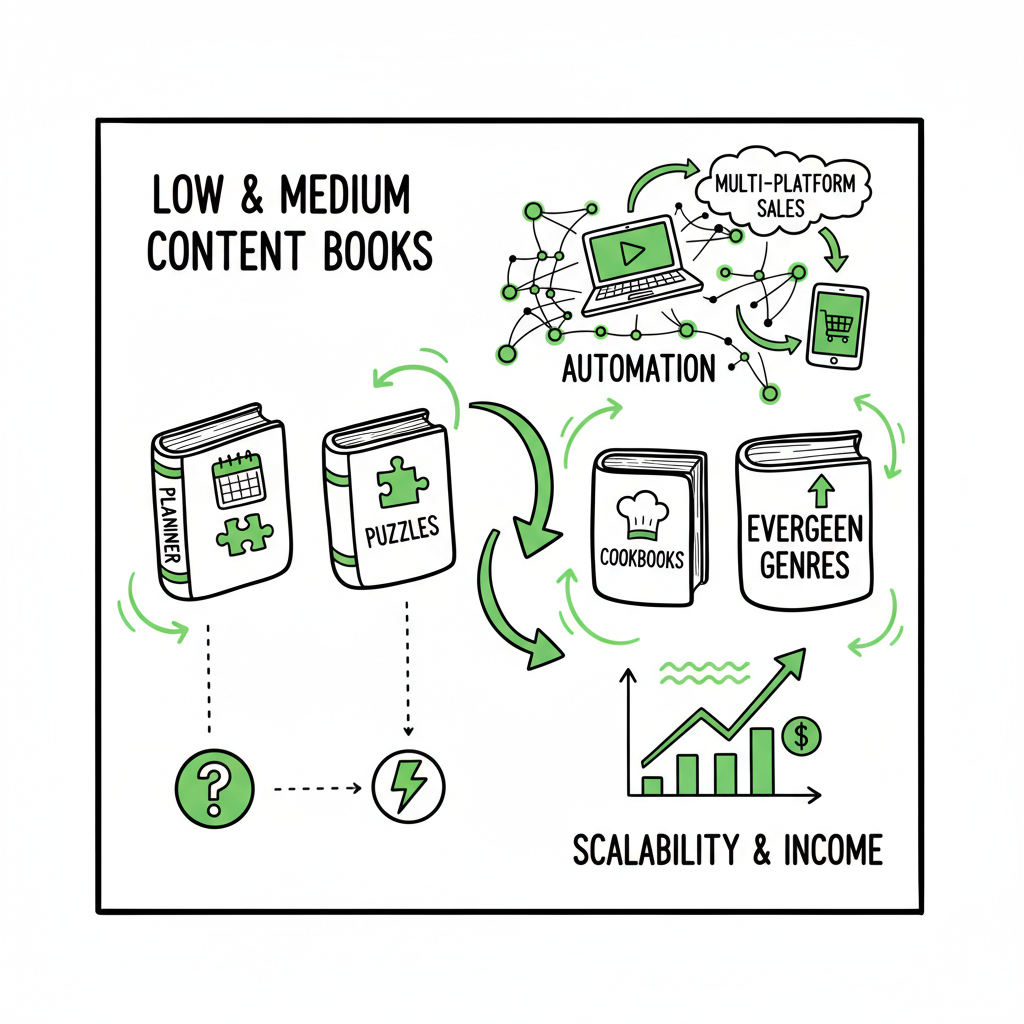
- Low- and medium-content books (planners, activity books, puzzles) scale fast; evergreen genres (self-help, cookbooks, spiritual) build long-term sales.
- Automating multi-platform uploads and batch workflows turns niche wins into reliable income.
Table of Contents
- Why a smart niche wins
- Profitable book niches that sell in 2026
- How to validate and scale a niche
- FAQ
Why a smart niche wins
Choosing the right book niches that sell is the difference between a one-off title and a steady publishing business. A good niche reduces competition, focuses marketing, and makes production predictable. For most indie authors, the fastest path to repeatable income is niching down to a clear audience — then serving that audience with reliable quality, consistent releases, and smart distribution.
Two practical rules: pick a niche you can produce for repeat runs (templates, formats, or a repeatable research process), and validate demand before spending heavy design or ad budgets. When you pair that with a predictable upload process and multi-platform distribution, niche publishing becomes scaleable.
Profitable book niches that sell in 2026
Here are the top niches to consider now, with why they work and practical examples you can produce without reinventing the wheel.
- Low- and no-content books (journals, planners, notebooks)
- Why: Fast to create, low production cost, steady demand for niche themes (fitness logs, meal planners, teacher lesson planners).
- How to niche down: target specific jobs-to-be-done (e.g., “grad student research planner”) or audience traits (e.g., “keto meal planner for beginners”).
- Activity books for kids
- Why: Parents and teachers buy in volume. Formats are evergreen: color-by-number, dot-to-dot, preschool tracing for phonics.
- How to niche down: age + theme sells — “truck coloring book for toddlers” or “space activity workbook for preschoolers.”
- Puzzle and game books (crosswords, sudoku, word find)
- Why: Higher perceived value and longer shelf life. Strong reviews build trust, and series work well.
- How to niche down: themed puzzles (e.g., “vintage cars word search”), difficulty levels, or subscription-style releases.
- Coloring books (adult and kids)
- Why: Continuous demand, giftability, and broad audience. Thin interior with strong cover sells.
- Production note: a high-quality cover makes or breaks sales — consider professional or automated cover tools to speed creation. For fast, repeatable cover work, avoid relying on a single design approach and focus on consistency.
- Medium-content workbooks and guided journals
- Why: Higher price point than notebooks, still repeatable. Self-help prompts, burnout recovery workbooks, and niche faith journaling are reliable.
- How to niche down: specific problems + demographics (e.g., “journaling for new teachers”).
- Cookbooks and recipe books with a narrow focus
- Why: Diet trends and gift markets keep cookbook sub-niches alive: air fryer regional recipes, Mediterranean for 2025, or plant-based slow-cooker meals.
- How to niche down: combine format + diet + occasion (e.g., “keto meal prep for busy parents”).
- Business, money, and how-to micro-guides
- Why: Buyers want quick, applicable steps. Budget planners, side-hustle guides, and beginner trade guides are practical sellers.
- How to niche down: skill level + platform + outcome (e.g., “beginner eBay flipping workbook”).
- Religious and niche spiritual topics
- Why: Communities support books that reflect specific practices or calendars. Niche topics like certain pagan holidays or regional spiritual practices can have loyal buyers.
- How to niche down: localize language, rituals, or year-specific content.
A note on Kindle Unlimited and platform mix: enrolling eligible titles in subscription services can increase reach and steady income. But the smart move is distribution across multiple stores — Amazon, Apple Books, Kobo, Draft2Digital, and Ingram — to make sales less dependent on any single algorithm.
How to validate and scale a niche
Validate first, scale second. Follow a simple cycle: research → test → iterate → automate.
Research
- Search storefronts for sub-niche keywords and scan best-sellers for repeat patterns in cover, title wording, and price.
- Look for low-competition long-tail phrases rather than head terms.
- Check customer reviews for unmet needs or feature requests you can address.
Test with a Minimal Viable Title
- Produce one small, well-targeted title. Keep the interior clean and the cover clear about who the book is for.
- Price competitively and run a short, low-cost ad test or split exposure across platforms to measure organic traction.
Iterate on Feedback
- Improve interior layout, tweak title phrases, and refine tags/categories based on initial performance and reviews.
- If the niche responds, plan a series: variations in theme, difficulty, or format.
Automate uploads and distribution
- Once you have 3–5 titles that prove demand, batching becomes essential. Manual uploads slow you down and increase errors.
- Use unified multi-platform publishing to push the same title to Amazon KDP, Apple Books, Kobo, Draft2Digital, and Ingram with consistent metadata. This makes wide distribution practical and reduces repetitive work.
- Batch tools that accept CSV uploads and apply platform-specific intelligence will save time and reduce upload mistakes. A good multi-platform service can cut upload time by roughly 90% and handle the quirks of each store.
Production tips that scale
- Interior templates: keep standardized templates for page size, margins, and fonts.
- Covers: use repeatable cover systems. For bulk projects, automation helps produce many cover variations quickly; this is especially helpful for low-content series. If you need high-volume cover processing, a book cover generator can speed the work without sacrificing consistency.
- File formats: most stores need EPUB for ebooks and print-ready PDFs for paperbacks. Converting reliably at scale matters — consider a dedicated EPUB converter to avoid formatting regressions and re-uploads.
- If you’re creating both paperback and ebook editions, set up a clean workflow that produces both files from the same source, and use a service that supports batch publishing to all stores to keep metadata and pricing synchronized. For generating paperbacks and ebooks efficiently, the book creation process is helpful.
Quality control and metadata
- Small mistakes in ISBN, trim size, or embedded fonts cause delays. Use automated checks for file validation where possible.
- Titles, subtitles, and backend keywords are your optimization tools. Use clear, outcome-oriented language in subtitles and long-tail keywords in backend fields.
Why automation is the obvious next step
- When you publish seriously — more than a handful of titles — manual uploads become the bottleneck. Automating repetitive uploads across platforms preserves time for research, writing, and promotion.
- Automation reduces errors, improves release cadence, and makes series management practical. It’s an obvious upgrade once authors start publishing seriously: automate the upload. Own the distribution.
FAQ
Q: Are low-content books still profitable?
Yes. Low-content books remain profitable when you target specific sub-niches, maintain simple but appealing interiors, and invest in strong covers and metadata.
Q: How many titles do I need to make steady income?
Numbers vary, but many publishers see reliable monthly revenue after 20–50 titles if they’re targeted and well-promoted. The key is consistent quality and distribution.
Q: Should I enroll in Kindle Unlimited?
KU can boost reads for eligible books, especially in fiction and long-form nonfiction. Test it with several titles and compare returns to wide distribution.
Q: Do I need separate files for ebook and paperback?
Yes. Ebooks (EPUB/MOBI) and print (PDF with trim and bleed) have different requirements. Use consistent source files and validated conversions to keep editions aligned.
Q: How can I publish to multiple stores quickly?
Use a multi-platform publishing tool that supports CSV batch uploads and applies platform-specific rules. That cuts repetitive work and reduces errors.
Final thoughts
Picking the right book niches that sell is a mix of practical research and repeatable production. Start small, validate demand, then scale by standardizing files, using templates, and automating distribution. That’s how a few niche wins become a reliable publishing business.
Visit the BookUploadPro site to see how multi-platform automation and CSV batch uploads simplify wide distribution — try the free trial.
Sources
- https://livingwriter.com/blog/most-profitable-amazon-kdp-niches-top-10/
- https://lowcontentprofits.com/best-kdp-niches-2023/
- https://dibbly.com/low-content-niches-guide/
- https://www.bookautoai.com/book-cover-generator-processing
- https://www.bookautoai.com/epub-converter
- https://www.bookautoai.com
book niches that sell Estimated reading time: 8 minutes Key takeaways Narrow sub-niches beat broad categories: find underserved needs and serve them well. Low- and medium-content books (planners, activity books, puzzles) scale fast; evergreen genres (self-help, cookbooks, spiritual) build long-term sales. Automating multi-platform uploads and batch workflows turns niche wins into reliable income. Table of…